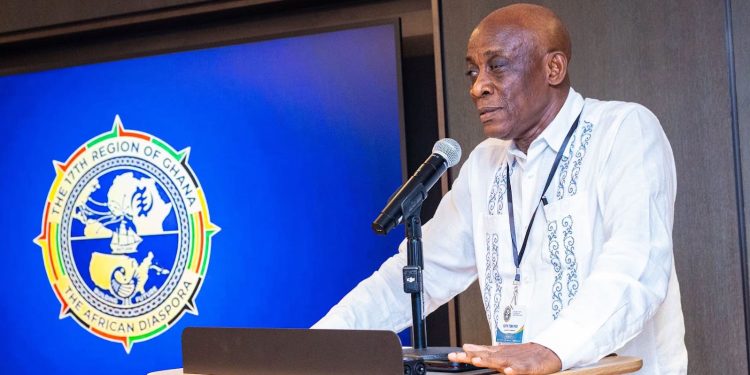
Ghana must strategically redirect diaspora remittances into productive sectors to foster national development and economic transformation. This call comes from Seth Terkper, the Presidential Advisor on the Economy and a former Minister of Finance.
Mr. Terkper emphasized that remittances from Ghanaians living abroad have become a vital source of financing for the economy. This is particularly true as Ghana and other African nations face evolving global financing conditions. These countries are gradually losing access to traditional concessional loans and grants.
This initiative aligns with Ghana's broader economic strategy to enhance domestic resource mobilization. As countries achieve higher income classifications, they must increasingly rely on internal resources and alternative financing options. This shift is essential to support their development agendas and reduce dependence on external aid.
Speaking at the launch of Region 17, themed “Harnessing the Power of the Diaspora to Transform Ghana’s Future,” Mr. Terkper urged a deeper assessment of these funds. He stated, “We need to diagnose the nature of remittances and how they can benefit Ghana’s development.” This diagnostic approach aims to identify optimal channels for investment.
Diaspora funds already contribute significantly to the economy in various ways. These include supporting housing development, facilitating business creation, and driving investment activities. They also play a role in transferring valuable skills and products into the country.
Mr. Terkper noted that these resources could play an even larger role in economic transformation. This requires designing policies that actively encourage a more productive use of diaspora capital. Such policies would shift the focus from mere consumption to sustainable investment.
The changing global economic environment necessitates that Ghana develops stronger domestic financing mechanisms. International support is becoming less accessible, making internal resource generation critical. Economically progressing nations are expected to mobilize more internal resources and build sustainable systems for financing their development.
Ghana’s recent debt challenges and subsequent defaults have impacted investor confidence. Mr. Terkper acknowledged this, highlighting the importance of maintaining policy credibility. Restoring confidence will require consistency in economic management and policies that attract both domestic and diaspora investors.
Mr. Terkper also drew lessons from the rise of the “African Lions,” a term for rapidly growing African economies. These economies have demonstrated that strong growth is achievable even amidst difficult global conditions. Ghana can similarly position itself for transformation by leveraging its human capital, diaspora resources, and domestic economic opportunities.
The Region 17 launch specifically focused on strengthening engagement with the Ghanaian diaspora. It explored ways to utilize diaspora networks, expertise, and financial resources to support national development goals. This integrated approach seeks to maximize the impact of remittances beyond individual family support.