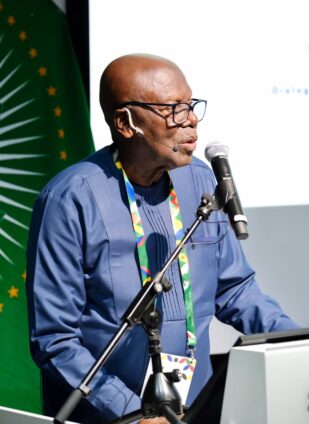
Economist Dr. Ishmael Yamson has challenged the Ghanaian government to ensure the nation's current economic stability lasts for at least a decade. He states that investors require long-term certainty before committing significant capital to the country.
Dr. Yamson, who also serves as Board Chairman of MTN Ghana, explained that Ghana’s historical economic cycles have made investors doubtful about the durability of recent gains. He noted that investors have witnessed a pattern where the economy builds for three years only to decline over the next five years. This history makes it difficult for them to trust that current stability is sustainable.
This call for extended stability comes as Ghana seeks to consolidate its economic recovery and attract foreign direct investment. The country has often experienced periods of growth followed by downturns, impacting investor confidence and long-term planning. Addressing this cyclical nature is crucial for sustained development and job creation across various sectors.
Dr. Yamson commended the government for its economic achievements over the past 18 months, describing the level of stability as unprecedented. He acknowledged the significant progress made from previous challenging economic conditions. However, he stressed that the true measure of success lies in the government's ability to build resilience to protect these gains from future economic shocks.
He pointed out that past governments often focused on immediate stabilisation without creating the necessary structures for long-term sustainability. Dr. Yamson cited the government’s Gold for Reserves programme as a potential initiative to strengthen Ghana's economic resilience. He believes achieving a 15-month reserve cover by 2028 would provide a robust foundation for continued stability, despite the inherent risks of such an ambitious plan.
Furthermore, Dr. Yamson highlighted long-term investment in agriculture as another critical step to address structural weaknesses. He noted that persistent food inflation, despite programmes like 'Planting for Food and Jobs,' shows the limitations of previous interventions. Investing in large-scale oil palm plantations, covering 250,000 hectares for both food and industrial use, could resolve fundamental issues over the long term, he suggested.
For Dr. Yamson, simply controlling expenditure is insufficient for lasting stability. He argues that while expenditure suppression can bring short-term calm, creating pillars of resilience is essential for enduring economic health. He expressed confidence that if the government fully implements its current resilience initiatives, Ghana can fundamentally alter its economic trajectory.
Ultimately, Ghana must convince investors that its stability will endure beyond political cycles. Dr. Yamson emphasised that serious investors make decisions based on decades, not electoral terms. He cited examples like Unilever, which has operated in Ghana for many decades, as proof that long-term commitment is possible when stability is assured. He concluded that breaking the boom-bust cycle requires a shift from short-term fixes to building resilience that can withstand changes in government.