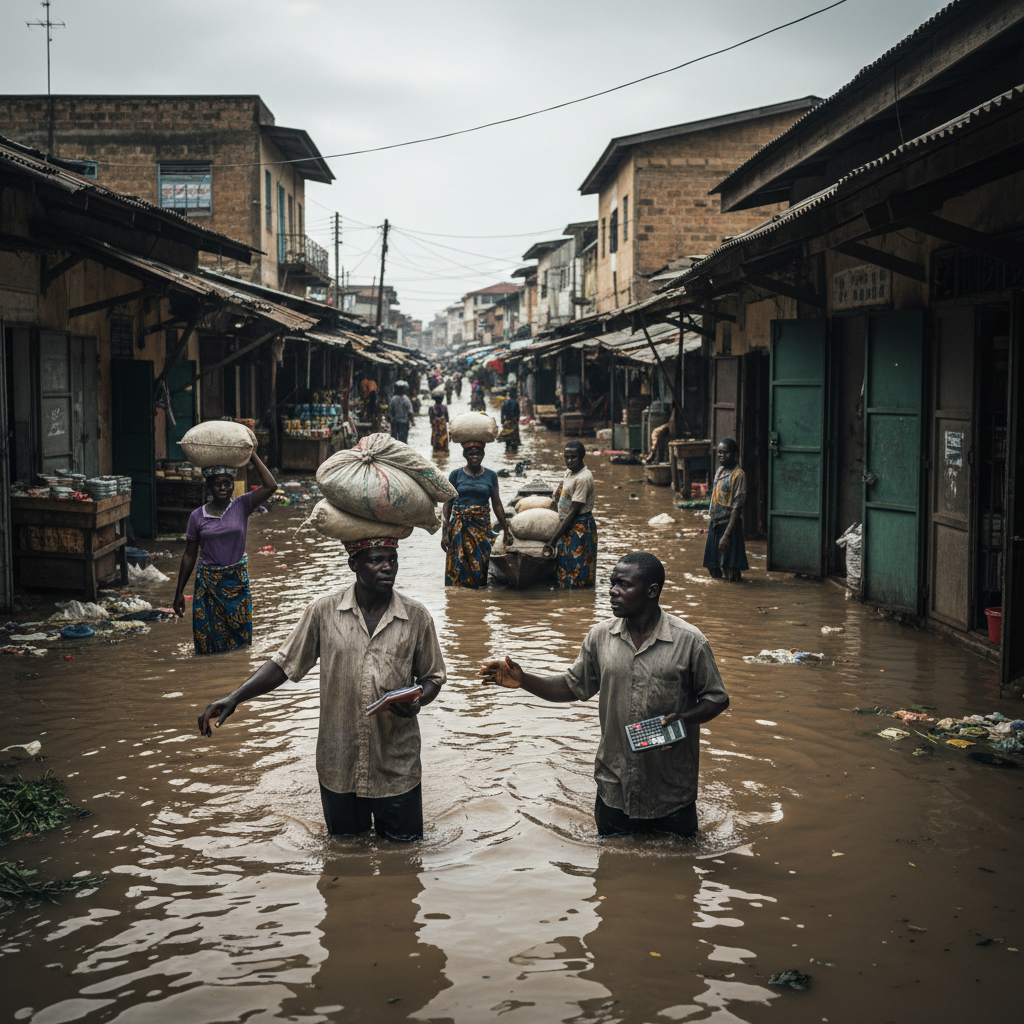
Ghana’s economy incurs an estimated annual loss of GHS 2.4 billion (equivalent to $200 million) from floods and droughts. This significant financial drain highlights the urgent need for a proactive national risk management strategy.
These substantial losses stem from Ghana's reactive approach to recurring crises. Past events like the COVID-19 pandemic, the Domestic Debt Exchange Programme (DDEP), and persistent energy instability underscore this issue. Ghana’s current methods focus on recovery after a crisis, rather than preventing or preparing for it.
This situation fits into a wider pattern of economic instability in Ghana. The country faces interconnected risks from financial markets, climate events, and global conflicts. For instance, the 2023 Akosombo spillage resulted in GHS 1.7 billion ($141 million) in losses and displaced over 30,000 people. The 2015 Accra flood, Ghana’s deadliest urban flood, claimed over 200 lives and cost GHS 1.3 billion ($108 million).
Kenneth Owusu Asante Amponsah emphasized, “The tragedy is not that floods occur; the tragedy is that many of these floods are predictable.” The Business & Financial Times reported this finding. Flood impacts extend beyond environmental concerns, affecting housing, public health, and government finances. Droughts in 2024 impacted 135,822 farmers and 571,745 hectares of farmland.
Adopting a comprehensive National Risk Management Policy is crucial for Ghana. Such a policy would shift the country from merely responding to crises to actively anticipating and mitigating risks. This approach would protect economic stability and foster national resilience against future shocks.
The proposed framework includes a ten-pillar national resilience strategy. This framework would address systemic risks that cascade across various sectors. For example, the Russia-Ukraine conflict increased food and energy prices in Ghana. Geopolitical events underscore the need for continuous risk monitoring in national planning.
The Domestic Debt Exchange Program (DDEP) also demonstrated the interconnectedness of risks. While necessary for debt sustainability, the DDEP affected banks, insurance companies, and pension funds. This illustrates how financial policies have broad economic consequences.
Moving forward, policymakers will likely consider integrating these recommendations. A proactive policy could reduce the severe financial and social costs of future crises. This shift would improve national preparedness and potentially attract more stable investment.
Implementing such a policy would require cross-sector collaboration and robust data analysis. Its success will depend on sustained political will and public engagement. This new approach aims to build a more resilient Ghana.