Ghana’s year-on-year inflation rate increased to 5.0% in August 2026. This figure is up from 4.6% recorded in July, according to the Ghana Statistical Service (GSS).
This 0.4 percentage-point rise marks the second consecutive monthly increase in inflation. The upward trend puts pressure on Ghana’s recent success in slowing down price increases. Domestic costs, particularly in housing, transport, utilities, and education, are the main drivers of this inflation.
This latest data indicates a shift in inflationary pressures towards internal factors within the Ghanaian economy. While the August 2026 rate is higher than July, it remains below the 5.5% seen in August 2025. This suggests that while challenges persist, the overall economic environment has improved compared to the previous year. The Bank of Ghana has previously emphasized the importance of maintaining price stability to support economic growth.
The Ghana Statistical Service highlighted that locally produced items and services account for 86.2% of total inflation. This underscores the growing influence of domestic cost pressures on the overall price level. Imported inflation, by contrast, remained relatively low at 2.2% in August.
Policymakers and consumers will closely monitor these trends for their impact on economic stability and purchasing power. The Bank of Ghana may consider its monetary policy stance in response to these persistent domestic price pressures. Businesses will also watch for potential shifts in consumer spending habits.
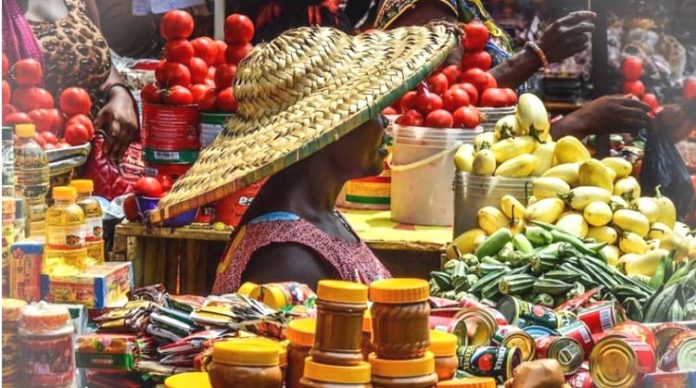
Non-food inflation slightly increased to 6.8% in August, up from 6.7% in July. This category contributed 70.9% to total inflation. Food and non-alcoholic beverages inflation eased to 3.0% from 3.1% in July. However, specific food items experienced sharp price increases. Fresh tomatoes surged by 458.3% year-on-year. Ginger prices rose by 128.3%, and shrimp increased by 67.1%. Mangoes also saw a 57.7% price hike.
Fresh tomatoes were the largest contributor to overall inflation, accounting for 21.4% of the total. Rent payments contributed 14.7%, while ginger added 12.2%. Among major spending categories, transport inflation reached 10.5%. Housing, water, and energy recorded 10.2% inflation. Education costs rose by 6.6%, and restaurants and hotels saw 4.3% inflation.
Services inflation increased to 8.6% from 8.5% in July. Goods inflation also rose to 3.8% from 3.6%. Inflation for locally produced items climbed to 6.1%, compared with 5.9% in July. Imported inflation saw a slight increase to 2.2% from 2.1%. These figures confirm that domestic factors are now the primary drivers of price changes.
Regionally, the Central Region recorded the highest inflation at 11.1%. Ashanti Region followed with 8.7%. Greater Accra matched the national rate of 5.0%. Bono East experienced the lowest inflation at 3.3%. Volta Region recorded 3.6%, and Upper East was at 3.7%. These regional variations highlight differing local economic conditions and supply chain dynamics.
Despite the annual increase, the general price level fell by 1.0% month-on-month in August. This indicates some short-term price moderation within the month. However, the sustained rise in the year-on-year rate remains a key concern. The government’s fiscal policies and the Bank of Ghana’s monetary decisions will be critical in managing these inflationary pressures. Businesses and households will need to adapt to these evolving economic conditions.