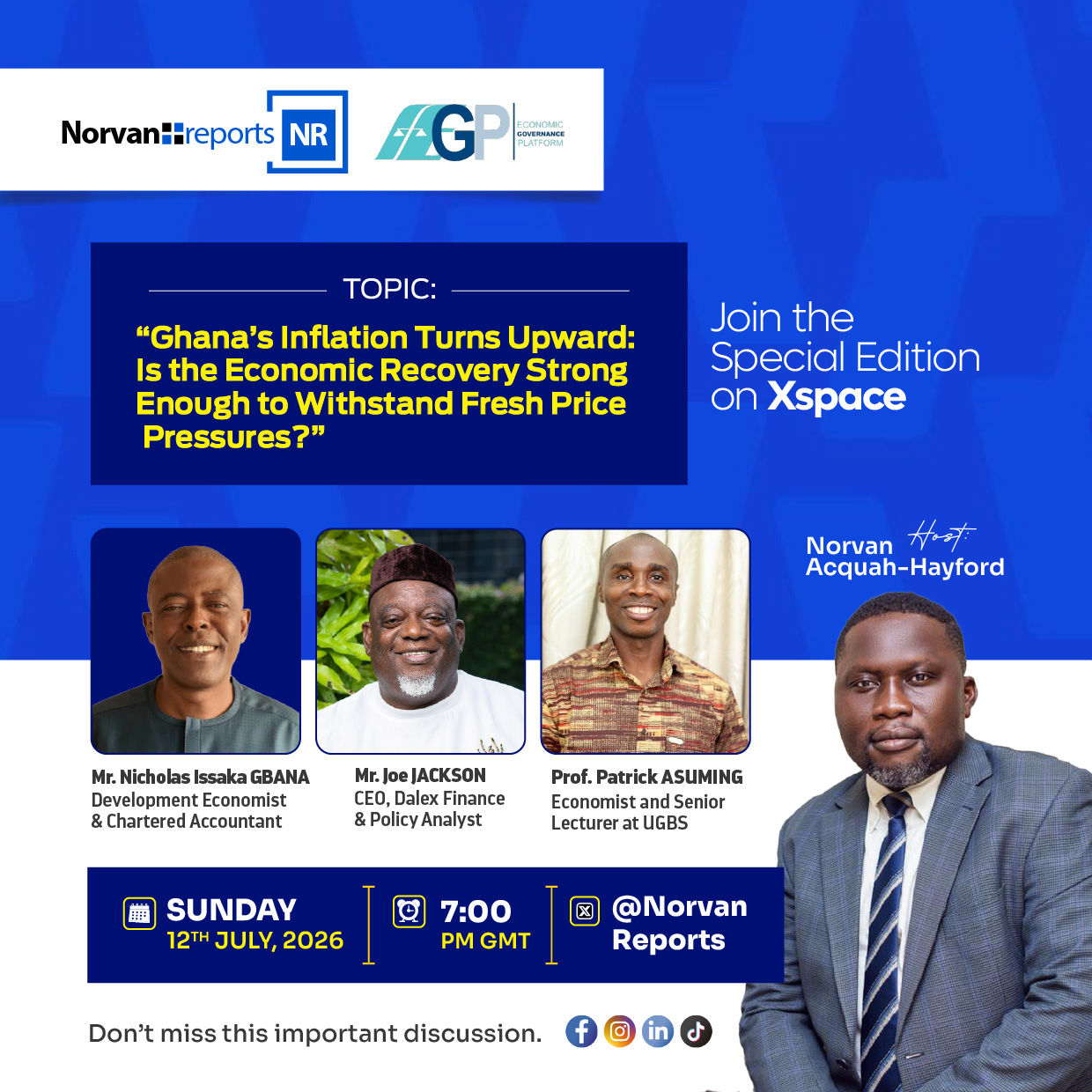
Ghana's inflation rate increased to 5.30% in June 2026. This marks a significant rebound and the third consecutive monthly rise in consumer prices. The latest figure raises critical policy questions ahead of the Bank of Ghana’s (BoG) 131st Monetary Policy Committee (MPC) meeting.
Inflation surged from its March low of 3.20% to 5.30% in June. This 2.10 percentage point increase changed the monetary policy conversation. It shifted focus from continued easing to concern over renewed price pressures. This trend may complicate the central bank’s efforts to support economic recovery.
This upward inflation trend contrasts with earlier rapid disinflation observed in late 2025 and early 2026. Inflation fell from 5.40% in December 2025 to 3.20% by March 2026. These decreases allowed the BoG to cut its policy rate in January and March. The policy rate is the interest rate at which commercial banks can borrow money from the central bank. The current inflation return raises concerns about the sustainability of Ghana's economic stability.
In January, the Bank of Ghana's MPC reduced the policy rate by 250 basis points to 15.50%. This decision followed a sharp decline in inflation. The central bank emphasized strengthened macroeconomic conditions and anchored inflation expectations. It cited a policy shift towards consolidating stability and supporting real-sector recovery. Even then, the central bank acknowledged potential risks from utility adjustments and commodity market volatility.
The BoG further cut the policy rate by another 150 basis points to 14.00% in March. This further cut highlighted continued confidence in declining inflation rates. However, the MPC also flagged potential external shocks from the Middle East conflict and crude oil market volatility. These factors could impact the inflation outlook. These risks became more pronounced by May, leading the MPC to pause further rate cuts despite inflation remaining low.
The June inflation figure, while below the BoG's medium-term target band of 8.00% ± 2.00%, signals a potential acceleration. Three consecutive monthly increases challenge the earlier narrative of stable price conditions. This dynamic poses a dilemma for the MPC. It must now weigh further monetary easing against the risk of reigniting inflationary spirals. The upcoming MPC meeting on July 22, 2026, will be crucial. Decision-makers will assess whether the economic recovery is robust enough to absorb these new price pressures. Businesses and households will closely monitor the outcome, as it will influence lending rates, investment decisions, and purchasing power. This volatility may also impact investor confidence and market expectations for Ghana's economic trajectory.