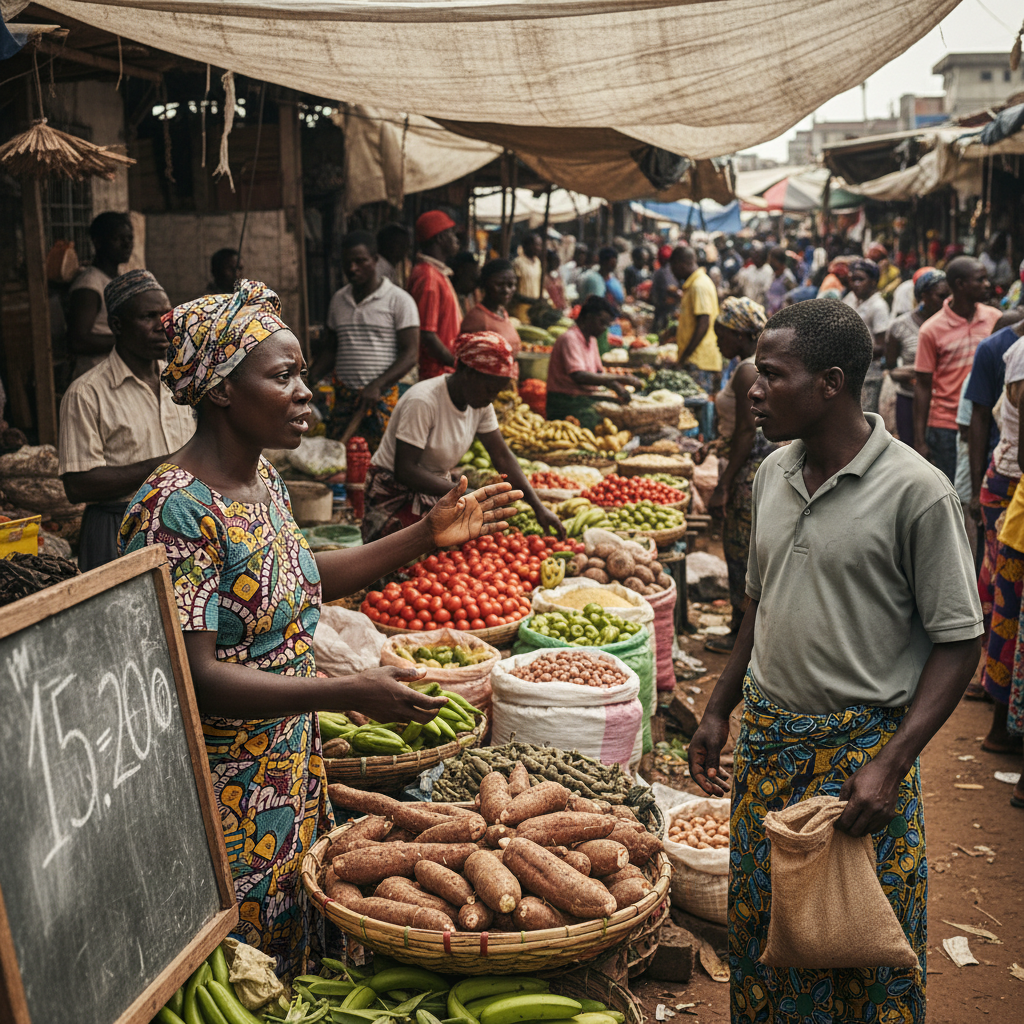
Ghana’s inflation efforts face renewed pressure as rising food prices threaten to erase recent gains in consumer price stability. Government Statistician Dr. Alhassan Iddrisu warned food inflation poses the main risk to Ghana’s broader disinflation path after headline inflation rose for a second straight month.
This development suggests that the sharp inflation easing seen over the past year may be more fragile. Food remains a significant component of the consumer price basket. Ghana Statistical Service officials noted earlier moderation in fuel and transport costs helped reduce inflation. Now, increasing prices of staple foods are starting to offset those benefits.
This renewed food price pressure stems from supply disruptions, high production costs, and poor storage systems. Post-harvest losses and inconsistent distribution networks also contribute. These issues reflect deeper structural weaknesses in Ghana’s agricultural supply chain, not just temporary market disturbances. This makes the current inflation outlook more complex.
Dr. Alhassan Iddrisu, Government Statistician, expressed concern about food inflation becoming the primary risk. This specific warning highlights the fragility of Ghana's progress against inflation. His statement underlines how crucial food prices are to the overall economic stability.
If food prices continue to climb, the Bank of Ghana may face a more difficult policy environment. The central bank is working to maintain macroeconomic stability, protect the Ghana cedi, and support economic recovery. Persistent food inflation could also reduce household purchasing power, especially for low-income families. These families spend a larger portion of their income on food necessities.
Economists warn that Ghana's inflation outlook will remain vulnerable without addressing structural bottlenecks in the food system. These include high fertiliser costs, limited irrigation, weak rural roads, and inadequate storage facilities. High transport costs and inefficient market distribution systems also contribute to the problem. Agricultural groups have called for urgent interventions to support domestic food production. They advocate for better access to fertiliser, expanded irrigation, improved storage, and stronger transport infrastructure. Such measures would move food more efficiently from farms to markets. These interventions are critical because supply constraints often drive food inflation in Ghana, not just demand. Poor harvests, bad roads, weak storage, or rising distribution costs can quickly increase food prices. This occurs even when general demand remains stable. Therefore, the food sector is central to Ghana’s inflation fight. Monetary policy can control demand and manage expectations. However, it cannot, by itself, increase maize production or reduce post-harvest losses. It cannot move vegetables faster from farms to markets. The latest warning from the Ghana Statistical Service underscores the need for closer policy coordination. Fiscal policy, monetary policy, and agricultural policy must work together. Price stability requires investment in food production, logistics, storage, irrigation, and market systems. Ghana’s inflation battle is increasingly fought in the food economy. If food prices stabilise, the broader disinflation path could continue. If they keep rising, recent gains in consumer price stability could face new threats. This would have consequences for households, businesses, and the wider economy.