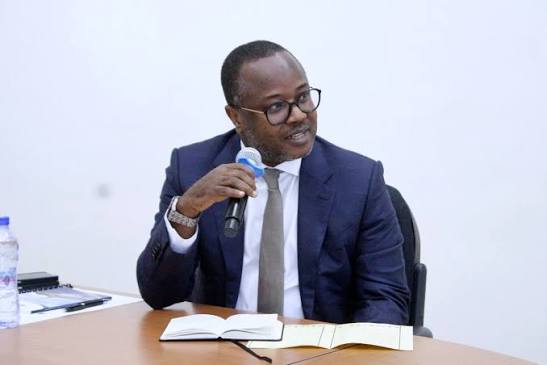
Ghana's economic expansion has largely depended on increasing labour and capital, including extractives, rather than innovation or efficiency improvements. Dr. Maxwell Opoku-Afari, a former First Deputy Governor, revealed this critical assessment. This approach raises serious questions about the long-term strength and fairness of Ghana's economic growth plans.
This long-term decline in productivity worries experts about the durability and resilience of Ghana's economy. The country has not seen a significant move towards high-productivity, export-focused manufacturing. This absence means that strong overall economic growth has not led to a broader tax base or more diverse exports. It also limits the country's ability to manage its debt effectively.
Ghana's economic structure shows agriculture remaining around one-fifth of the Gross Domestic Product (GDP) between 2013 and 2024. The industrial sector experienced significant ups and downs, mainly due to extractive activities like mining, not manufacturing. Services consistently dominated the economy during this period. This pattern confirms that economic growth has not brought necessary structural changes to improve fiscal strength.
Dr. Opoku-Afari, a Non-Resident Fellow of Finance for Development Lab, explained that borrowing is often presented as funding for infrastructure and major government projects. However, a large portion of these borrowed funds ends up covering everyday government expenses. This happens due to cost overruns or projects that do not generate enough economic benefits. This mismanagement weakens the intended impact of the borrowing.
Petroleum revenues, which are supposed to fund important infrastructure, are frequently diverted. These funds often go towards recurrent spending and servicing existing debts. As government financial pressures increase, higher government borrowing makes it harder for private businesses to get loans. This situation raises the cost of capital, slowing down private investment and limiting potential economic growth.
The 'crowding-out' effect has become increasingly clear over time. Private sector credit growth has slowed significantly. At the same time, high domestic interest rates make borrowing more expensive for businesses. This dynamic discourages new investments and expansion. This situation aligns with a 'debt-overhang' problem, where ongoing government financial imbalances and rising borrowing needs reduce private sector activity. This ultimately weakens Ghana's medium-term growth prospects.
The reliance on factor accumulation, meaning simply adding more labour and capital, is a less sustainable growth model. True economic progress often comes from innovation, which means finding new and better ways to produce goods and services. Without this shift, Ghana risks a growth path that is not inclusive and struggles to withstand economic shocks. Policymakers must address these fundamental issues to ensure a robust and resilient future for the Ghanaian economy.
The current economic strategy needs a re-evaluation to foster productivity gains and structural transformation. Investing in human capital, promoting research and development, and creating an environment for technological adoption are crucial. These steps can help Ghana move beyond its current growth drivers. Such changes would allow the nation to build a more diversified and innovation-driven economy. This would lead to stronger fiscal resilience and more equitable development for all citizens.