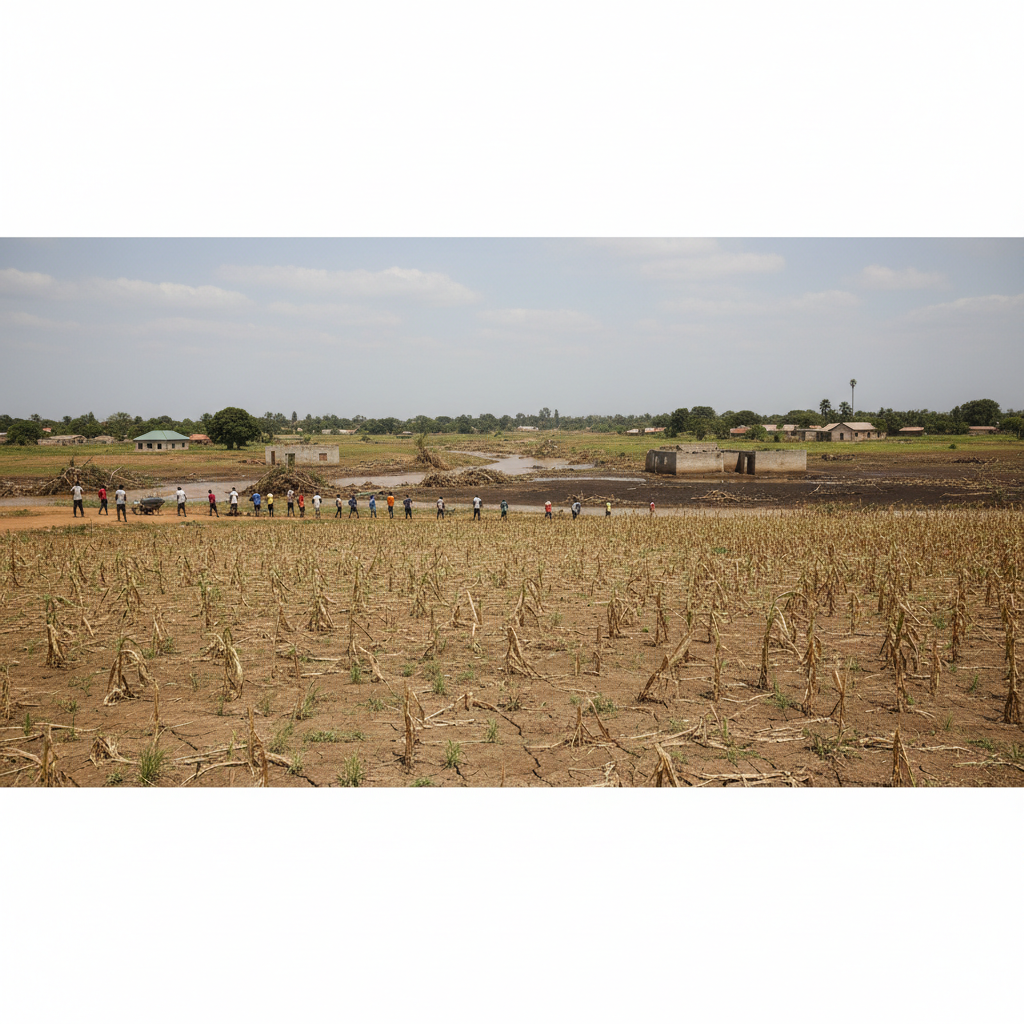
Ghana is currently confronting a dual climate crisis, having recently experienced devastating floods and now bracing for potential drought conditions. The government has already allocated GHS 300 million from its Contingency Fund to address the immediate aftermath of the floods.
These floods, which occurred on June 28–29, 2026, were triggered by a violent rainstorm across Greater Accra and southern Ghana. Areas like Spintex, Adabraka, Achimota, and Agbogbloshie were submerged, rendering major roads impassable and destroying homes, vehicles, and businesses. Cities including Cape Coast and Kumasi also experienced significant flooding, resulting in dozens of fatalities and damage estimated in the hundreds of millions of dollars, a figure expected to rise with indirect costs.
This immediate crisis is now compounded by the confirmed strengthening of an El Niño event, which historically brings drier conditions to West Africa. This shift from extreme wet to extreme dry within the same rainy season highlights Ghana's vulnerability to global climate patterns. The country's economic stability, particularly its agricultural sector, is heavily reliant on predictable rainfall patterns.
The World Meteorological Organization (WMO) confirmed that El Niño conditions have developed and are rapidly strengthening. International climate models project a strong El Niño event for July–September 2026, with sea-surface temperatures expected to exceed 2°C in key monitoring regions. The National Oceanic and Atmospheric Administration's (NOAA) Climate Prediction Center assigns a 63% chance of this event reaching very strong intensity by November 2026–January 2027.
El Niño is the warm phase of the El Niño–Southern Oscillation (ENSO), a natural cycle of sea-surface temperature and atmospheric pressure fluctuations in the tropical Pacific. During an El Niño, the eastern and central Pacific warms significantly, altering global rainfall patterns. For West Africa, including Ghana, this typically means drier conditions and below-normal rainfall.
Ghana's history with strong El Niño events underscores the potential severity of the current forecast. The 1982/83 El Niño caused Ghana's most severe modern drought, leading to widespread bushfires, destruction of cocoa farms, damage to food crops, and localized famine. Similarly, the 1997/98 El Niño disrupted West African rainfall, contributing to below-normal totals across the Guinea Coast. The 2015/16 event also brought significant dry spells.
The implications for Ghana are substantial, particularly for its agriculture-dependent economy. Reduced rainfall and early-ending rains could severely impact crop yields, leading to food insecurity and increased food prices. This would place additional strain on household incomes already affected by flood-related losses. The government and agricultural sector must prepare for potential water scarcity and implement mitigation strategies.
Decision-makers will need to monitor climate forecasts closely and consider interventions such as drought-resistant crop varieties or irrigation support. The dual challenge of flood recovery and drought preparation demands a comprehensive and adaptive national response. The economic impact of these climate events could be significant, affecting GDP growth and national development targets.
The current situation highlights the urgent need for robust climate adaptation and resilience strategies in Ghana. The agricultural sector, which employs a large portion of the population, is particularly vulnerable. Ensuring food security and protecting livelihoods will be paramount in the coming months as the El Niño event unfolds.