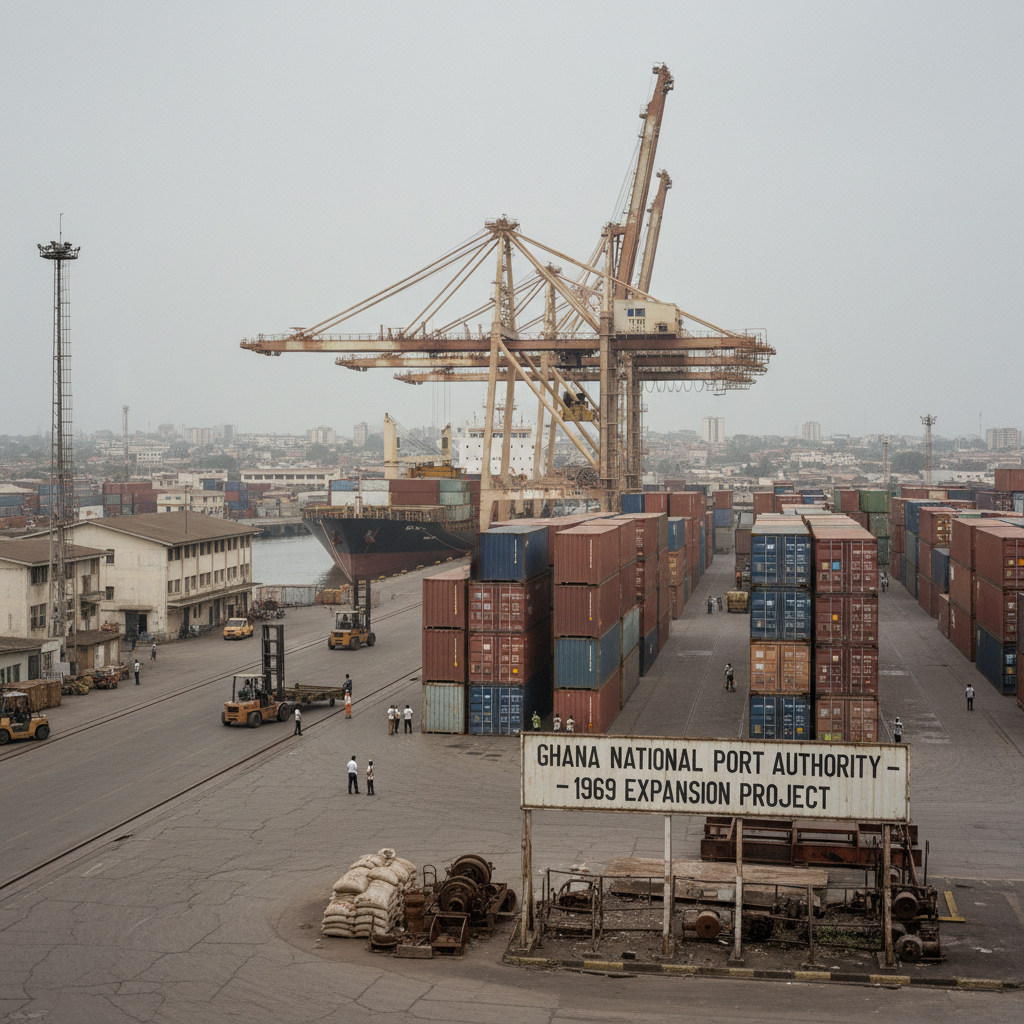
Ghana's current government is pursuing policies that aim to maintain the Ghana cedi to US dollar exchange rate between GHS 10 and GHS 12. This approach mirrors actions taken in 1969 under Prime Minister Kofi Busia, which involved overvaluing the local currency. These historic policies eventually led to significant economic instability.
Professor Busia's administration implemented large expansion programmes without sufficient financial backing. These policies contributed directly to a severe balance of payments crisis. The situation necessitated Ghana seeking its first agreement with the International Monetary Fund (IMF) on December 27, 1971.
This historical parallel points to broader concerns about Ghana's economic management across different eras. Past instances of currency overvaluation and unchecked spending have consistently triggered economic distress. Understanding these historical patterns is crucial for evaluating current monetary policy decisions.
Kwadwo Poku, writing for Joy News, highlights the striking similarities. He notes that the Busia administration's policies ultimately triggered a balance of payments crisis. The subsequent IMF agreement mandated a currency devaluation, which proved highly unpopular and led to widespread unrest. This discontent culminated in the overthrow of Busia's government by Lt. Col. I.K. Acheampong.
The current government possesses substantial foreign exchange reserves, partly due to the Domestic Gold Purchase Programme. These reserves may mitigate immediate foreign exchange shortages, unlike the situation in 1971. However, the fundamental economic challenges that lead to such policy choices persist. Observers watch to see if these efforts lead to genuine stability or repeat past mistakes.
The current policy of maintaining a narrow exchange rate band for the cedi is not based on a clear market mechanism. Instead, it appears designed to support a political narrative of stability. This selective intervention raises questions about the long-term sustainability of the exchange rate. Unnatural exchange rate controls often lead to parallel markets and economic distortion.
The Bank of Ghana's role in setting this exchange rate without a transparent framework further complicates the situation. A lack of clear market mechanisms can undermine investor confidence. Independent economic analysis often flags such interventions as unsustainable in the long run.
Ghana's economic history is rife with examples of politically motivated currency management. These actions frequently precede periods of instability and necessary, often painful, adjustments. The current path therefore requires close monitoring from an economic perspective.
The implications of these policies extend to market confidence and Ghana's international financial standing. If the controlled exchange rate becomes unsustainable, a sudden, sharp devaluation could occur. Such an event would impact businesses, consumers, and potentially trigger social unrest. Decision-makers must carefully balance political goals with economic realities to avoid repeating historical errors.