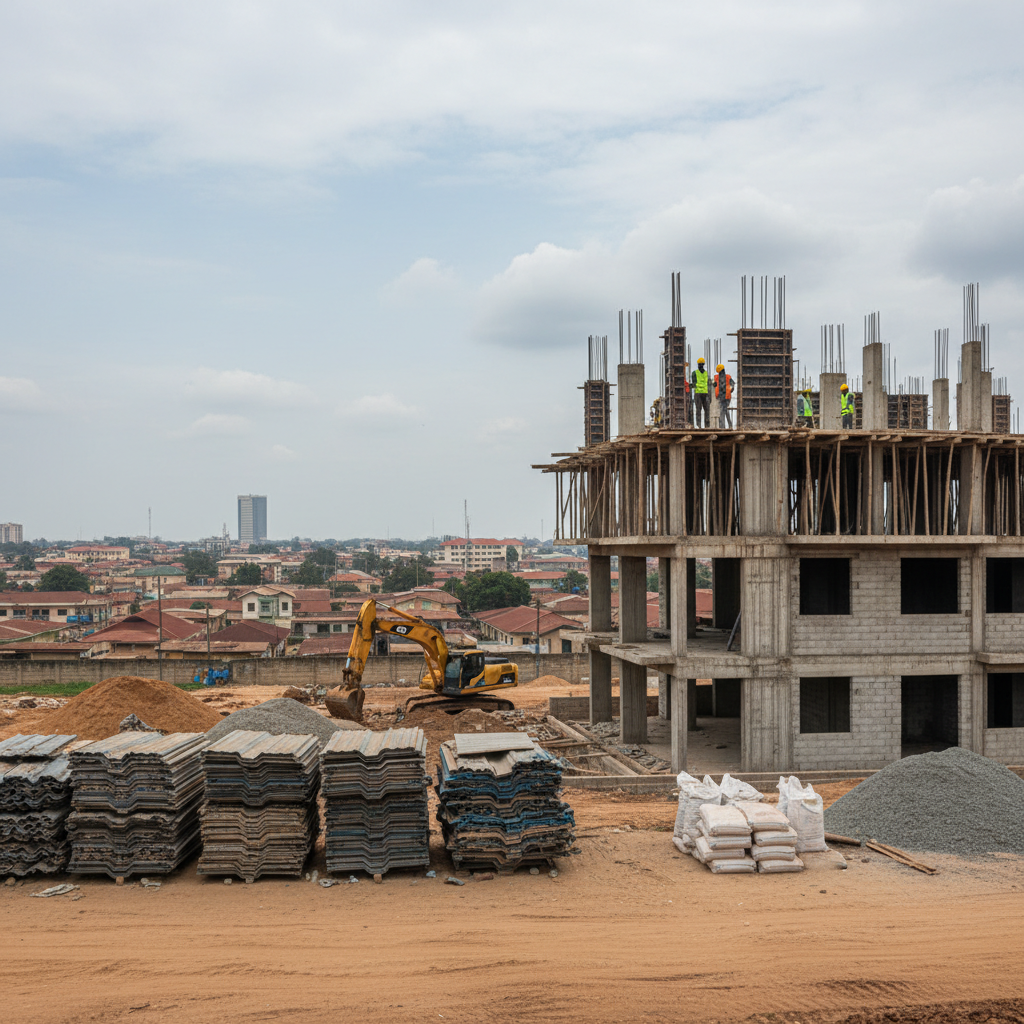
Ghana's Prime Building Cost Index (PBCI) inflation rate rose to 2.7 percent in May 2026 from 2.2 percent in April. This increase signals a modest acceleration in building cost inflation, ending a period of deceleration.
The uplift in overall construction costs stemmed mainly from rising prices for equipment, specialised materials, and selected construction inputs. Simultaneously, major bulk materials like cement and steel experienced continued price declines. These contrasting trends shaped the sector's cost dynamics, affecting contractors and developers.
This increase, while modest, represents a shift after several months of slowing inflation in the construction sector. It remains significantly lower than the 22 percent recorded in May 2025. The construction sector's performance is a key indicator for Ghana's economic health, reflecting investment in infrastructure and housing. Data from the Ghana Statistical Service (GSS) consistently tracks these shifts, providing crucial insights into market conditions.
The Ghana Statistical Service reported the increase in the PBCI inflation rate. They noted that the materials component, carrying a significant weight of 76.5 percent in the index, recorded a year-on-year inflation rate of 3.5 percent in May, up from 2.4 percent in April. This component was the dominant source of inflationary pressure.
Decision-makers and market participants will closely watch these trends for future project planning and investment. The balance between rising equipment costs and falling bulk material prices will determine the pace of future inflation. Persistent swings in labour costs, now in deflationary territory at negative 2 percent, also warrant attention, suggesting potential structural issues within the construction workforce.
Within the materials category, plumbing costs saw the steepest increase, rising 22.8 percent year-on-year. Roofing sheets followed with a 19.9 percent increase, and glazing costs rose by 18.5 percent. Electrical works, metalwork, and reinforcement materials also experienced double-digit inflation. However, cement prices fell 14.5 percent year-on-year in May, while steel prices declined by 8.1 percent. These significant decreases in heavily weighted inputs partially offset the overall rise in materials inflation.
Electrical works emerged as the single largest contributor to the year-on-year construction inflation, accounting for over 63 percent of the total. Glazing, metalwork, plumbing, and tiles also significantly contributed to the rising costs. A notable development was the sharp acceleration in plant inflation, which covers equipment and construction tools. These costs increased by 9.8 percent year-on-year in May, more than double the 4.7 percent recorded in April. Small tools recorded inflation of 12.6 percent, and general equipment costs rose 6.2 percent. On a monthly basis, plant prices increased by 4.7 percent, underscoring growing cost pressures related to machinery.
Conversely, labour costs entered deflationary territory, falling to negative 2 percent in May from positive 1 percent in April. This made labour the principal factor moderating overall building inflation. Skilled labour costs declined 1.7 percent year-on-year, while unskilled labour costs fell 2.6 percent. Labour prices also contracted by 0.6 percent on a monthly basis. The GSS highlighted that labour's negative contribution helped offset some of the upward pressure from materials and plant costs. The agency suggested that persistent fluctuations in labour costs might indicate structural challenges within the construction workforce, including skills availability and broader labour market conditions. The annual average building inflation stood at 7.1 percent in May 2026, considerably lower than levels observed a year ago, suggesting a period of relative cost stability after the sharp inflationary cycle experienced in 2024 and early 2025.