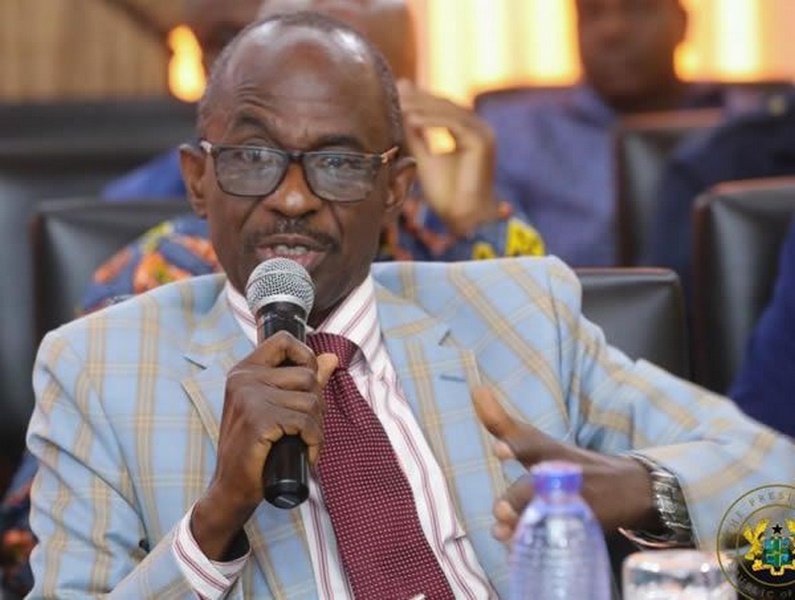
Johnson Asiedu Nketia, the National Chairman of the National Democratic Congress (NDC), called for African countries to become equal global economic partners instead of remaining raw material suppliers. He made these remarks on June 25, 2026, at the third meeting of the Standing Committee of the International Movement for the Freedom of Nations in St. Petersburg.
Mr. Nketia stressed that Africa must leverage the increasing global demand for its natural resources to gain greater economic value. He urged the continent to avoid repeating historical patterns where it exports strategic resources while other nations reap the majority of the benefits. This approach emphasizes economic diversification and local value addition.
This call aligns with Ghana's long-standing economic development goals to industrialize and reduce reliance on commodity exports. Ghana has consistently aimed to process its raw materials, such as cocoa and gold, domestically to create more jobs and income. This strategy is crucial for achieving sustainable economic growth and reducing vulnerability to global price fluctuations for raw materials.
Mr. Nketia stated, “The world is entering a period of renewed competition for resources, influence and strategic advantage.” He questioned whether Africa would participate as an equal partner or merely as a source of inputs. He emphasized that Africa’s future depends on its policy choices, institutional quality, and economic sophistication.
The implications are significant for Ghana and the broader African continent, suggesting a shift towards policies that foster industrial capacity and technological advancement. Decision-makers will likely focus on strengthening educational systems and promoting regional integration. This strategy aims to build Africa's negotiating power and achieve genuine economic sovereignty in an evolving global landscape.
The global economy is transforming due to advances in artificial intelligence, biotechnology, and clean energy transition. All these sectors require resources abundant in Africa. Mr. Nketia argued that Africa's fight against neocolonialism requires competent governance, industrial capacity, and technological capability. It cannot be won through rhetoric alone, but through strategic economic development.
Ghana’s commitment to international cooperation based on mutual respect and equality was also reaffirmed. The objective is to foster an international order where partnership is genuine and sovereignty is respected, regardless of a nation’s size. A fairer international system is seen as essential for global stability and equitable development.
This push for value addition and economic integration is critical for African markets. Investors and international partners will observe how African nations implement policies to industrialize and add value to their resources. Success in these areas could unlock significant new capital and foster long-term economic prosperity across the continent.