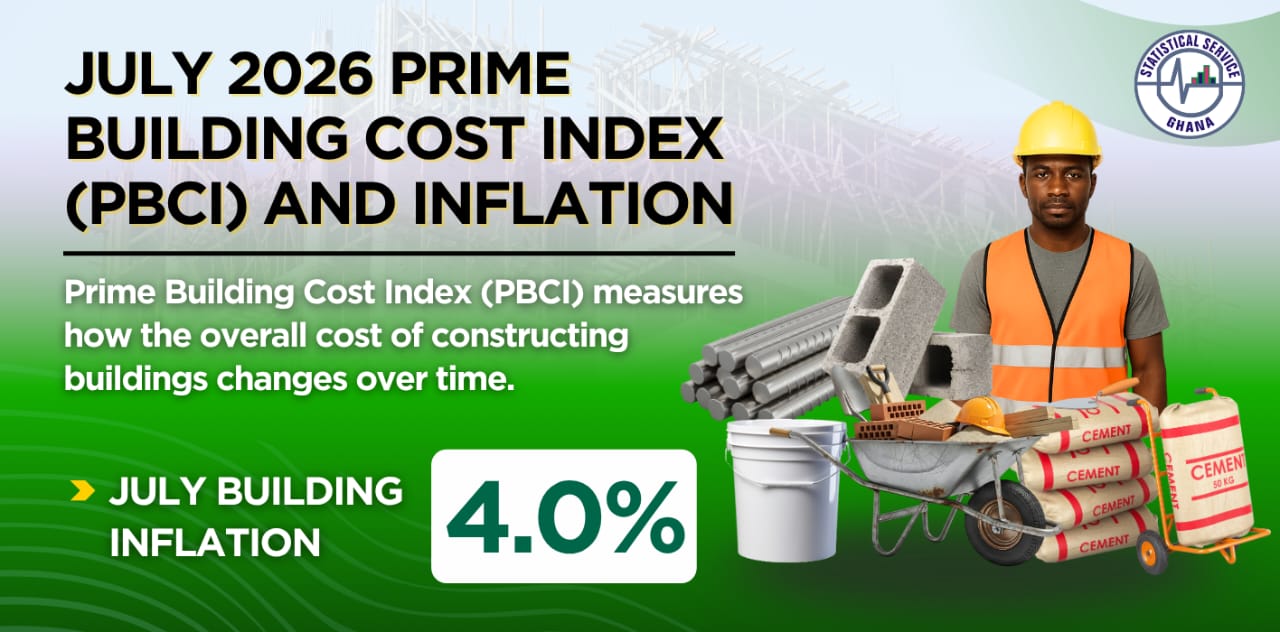
Ghana's building-cost inflation rose to 4.00% in July 2026. This marks an increase from 3.10% recorded in June, signalling renewed cost pressures in the construction sector. The Ghana Statistical Service reported that overall construction costs were 4.00% higher than a year earlier. This increase was primarily driven by higher prices for plant, tools, and selected installation materials.
The rise in specific component costs offset falling prices for labour, cement, and steel. Plant inflation, for instance, accelerated to 18.00% year-on-year in July from 16.00% in June. Small tools recorded an inflation rate of 22.60%, while plumbing saw the highest year-on-year inflation at 25.30%. These increases highlight a shift in cost drivers within the construction industry.
This development fits into Ghana's broader economic narrative of managing inflation across various sectors. While the headline building inflation remains below the 14.20% recorded in July 2025, underlying trends suggest new challenges. The overall Prime Building Cost Index increased to 138.3 in July from 133.0 in July 2025. This indicates a persistent upward trajectory in construction expenses, even if the pace has moderated from previous peaks. The annual average inflation stood at 4.90%.
The Ghana Statistical Service cautions against assuming broad-based cost relief. Its July release explicitly advises households to update building budgets using current prices. It also recommends comparing supplier quotations rather than assuming all materials have become more expensive. This guidance underscores the uneven nature of price movements within the sector.
The implications for developers, contractors, and households are significant. Projects in early structural phases might benefit from lower cement and steel prices, which were down 9.80% and 8.90% respectively. However, projects at the finishing and installation stages face much stronger pressure from plumbing, electrical works, and glazing. Electrical works and metalwork both recorded 18.70% inflation, while roofing sheets rose 21.40%. This creates a more complex budgeting environment than the headline 4.00% figure suggests.
For businesses, managing exposure to plant, tools, and high-inflation materials becomes crucial. The cost of machinery and equipment can have an outsized effect on project budgets. This is true even when their formal weight in the index is relatively small. Construction firms rely on mixers, lifting equipment, and specialised machinery. Their acquisition and replacement costs can quickly affect project margins. This shift in cost pressure means that while some inputs are cheaper, the tools needed to use them are becoming more expensive.
Materials remain the dominant component of the index, accounting for 76.50% of the basket. Material inflation increased to 5.10% in July from 3.90% in June. It contributed 97.30% of the upward pressure on the overall index. This dominance means movements in materials will continue to determine the broad direction of construction inflation. However, the July data show a deeply uneven picture across material sub-groups. Fourteen of the 23 sub-groups recorded inflation above the national building-cost average of 4.00%. This includes glazing at 20.40% and reinforcement at 20.20%.
The decline in cement and steel prices offers an opportunity for developers to reprice certain projects. This is especially true where procurement contracts allow companies to take advantage of lower current market prices. However, the rising costs of other essential components like toilet accessories, up 17.20%, and ironmongery, up 16.80%, will demand careful financial planning. Decision-makers in the construction sector will need to closely monitor these disaggregated inflation figures. This will ensure accurate project costing and maintain profitability in a dynamic market.