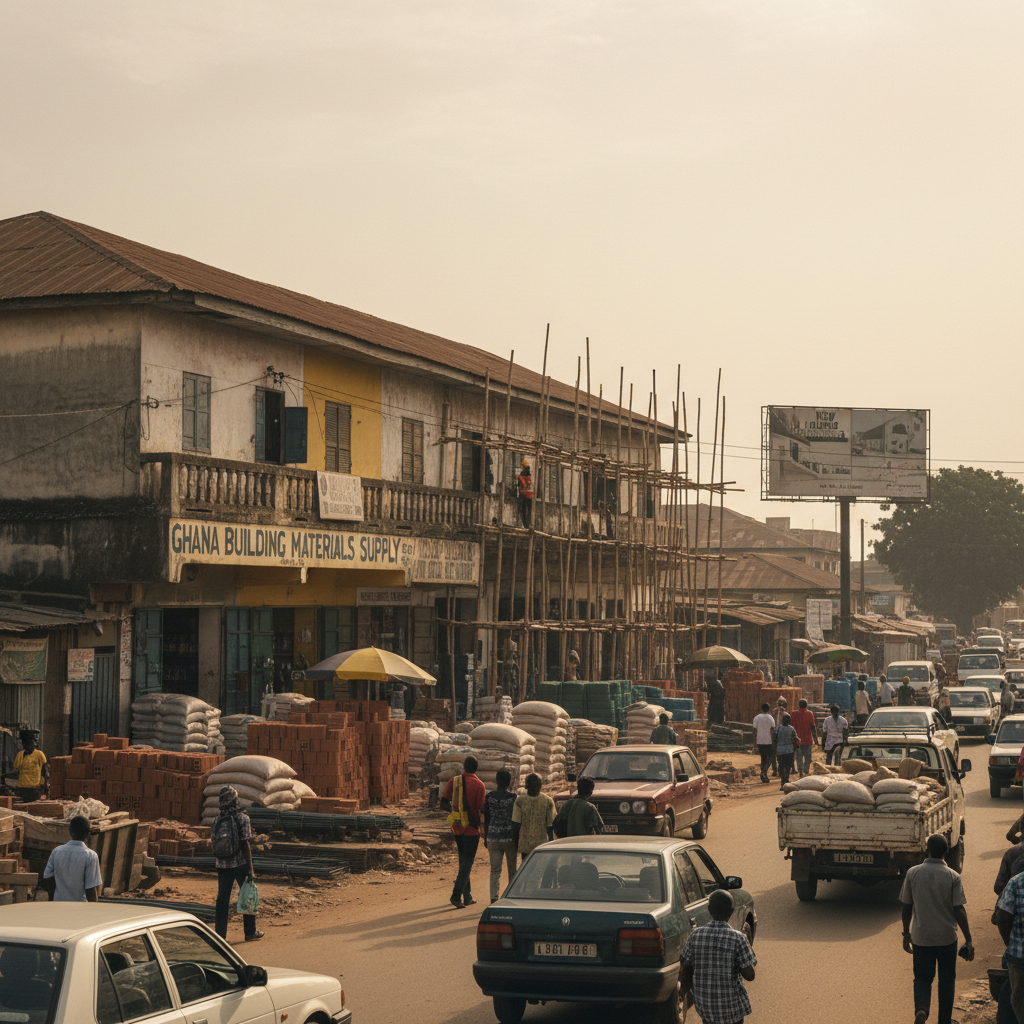
Ghana's building cost inflation reached 2.7% in May 2026, marking a slight increase from the 2.2% recorded in April 2026. This figure reflects the year-on-year change in the Prime Building Cost Index (PBCI).
The Ghana Statistical Service (GSS) reported this rise, which signals a modest uptick in construction expenses. Material costs were the primary driver, recording a 3.5% year-on-year inflation rate. This component accounts for over three-quarters of the PBCI basket.
This slight increase occurs within a broader context of significantly eased inflation pressures compared to the previous year. In May 2025, building cost inflation stood at a much higher 22%. The current, lower inflation rate suggests a more stable economic environment for the construction sector, aligning with Ghana's efforts to manage overall inflation.
Overall building input prices rose by 1.4% between April and May 2026. Material price increases were partly offset by a decline in labour costs, which entered negative territory at -2.0% year-on-year. Plant and equipment, however, saw accelerated growth, with inflation reaching 9.8% year-on-year.
The GSS noted that plumbing materials recorded the highest inflation rate at 22.8%. Roofing sheets followed at 19.9%, and glazing materials at 18.5%. Conversely, cement prices declined by 14.5%, and steel prices dropped by 8.1%.
The considerable easing of building cost inflation over the past year has created opportunities. This environment is favourable for households, businesses, and government infrastructure projects. The GSS advises businesses to secure current prices and encourages the government to expedite key infrastructure initiatives while inflation remains relatively low. This sustained moderation in building costs could stimulate investment and accelerate development projects across the country, impacting overall economic growth.
A more predictable cost environment allows for better budgeting and financial planning for construction projects. This stability can attract both local and foreign investment into Ghana's real estate and infrastructure sectors. Decision-makers will likely monitor these figures closely to ensure that construction remains accessible and affordable for a wider range of projects. The government's push for timely infrastructure completion will depend heavily on these cost trends remaining subdued.
The decline in labour costs might indicate a shift in the skilled labour market or a general deflationary pressure on wages in the construction sector. However, the surge in plant and equipment costs suggests ongoing capital expenditure and potential import price pressures for machinery. These dynamics will continue influencing project viability and overall development costs. Future economic reports will reveal whether these trends persist or if new factors emerge to alter the current trajectory of building costs.