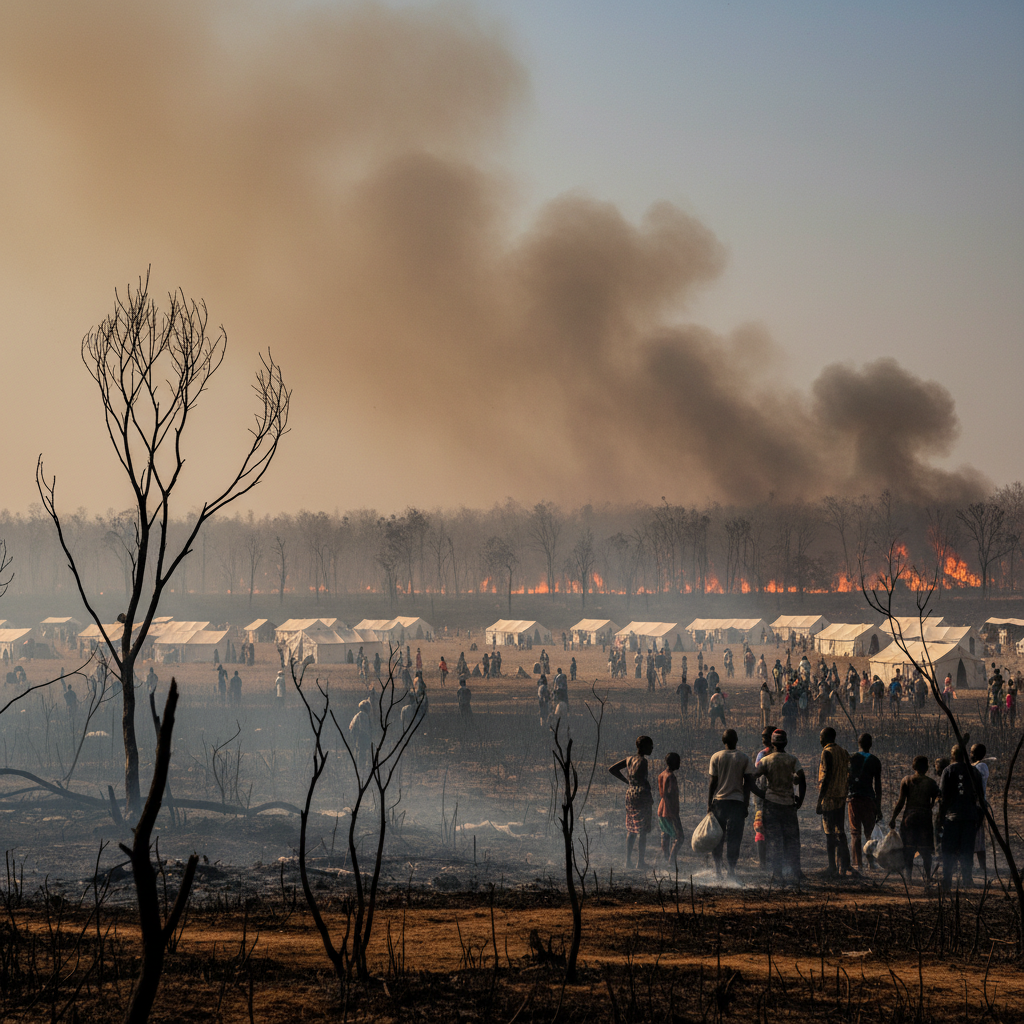
Massive wildfires in France's southwestern Gironde region have destroyed 50,000 hectares of land, forcing tens of thousands of residents and tourists to evacuate. Fire crews are battling the blazes amid searing temperatures reaching 40C, with the fires proving difficult to contain.
The rapid spread of the fires is attributed to the extremely dry soil and abundant pinecones and dried leaves, creating ideal conditions for ignition and propagation. Firefighters describe the situation as a relentless game of "cat and mouse," with new flare-ups constantly emerging as others are brought under control. The scale of destruction has prompted a significant response from both professional firefighters and a large contingent of volunteers.
While this event is geographically distant, it underscores the increasing global impact of climate change, which contributes to more frequent and intense heatwaves and droughts. Such conditions can have indirect economic effects, including disruptions to global supply chains, increased insurance costs, and potential impacts on tourism, which are relevant to Ghana's interconnected economy. Ghana, like many nations, faces its own environmental challenges, including deforestation and the impact of changing weather patterns on agriculture.
Hugo, a 26-year-old volunteer, expressed the profound loss felt by locals, stating, "Fifty thousand hectares has already been destroyed, what will we tell our children?" His sentiment reflects the deep emotional and environmental toll these fires are taking on the affected communities. Maëlys, a 23-year-old nurse, also highlighted the community's dedication, working at the hospital in the morning and volunteering in the forest in the afternoon.
The immediate implication is the continued strain on emergency services and the displacement of thousands of people. Decision-makers will need to assess long-term strategies for wildfire prevention and management, especially as climate change projections indicate more frequent extreme weather events. The international community will also watch for potential requests for aid or specialized equipment to combat such large-scale environmental disasters.
Fire crews from across France, including Brittany, Marseille, and Lyon, have converged on the Gironde region to assist. They are not only dousing active flames but also watering soil and vegetation to prevent future fires, a process known as "noyer" or "drowning." Despite these efforts, officials warn that the wildfires, though under relative control in some areas, are far from extinguished. The ongoing battle highlights the immense challenge of protecting communities and natural resources against such powerful environmental forces.