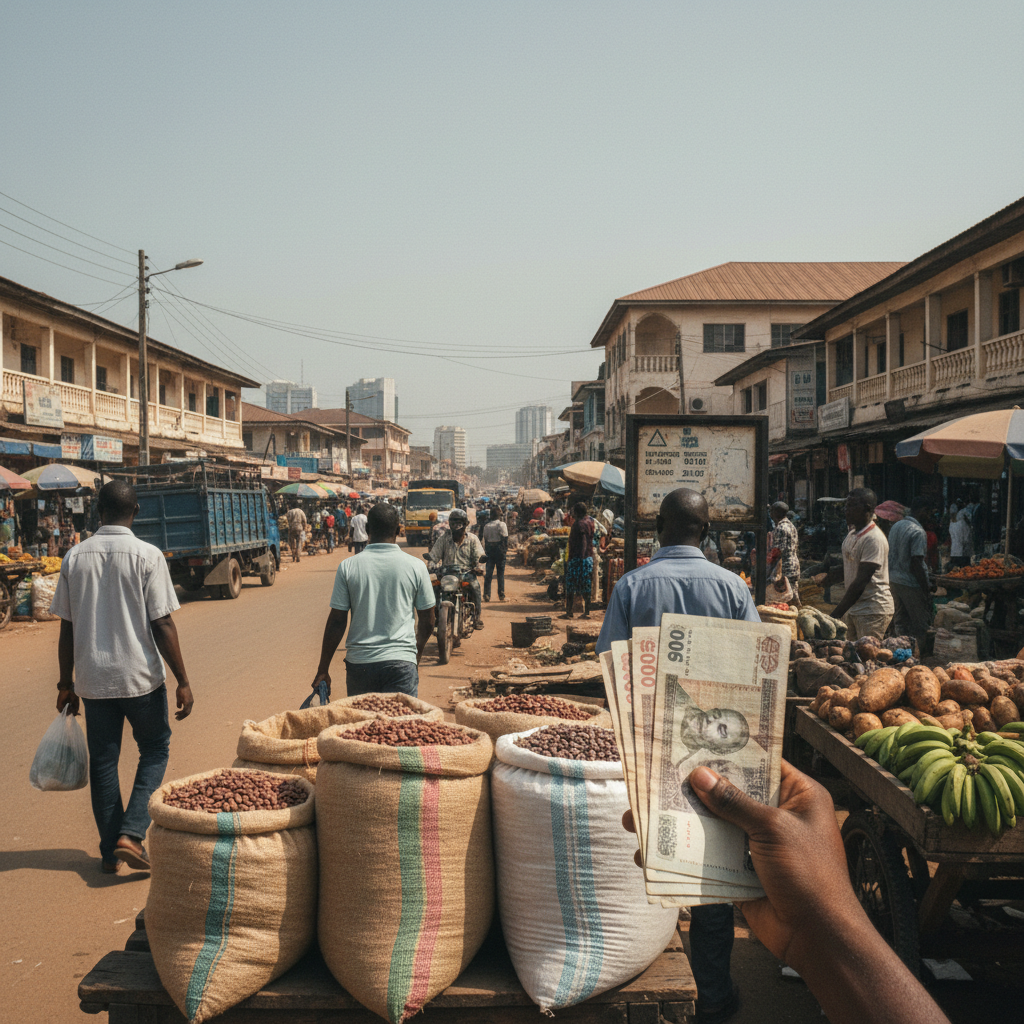
Ghana's cedi depreciated slightly against the US dollar, British pound, and euro during the week ending July 9, 2026. Bank of Ghana data showed the local currency weakened over the four-day trading period.
The depreciation was most noticeable between July 7 and July 8. The US dollar buying rate rose from GHS 11.3838 on July 6 to GHS 11.4343 by July 9. This means that more cedis were needed to purchase a single dollar, indicating a weakening of the local currency.
This performance fits into a broader pattern of recent mixed results for the cedi. The Bank of Ghana has previously intervened in the foreign exchange market to manage the cedi's stability. Such movements affect import costs, inflation, and the overall economic landscape for consumers and businesses in Ghana.
Market data specifically revealed that the cedi lost approximately 0.44 per cent against the dollar. It also depreciated by 0.50 per cent against the British pound. The euro saw a marginal gain against the cedi, with the currency losing 0.09 per cent.
Despite this decline, the depreciation remained modest, with exchange rate movements staying below one per cent against all three major currencies. Previous reports indicated the Bank of Ghana injected $2.01 billion into the forex market in 2026 to support the cedi. This suggests ongoing efforts to maintain stability.
The British pound proved to be the strongest-performing major currency during this period. Its buying rate increased from GHS 15.2042 at the start of the week to GHS 15.2796 on July 9. The euro, while experiencing mixed movements, ended the week slightly higher, moving from GHS 13.0218 to GHS 13.0339.
Policymakers and market participants will closely watch these trends. Future interventions by the Bank of Ghana might be necessary to support the cedi. The stability of the cedi is crucial for Ghana's import-dependent economy and for managing inflationary pressures.
Businesses engaged in international trade will monitor these exchange rate fluctuations. Consumers also face potential impacts, as a weaker cedi can lead to higher prices for imported goods. The Bank of Ghana's monetary policy decisions will be key in shaping the cedi's trajectory in the coming weeks.