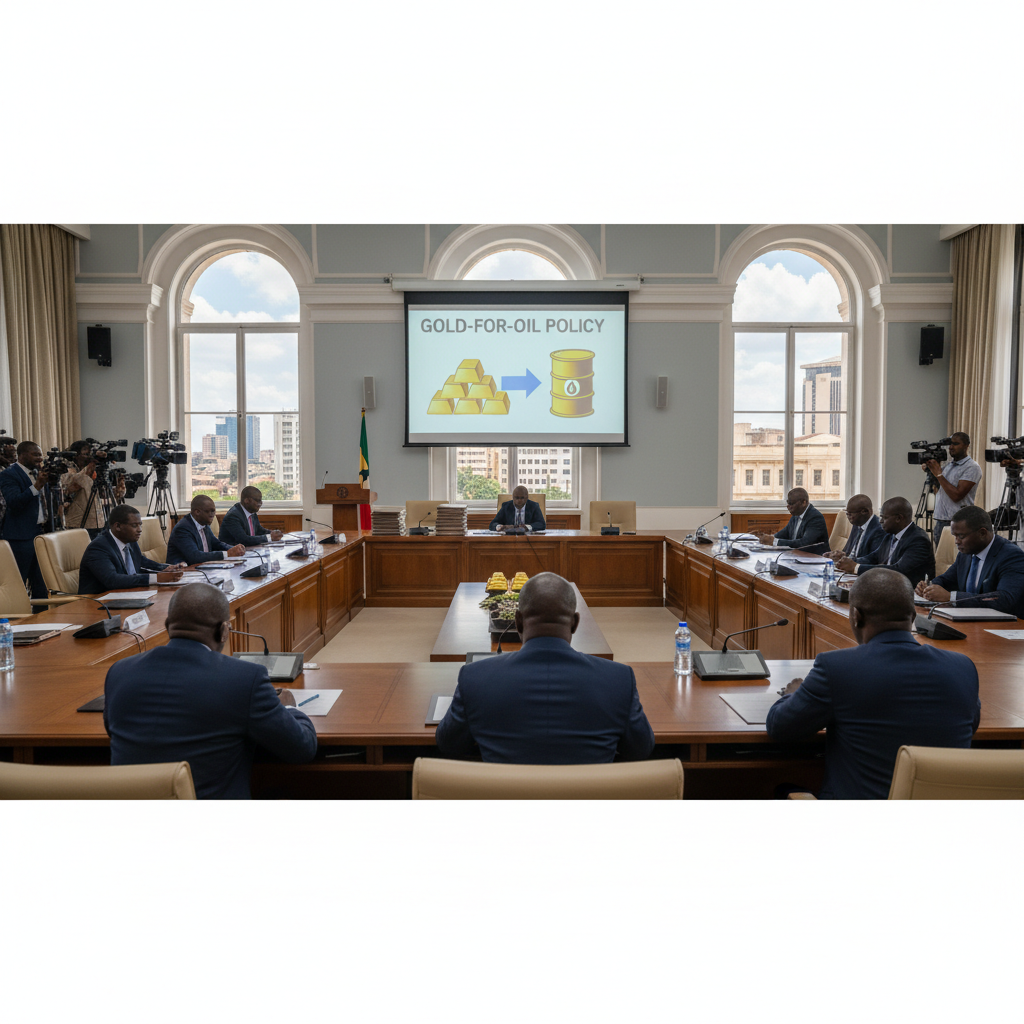
Ghana implemented its Gold-for-Oil and Domestic Gold Purchase programmes to combat a severe balance of payments crisis and foreign exchange shortages. Dr. Mahamudu Bawumia, then Vice President, initiated these policies after external financing dried up and strict International Monetary Fund (IMF) conditions limited foreign exchange market interventions.
These programmes emerged from two critical economic challenges Ghana faced. The first was a sudden halt in external financing, triggered by the global economic impact of the COVID-19 pandemic and the Russia-Ukraine war. This external financing freeze led directly to a balance of payments crisis in Ghana, severely affecting the nation's ability to pay for essential imports. The second challenge involved stringent conditions imposed by Ghana's IMF programme, which restricted the Bank of Ghana to using only $80 million monthly for foreign exchange market interventions. This amount was significantly less than the actual demand for foreign currency, causing the Ghana cedi to depreciate daily.
Ghana's economy has historically relied on external loans and commodity exports for foreign exchange. The sudden withdrawal of external funding exposed vulnerabilities in the nation's financial architecture. The IMF programme, while aimed at restoring economic stability, placed tight controls on central bank operations, exacerbating the foreign exchange crunch. This period saw significant pressure on the cedi, impacting import costs and inflation. The Gold-for-Oil policy sought to stabilise fuel prices and supply by using gold directly for imports, bypassing the need for scarce dollars. The Domestic Gold Purchase Programme aimed to build the Bank of Ghana's gold reserves using local currency, reducing reliance on dollar-denominated assets.
Speaking to the Ghana National Association of Small-Scale Miners in Accra, Dr. Bawumia explained his rationale. He stated that the external financing 'tap was shut for Ghana,' leading to the balance of payments crisis. He also highlighted the IMF condition limiting the Bank of Ghana to $80 million monthly for foreign exchange intervention, which was insufficient to meet demand. This imbalance, where demand exceeded supply, inevitably led to the cedi's daily depreciation. Dr. Bawumia described these programmes as 'out-of-the-box thinking,' noting that they were not conventional economic textbook solutions.
The implications of these programmes are far-reaching for Ghana's economic sovereignty and stability. By using gold to pay for oil, Ghana reduced its immediate demand for dollars, easing pressure on the cedi and helping to stabilise fuel prices. The Domestic Gold Purchase Programme strengthens the Bank of Ghana's reserves with a tangible asset, providing a hedge against currency fluctuations and global economic shocks. This strategic shift could inspire other resource-rich nations facing similar foreign exchange challenges. Future economic policy will likely continue to explore innovative ways to leverage Ghana's natural resources to ensure financial resilience and reduce external dependency, with markets closely watching the long-term impact on inflation and currency stability.
The Bank of Ghana initially took almost a year to conduct due diligence on the unconventional gold-backed proposals. Officials were concerned about potential repercussions for implementing such an unorthodox approach. However, they eventually agreed, making Ghana the first country in Africa, and possibly the world, to implement such a comprehensive programme. This pioneering effort has since attracted interest from other nations seeking to learn from Ghana's experience in leveraging its gold resources for economic stability. The success of these programmes could redefine how resource-rich developing economies manage their foreign exchange reserves and import needs.