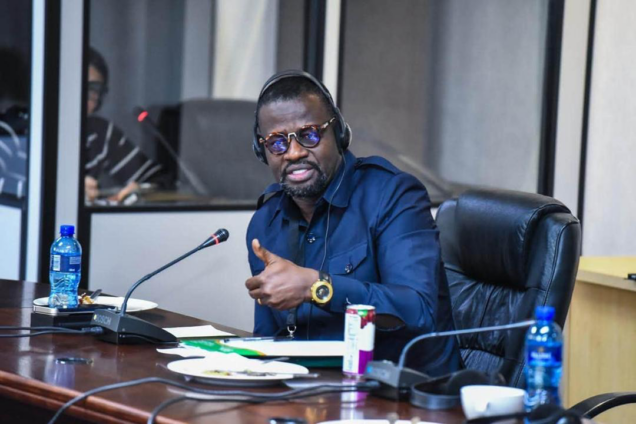
Frank Annoh-Dompreh, Ghana's Minority Chief Whip and Nsawam-Adoagyiri MP, has urged African leaders to convert the continent’s vast natural resources into real economic development. He stated that Africa must not allow other nations to reap the greatest benefits from its mineral wealth. This call came during a high-level working lunch between the Pan-African Parliament (PAP) and the South African Institute of International Affairs (SAIIA).
Mr. Annoh-Dompreh emphasized that Africa's enormous reserves of critical minerals, expanding trade opportunities, and environmental assets must be transformed into industrial growth, jobs, and prosperity. He pointed out that Africa possesses some of the world’s largest deposits of these critical minerals, which should provide considerable leverage in the global energy transition. The meeting also discussed South Africa’s G20 Presidency, Africa’s role within the G20, and the implications of the incoming United States Presidency for the continent, particularly concerning debt, trade, climate finance, and BRICS.
This push for value addition aligns with Ghana's broader economic strategy, which seeks to move beyond raw material exports. The Bank of Ghana has previously highlighted the importance of processing more raw materials domestically to strengthen the economy. Ghana's budget transparency score falling to 22% in 2025 also underscores the need for better resource management and accountability. The country's efforts to boost local mining ownership, despite not being anti-investment, reflect a similar desire to retain more economic benefits within the nation.
Responding to these concerns, Jordan McLean, a representative from Southern Transitions, highlighted the African Green Minerals Strategy and the work of the African Minerals Development Centre. She noted that Africa holds about 30% of the world’s reserves of key minerals. This position should be used to negotiate stronger partnerships, promote value addition, and ensure participation across the entire production chain. External partners are seeking access to these resources not only for the energy transition but also for broader strategic reasons.
Mr. Annoh-Dompreh also challenged inequities in global climate finance. He questioned why promised financial support for developing countries has repeatedly failed to materialize. He observed that developed countries industrialized through carbon-intensive growth, while African countries are now expected to pursue cleaner development under stricter environmental rules. This creates an unfair burden on African nations.
The Ghanaian legislator further questioned the credibility of some carbon credit arrangements operating across Africa. He called for common standards to ensure transparency and protect local communities. Without clear and credible mechanisms, these arrangements risk undermining Africa's environmental and economic goals. He stressed the importance of ensuring that such schemes genuinely benefit the continent and its people.
Turning to trade, Mr. Annoh-Dompreh stated that the African Continental Free Trade Area (AfCFTA) remains one of the world’s most ambitious trade agreements. However, its benefits are yet to be fully felt by ordinary Africans. He urged policymakers and researchers to communicate continental policies in simpler language. This would help citizens better understand and benefit from these frameworks, ensuring that the average African recognizes AfCFTA as a continental instrument.
The call for greater coordination and value addition is critical for Africa to achieve sustainable economic growth. By leveraging its mineral wealth, addressing climate finance disparities, and effectively implementing trade agreements, the continent can create more jobs and improve living standards for its citizens. Decision-makers must now develop practical policies to translate these aspirations into tangible outcomes.