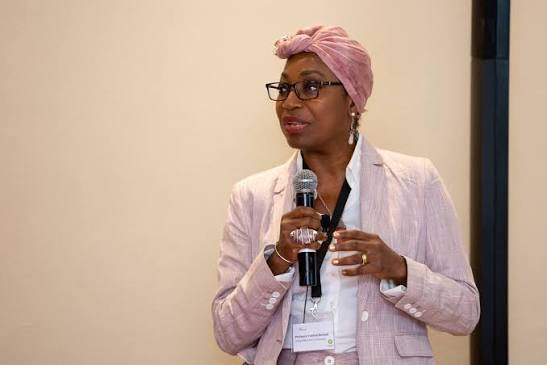
Professor Fatima Denton, Director of the United Nations University Institute for Natural Resources in Africa (UNU-INRA), states Africa must use its mineral wealth to drive industrialisation. This approach aims to move beyond traditional extractive economic models. She argues that adding value to critical minerals can create jobs, strengthen economic independence, and help African countries benefit more from the global shift to cleaner energy.
Professor Denton made these remarks ahead of the eighth session of the Kwapong Lectures series. She highlighted that the continent is at a crucial point in its development. Global demand for minerals essential for clean energy technologies continues to increase. This rising demand presents both significant opportunities and potential risks for African nations.
The continent's rich mineral deposits, including lithium, cobalt, and bauxite, are vital for renewable energy technologies. However, Africa has historically exported these raw materials with limited benefits to local economies. This pattern has often left African countries vulnerable to global commodity price fluctuations. For instance, changes in global lithium prices can severely affect government revenues, employment, and investment in countries like Ghana.
Professor Denton stressed the need for Africa to challenge these long-standing patterns. She urged leaders to think beyond past economic constraints. “We have to think beyond the things that have held us captive in the global economy,” she stated. She believes Africa must use its advantages to create progress and a self-determined green transition. This means securing greater value from natural resources rather than just extracting them.
The transition to greener economies, while promising, also brings complex trade-offs for resource-rich countries. Professor Denton described the situation as one of several contradictions African countries must navigate. They seek to benefit from growing global demand for critical minerals. Yet, they must also manage the associated challenges effectively.
Another significant challenge involves the environmental impacts of these so-called “green” resources. Professor Denton pointed out that while minerals like lithium, cobalt, and bauxite are central to renewable energy, their extraction can cause substantial environmental damage. This includes land degradation, loss of biodiversity, and negative effects on agricultural productivity. She questioned how truly “green” these resources are when their extraction harms soils, ecosystems, and farming potential. Addressing these environmental concerns is crucial for a sustainable green transition in Africa. This requires careful planning and robust regulatory frameworks to protect local communities and natural habitats.
The call for industrialisation through value addition aligns with broader economic development goals across Africa. Many African governments aim to diversify their economies and reduce reliance on raw material exports. This strategy could lead to more stable economic growth and increased domestic employment. It also supports the development of local manufacturing capabilities. Such a shift would allow African nations to capture a larger share of the value chain in the global clean energy market. This approach is vital for achieving true economic independence and sustainable development.