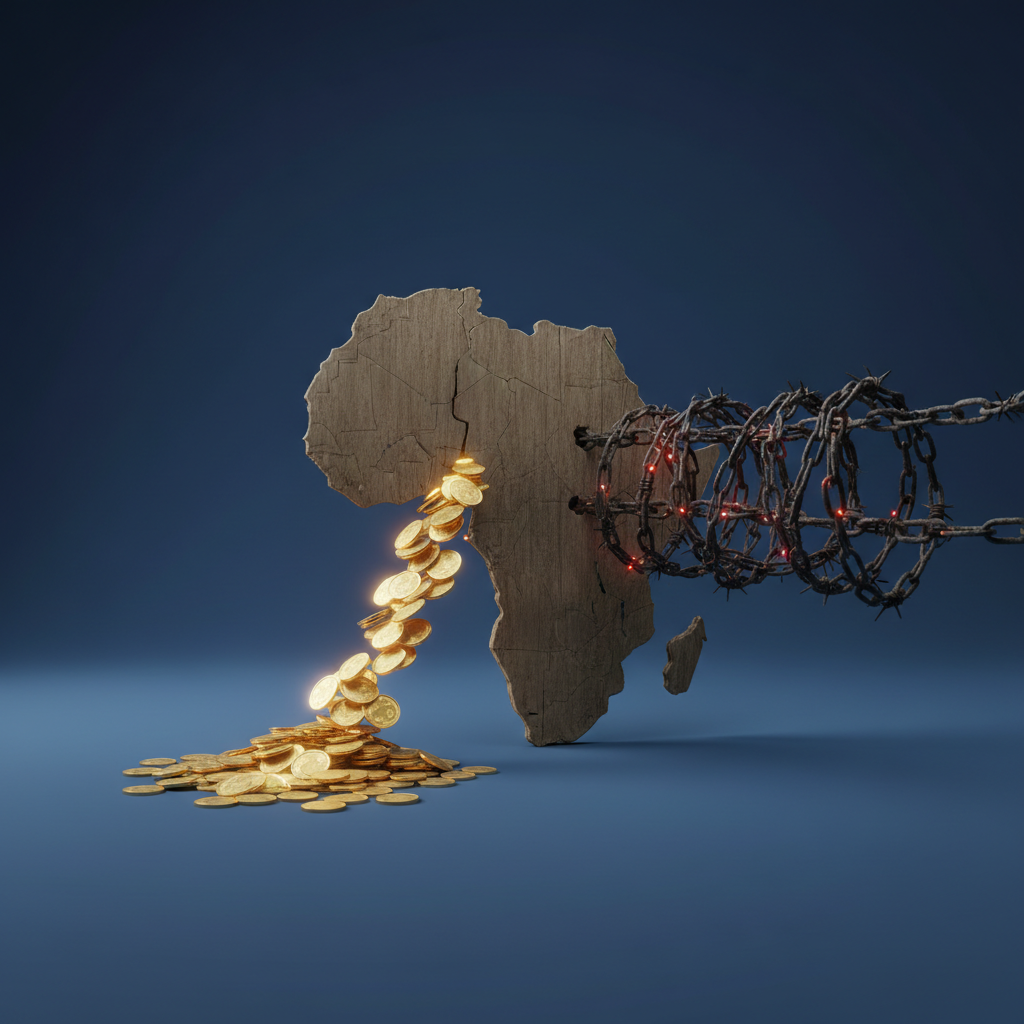
Ghanaian business leader Sir Sam Jonah has challenged African institutional investors to deploy more capital within the continent. He warned that Africa is trapped in a cycle of exporting its savings while borrowing expensive capital from abroad. This situation significantly widens the continent’s infrastructure financing gap. It also leaves promising African businesses struggling to access crucial long-term funding.
Sir Sam Jonah delivered this keynote address at the Global Business Forum – Ghana Edition on Friday, August 28. He described this economic pattern as Africa’s “great paradox.” He stated, “Africa exports its savings and imports expensive capital.” He noted that pension funds and institutional pools often sit in short-term instruments. Meanwhile, the continent’s infrastructure gap grows, and entrepreneurs seek funding. He added that Africa then borrows its own money back from abroad at punishing rates.
This economic dynamic has long been a point of discussion among African policymakers and economists. Ghana, like many African nations, faces significant infrastructure deficits. These include roads, energy, and digital connectivity. The country also grapples with high borrowing costs on international markets. This paradox exacerbates these challenges. It diverts potential domestic investment from critical sectors. This trend contributes to a reliance on external financing, often with stringent conditions.
Sir Sam Jonah emphasized that no continent in history has industrialized solely on rented capital. He acknowledged the importance of foreign investment and its contribution to Africa’s development. He noted his own career involved raising foreign investment and partnering with international investors. However, he stressed that African countries and investors must show greater confidence in their own economies. He stated, “Capital follows conviction; it does not substitute for it.”
He used an analogy to illustrate his point. Investors are more likely to commit funds when they see African investors taking risks in their own markets. He said, “Investors, like dinner guests, come far more readily to a table where the host is already seated and eating.” This highlights the need for local commitment to attract further external capital. This approach fosters a more sustainable and self-reliant economic growth model.
Sir Sam Jonah also called for the creation of more African companies capable of global competition. These companies should create jobs and achieve long-term growth. He cited his experience with Ashanti Goldfields as a prime example. Ashanti Goldfields became the first operating African company listed on the New York Stock Exchange. This demonstrated that African businesses can compete globally when properly built and managed. He asserted, “The lesson was not that we needed New York's validation. The lesson was that an African enterprise, properly built and boldly led, could stand anywhere on earth and look anyone in the eye.”
He believes Africa needs hundreds, even thousands, more such firms across strategic sectors. These include agribusiness, finance, energy, technology, and manufacturing. He argued that building these businesses is not solely the government’s responsibility. Instead, it is the collective duty of the private sector and investors. He urged African investors to embrace patient capital. They should take positions in promising businesses before all risks are eliminated. He suggested that those who correctly assess and price risks early could benefit significantly from Africa’s long-term growth opportunities. He concluded that the best opportunities will belong to those who priced the risk correctly while others were still afraid.