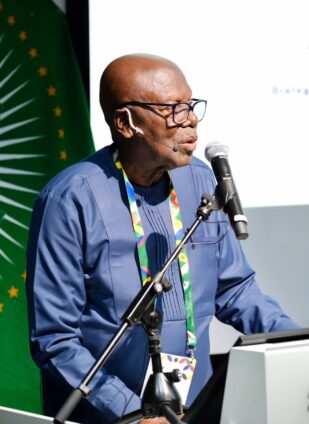
Africa's economic future depends significantly on the free movement of people, skills, and ideas across its borders. Dr. Ishmael Yamson, a member of Ghana's Presidential Advisory Group on the Economy, articulated this crucial point at the Kgalema Motlanthe Winter Seminar 2026 in Johannesburg.
Dr. Yamson emphasized that economic transformation requires more than just the movement of goods and capital. He highlighted that well-managed migration has historically been a primary driver of economic growth and regional integration across the continent. This perspective challenges conventional views that often focus solely on trade policies.
This insight fits into Ghana's broader economic narrative, which increasingly prioritizes regional integration and the success of the African Continental Free Trade Area (AfCFTA). Ghana, as the host nation for the AfCFTA Secretariat, has a vested interest in policies that foster continental economic cohesion. The country's economic strategy often references the need for expanded markets and skilled labor to boost its industrialization efforts.
Dr. Yamson stated, "People move where opportunity exists. Our task is therefore not to stop people from moving; our task is to ensure that Africa creates sufficient opportunities for its people, wherever they may choose to live and work." He cited historical examples, such as the trade links between Ghanaian traders and Yoruba merchants, to illustrate how mobility fostered economic development and cultural exchange.
The implications of Dr. Yamson's remarks are significant for policymakers across Africa. They suggest that governments must focus on creating environments that attract and retain talent, rather than solely restricting movement. This includes investing in education, technical and vocational training, and fostering entrepreneurial ecosystems to harness the continent's youthful demographic advantage.
Dr. Yamson further stressed that the success of AfCFTA requires more than just removing trade barriers. He called for prioritizing skills mobility, robust infrastructure development, enhanced digital connectivity, and deeper financial integration. These elements are critical for building a truly connected and competitive continental economy.
He observed that intra-African trade remains significantly lower than in comparable regions globally. AfCFTA presents a historic opportunity to rectify this imbalance. No African country, regardless of its size, can achieve its full economic potential in isolation, according to Dr. Yamson. Fragmented markets and large infrastructure gaps necessitate a more integrated approach.
Addressing Africa's youthful population, Dr. Yamson noted that 70 percent of the continent's population is under 30 years old. This demographic dividend can only translate into prosperity if young people are equipped with the right skills and opportunities. He warned that without investments in education, entrepreneurship, and innovation, this demographic advantage could become a significant challenge.
Dr. Yamson also cautioned against blaming migrants for economic challenges. He argued that migration pressures often arise from a lack of access to jobs, education, and economic opportunities within their home countries. When young people have access to quality education, productive employment, and efficient markets, migration becomes a choice rather than a necessity.
The Kgalema Motlanthe Winter Seminar, organized by the Kgalema Motlanthe Foundation in partnership with MTN Group, brought together various stakeholders. These included government leaders, policymakers, business executives, and academics. The seminar aimed to reframe migration as a driver for African development, focusing on its potential to support trade, investment, innovation, and social cohesion.