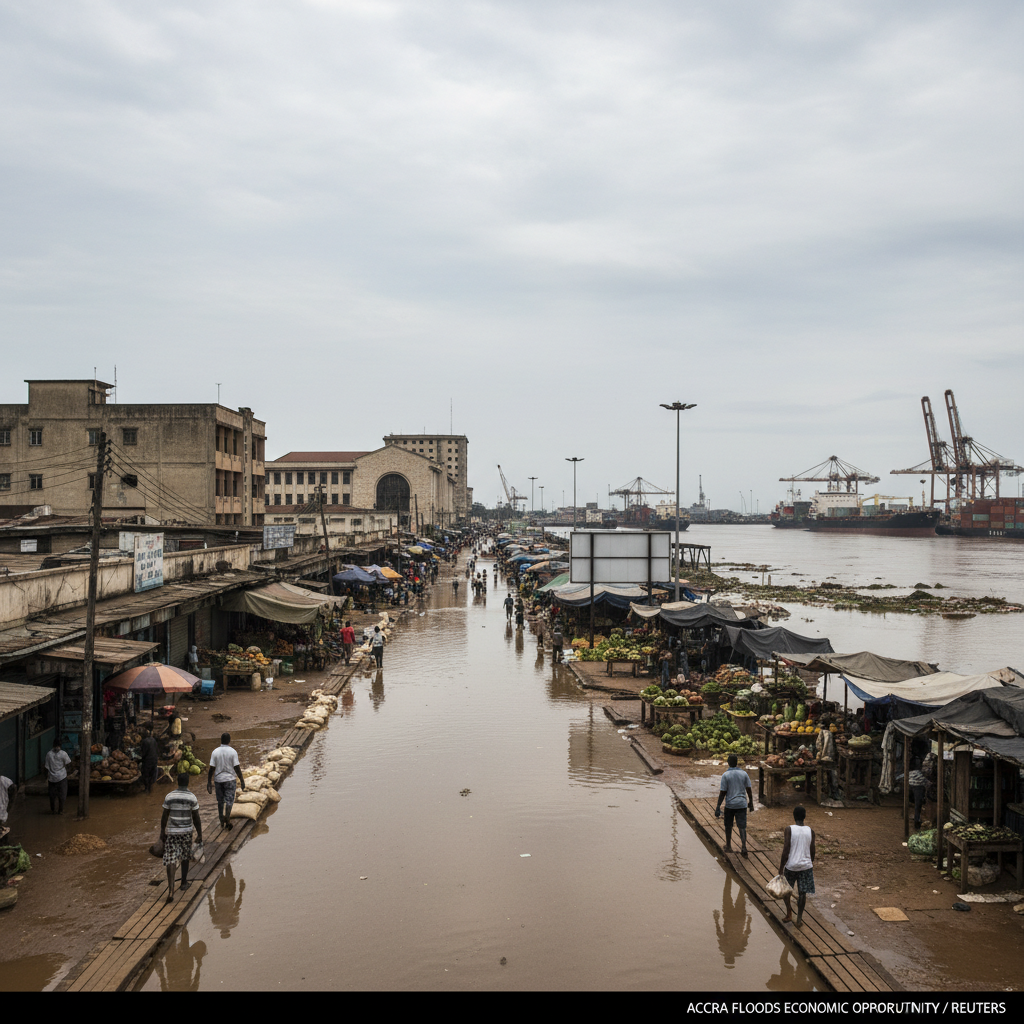
Accra's recurring floods consistently devastate communities each rainy season, but this ongoing challenge presents a significant economic opportunity. Annual damages and prevention costs related to flooding are estimated to exceed GHS 4.2 billion across Ghana. The private sector can now actively engage in developing sustainable business solutions for flood management.
These solutions include modern drainage and water management systems, along with flood monitoring and early warning technologies. Climate-resilient construction materials and smart urban planning solutions also offer substantial investment possibilities. This approach shifts the burden from relying solely on government, encouraging broader participation in addressing the complex issue of urban flooding.
Historically, flood management has primarily fallen under the government's purview, involving drainage projects and desilting exercises. However, these interventions have not fully resolved the problem, with floods continuing to cause destruction. This situation highlights a need for innovative multi-stakeholder approaches. Ghana's economic development depends on addressing such systemic issues creatively.
Dr. I.K. Abdul-Hamid, in an analysis in BFTOnline, emphasized that flooding should not just be seen as a problem. Businesses can develop products and services that solve problems, create employment, and drive economic growth. He stated, "The question therefore is not only, 'How do we stop floods?' but also, 'How can businesses create sustainable solutions that reduce the impact of floods?'"
This shift from crisis to opportunity can unlock new industries and create jobs. Companies specializing in waste management and recycling systems can prevent blocked drains, a major cause of urban flooding. Environmental consultancy services and flood insurance products also represent untapped market segments.
The implications for Ghana's urban development and economic resilience are profound. Businesses that invest in preventive measures will safeguard their operations and strengthen their corporate reputation. This includes supporting community drainage projects and adopting greener infrastructure. Policymakers should create an enabling environment for these private sector investments. This includes offering incentives and streamlining regulatory processes.
Universities and research institutions can support this initiative by focusing on climate adaptation and engineering solutions. Their findings can then be commercialized by businesses, turning academic insights into practical, scalable solutions. This collaborative effort could significantly reduce the GHS 4.2 billion annual economic impact of floods. It will also foster a more resilient and sustainable urban future for Ghana.