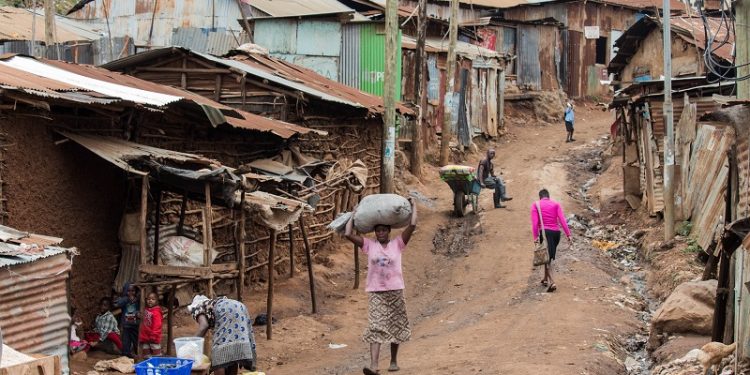
The World Bank has revealed that 56.4% of Ghanaians remain in poverty, despite the country's ongoing economic recovery. This significant figure indicates that economic gains are not reaching millions of citizens across the nation.
This persistent poverty is accompanied by widening regional disparities, creating a growing gap between economic progress and household well-being. The World Bank emphasizes that strong economic growth has not translated into improved living conditions for a large part of the population. This situation underscores an urgent need for growth that actively creates jobs and benefits more Ghanaians.
This finding fits into Ghana's broader economic narrative, which often grapples with ensuring growth translates into tangible improvements for its citizens. Despite robust economic indicators, such as a 6% growth rate in 2025 and 6.4% in the first quarter of 2026, poverty remains widespread. These figures reflect a strong recovery in economic activity, yet the benefits are not broadly distributed. The challenge lies in making this recovery inclusive and job-intensive, especially for the country's youthful population.
Robert R. Taliercio, the World Bank’s Division Director for Ghana, Liberia, and Sierra Leone, highlighted this issue. Speaking at the launch of the Tenth Ghana Economic Update in Accra, Mr. Taliercio stated, “56.4% of Ghanaians remain in poverty, and spatial disparities are widening.” He further noted a clear “disconnect between the headline growth that is yet to reach most of the population.” This statement underscores the critical need for policy interventions.
The implications are significant for Ghana's future economic stability and social cohesion. Policymakers must now focus on strategies that promote job creation and boost productivity across all sectors. The current growth is primarily led by sectors with limited capacity to absorb the increasing number of young people entering the labour market. This structural imbalance requires immediate attention to ensure Ghana’s economic recovery benefits more people. Decision-makers will need to implement policies that foster inclusive, job-intensive, and resilient growth to sustain recent macroeconomic stability gains. Failure to address this could exacerbate social inequalities and hinder long-term development.
Ghana's youthful population presents both an opportunity and a challenge. Creating enough jobs for these young people is crucial for national development and poverty reduction. The World Bank's report serves as a stark reminder that economic recovery alone is insufficient without equitable distribution of its benefits. The government must prioritize investments in sectors that generate widespread employment. This includes supporting small and medium-sized enterprises (SMEs) and vocational training programs. Such initiatives can help bridge the gap between economic growth and the daily struggles of ordinary Ghanaians. The focus must shift from mere growth figures to the quality and inclusiveness of that growth. This will ensure a more prosperous future for all citizens.