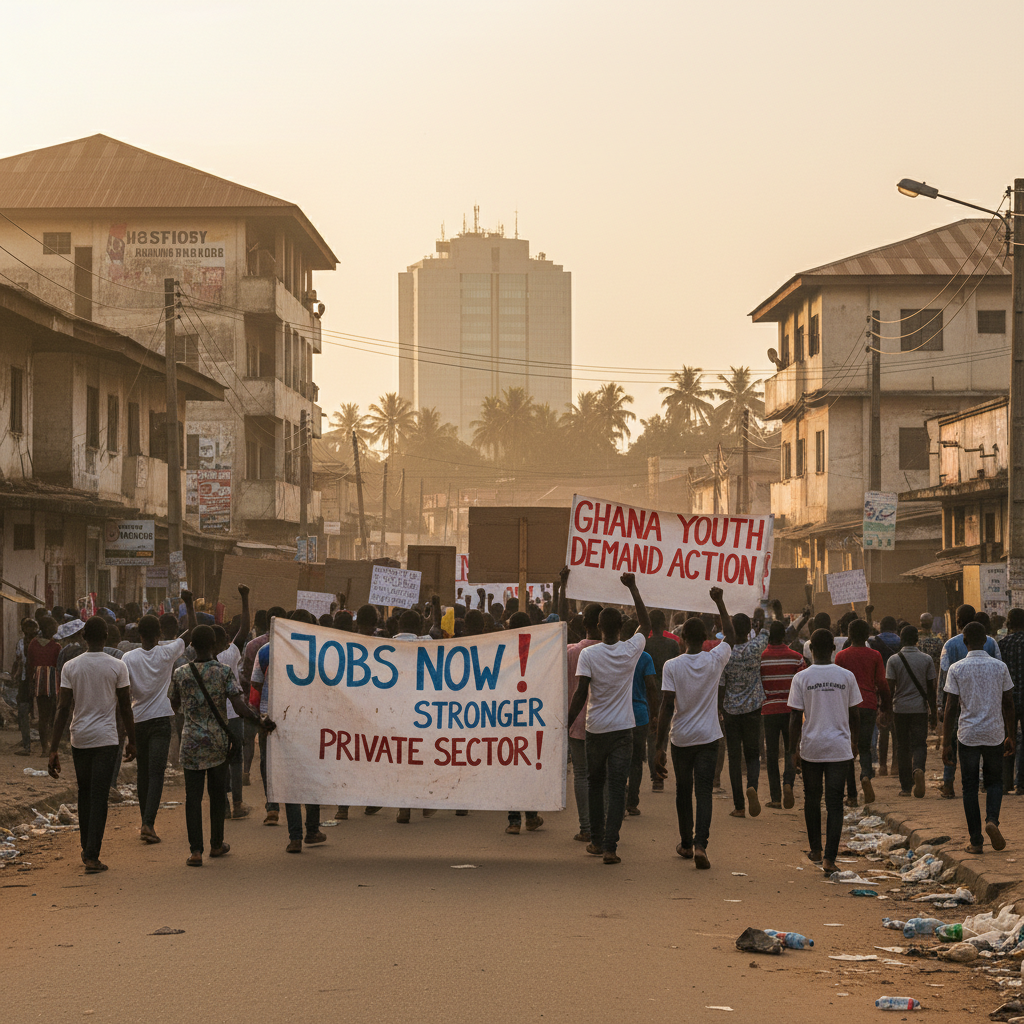
A group of young Ghanaians in Tema has urged the government to implement policies that significantly bolster the private sector. They believe that sustainable employment opportunities depend on expanding businesses. This approach is preferred over relying on continued public sector recruitment.
These young people demand an enabling business environment. Such an environment requires easier access to finance, targeted tax incentives, and robust support for small and medium-sized enterprises (SMEs). These measures would encourage businesses to grow and hire more young people.
This advocacy comes as Ghana faces increasing pressure to create jobs for its growing youth population. The economy's ability to absorb new entrants into the labour market is critical. Data from the Ghana Statistical Service consistently shows high youth unemployment rates, highlighting the urgency of this issue. Policies that foster private sector growth are essential for Ghana's long-term economic stability and social development.
Mr. Isaac Ofori, a Tema resident, told the Ghana News Agency (GNA) that Ghana's economic transformation requires greater private sector participation. This participation is necessary to absorb the growing number of young people entering the labour market each year. He emphasized that the government alone cannot create enough jobs to meet the country's employment needs.
Ms. Martina Agyeman, an unemployed university graduate, appealed for targeted regulatory reforms and skills development programmes. She also called for financial support to help businesses employ young people. Many graduates possess the willingness to work but face limited opportunities after completing their education. Unemployed Ms. Nyamekye Manu called for increased access to financing for SMEs. She noted that many businesses cannot expand due to limited access to affordable credit. She specifically recommended strengthening guarantee schemes and financial interventions to encourage banks to lend to businesses, especially those led by youth.
Expanding the private sector could lead to several positive outcomes. It may reduce unemployment, stimulate innovation, and increase national productivity. These factors are vital for strengthening Ghana's overall economy. Future government policies regarding business regulation, financial accessibility, and youth entrepreneurship will be critical areas to watch.