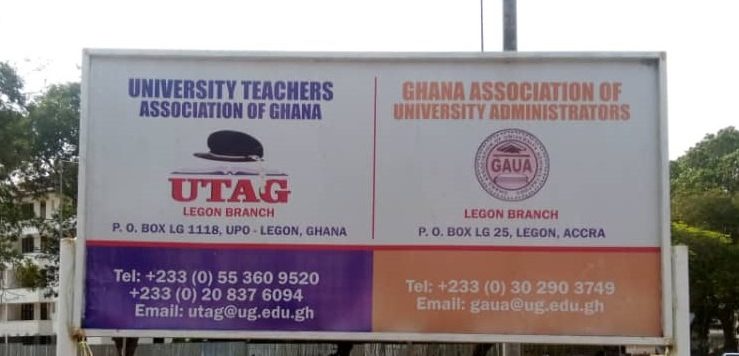
The University Teachers Association of Ghana (UTAG) has rejected claims by the Ghana Association of University Administrators (GAUA) that differences in market premiums and other allowances between teaching and non-teaching senior members in public universities amount to discrimination. UTAG argues that varying remuneration does not automatically mean unfair treatment, emphasizing that the two groups perform distinct roles with different professional requirements.
This rejection follows GAUA's announcement of plans to resume a suspended strike. GAUA maintains that the existing disparities in market premiums and related allowances are unfair. They argue that both teaching and non-teaching senior members operate within the same public university system, warranting equal treatment in compensation.
This dispute highlights a long-standing tension within Ghana's public university sector regarding salary structures. The broader economic context in Ghana often sees various public sector unions advocating for improved conditions of service. These negotiations frequently involve the Single Spine Salary Structure, which aims to ensure fair and equitable pay across public institutions. The current disagreement underscores the complexities of applying a harmonized pay structure to diverse professional groups.
In a statement issued on Monday, August 10, UTAG clarified its position. The association stated that public universities employ a wide range of professionals. These include academics, administrators, accountants, auditors, librarians, lawyers, and technicians. While all contribute to the university system, their responsibilities and demands are not identical.
UTAG believes compensation should reflect the specific requirements of each profession. They argue against applying the same rate to all categories of employees. Factors such as qualifications, level of responsibility, scarcity of specialized skills, and labor market conditions should guide decisions on market premiums. The need to attract and retain professionals in specific fields is also a crucial consideration.
UTAG specifically challenged GAUA's argument that the 114% market premium harmonized for senior members in 2012 should remain the basis for current remuneration. The teachers' association asserts that economic conditions, labor markets, and institutional needs have changed significantly since 2012. This necessitates periodic reviews of compensation structures.
The association supports efforts to improve the conditions of service for non-teaching senior members. However, UTAG disagrees that fairness requires professionals with different duties to receive identical compensation. They advocate for a nuanced approach to salary determination.
UTAG has called for an independent review of the entire remuneration structure. This review should involve key stakeholders including the government, the Fair Wages and Salaries Commission, the Ministry of Education, and the National Labour Commission. Other relevant stakeholders should also participate in this comprehensive assessment.
The proposed review should consider various factors. These include qualifications, workload, responsibilities, promotion opportunities, and comparisons with the broader labor market. Staff retention and the overall benefits available to different professional groups are also critical considerations. This comprehensive approach aims to create a more equitable and sustainable compensation system for all university staff.