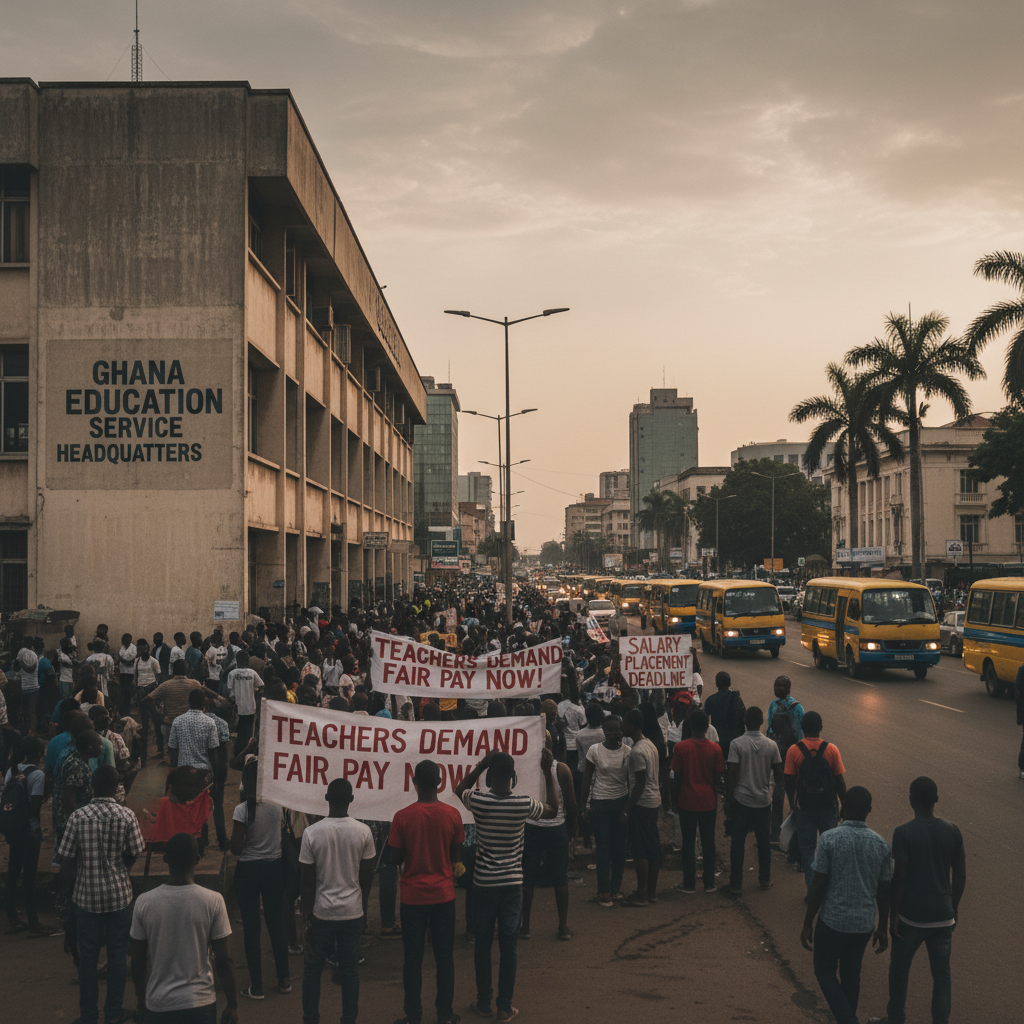
A coalition of teacher unions has threatened industrial action if newly promoted teachers are not placed on their appropriate salary scales by Monday, August 31, 2026. This ultimatum comes after a directive from the Controller and Accountant-General’s Department.
The unions state this directive contradicts an earlier assurance from the Ghana Education Service (GES). The GES had previously indicated that teachers who successfully completed the promotional process would be placed on their new grades by August. Failure to meet this deadline will lead to widespread industrial action.
This situation highlights persistent challenges within Ghana's public sector payroll administration. Delays in salary adjustments for promoted staff often lead to labour disputes, impacting service delivery. The government's wage bill, a significant component of public expenditure, faces constant pressure from such demands. In 2025, the government allocated GHS 45.2 billion to compensation of employees, representing 28% of total expenditure. Efficient payroll management is crucial for fiscal stability and maintaining industrial harmony across the public sector.
Thomas Musah, General Secretary of the Ghana National Association of Teachers (GNAT), described the Controller and Accountant-General’s directive as unlawful. He warned that relevant agency heads would be responsible for any disruption. Musah stated, “We the teacher unions, we have no option than to make it clear that the automatic promotion of teachers or placement of teachers on the required grade as to where they should be on the promotion as of the results that came out, they should be put on their respective scales by close of work on Monday, 31st August, 2026.”
The President of the Pre-Tertiary Teachers Association of Ghana (PRETAG), Jacob Anaba, also accused the GES of failing to provide detailed data. He noted the GES did not disclose the number or percentage of teachers who passed or failed promotional examinations. This lack of transparency differs from previous years, where such breakdowns were routinely provided. The absence of this data further fuels mistrust between the unions and education authorities.
Should the deadline pass without resolution, a nationwide strike by teachers appears imminent. This would severely disrupt the academic calendar and affect millions of students across Ghana. Policymakers and education authorities must urgently address these demands to prevent widespread industrial unrest. The government faces pressure to balance fiscal prudence with the legitimate demands of its workforce. The outcome will significantly influence public sector labour relations and the stability of the education system. This incident underscores the need for clear communication and timely implementation of payroll adjustments for public sector employees.