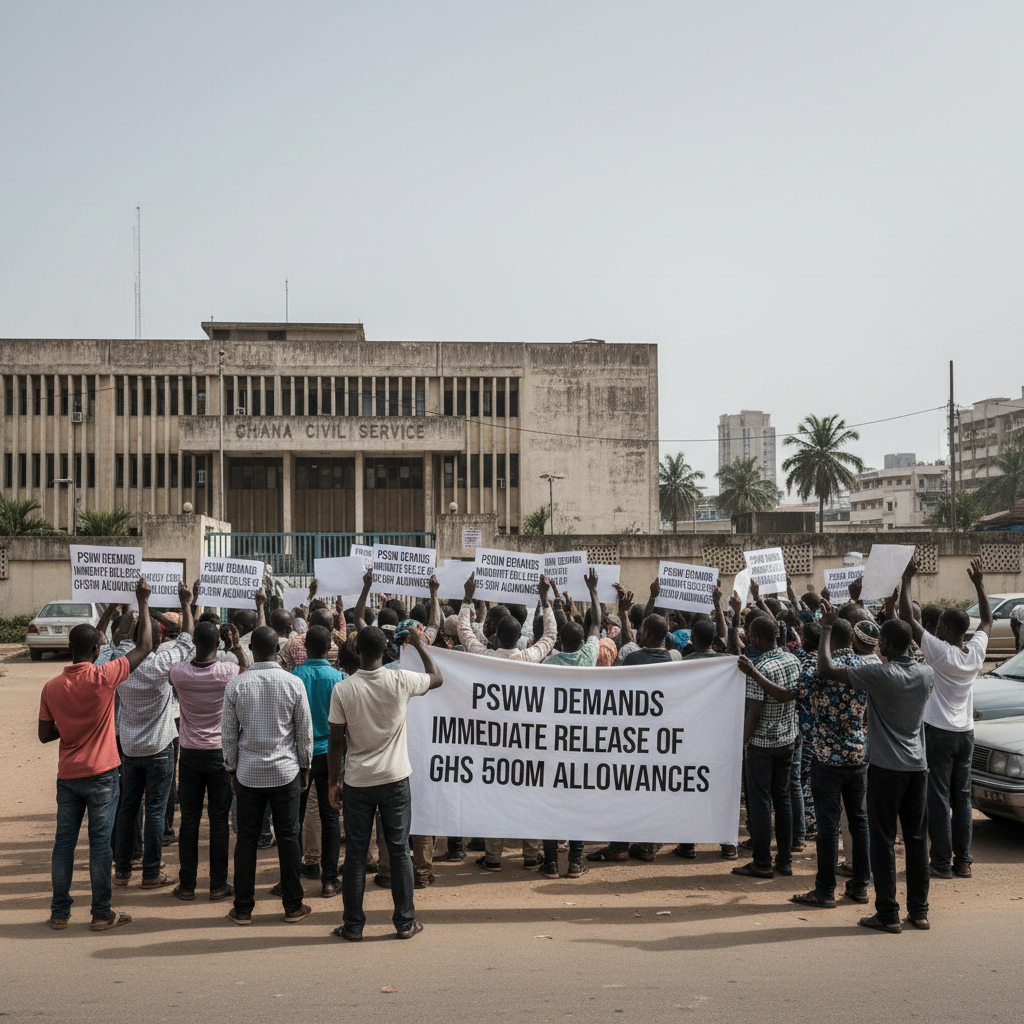
The Public Services Workers’ Union (PSWU) of the Trades Union Congress (TUC) has called on the Fair Wages and Salaries Commission (FWSC) to release agreed institution-specific allowances. These payments are due to staff of identified PSWU member organizations. The union warns that failure to pay by Tuesday, June 30, 2026, will lead to renewed industrial action.
This demand follows an agreement reached on March 31, 2026, for Interim Operational Allowances. The agreement was specifically designed to take effect from April 2026. The initial understanding helped prevent an industrial action earlier in the year by the PSWU.
This situation highlights ongoing challenges in public sector wage negotiations and government expenditure. Delays in fulfilling agreements can impact public services and confidence in state institutions. Ghana's public sector wage bill has consistently been a significant component of government spending.
Mr. John Nii Donu Sampah, Deputy General Secretary of the PSWU, signed the letter to the FWSC's Chief Executive, Dr. George Smith-Graham. He stated, “We count on your usual cooperation in this matter.” Copies of this urgent communication also went to the Minister of Finance and the National Security Coordinator, underscoring the issue's gravity and widespread impact.
The immediate implication is a potential disruption of public services if the PSWU follows through with its strike threat. Such action could further strain public finances and require immediate government intervention. Decision-makers in both the government and the FWSC will need to respond swiftly to avert this escalation. This event also tests the effectiveness of collective bargaining agreements in Ghana's labor relations.
Payment of these allowances will likely result in an unbudgeted expenditure for the government. This could affect the nation's fiscal targets for 2026. Ghana's government has been working to contain its wage bill under agreements with international bodies. This includes the International Monetary Fund (IMF) program.
Further delays could also damage trust between public sector unions and government agencies. This could lead to more frequent industrial disputes in the future. The ripple effect on various sectors reliant on public services could be substantial. This situation demands close attention from economic observers and the general public.
The PSWU’s consistent history of advocating for its members’ rights suggests serious resolve. Their prior strike notices and subsequent negotiations highlight a pattern. This specific allowance agreement was pivotal in averting an earlier planned strike. This context makes the current non-payment even more critical for both parties. The government must balance fiscal prudence with labor demands.