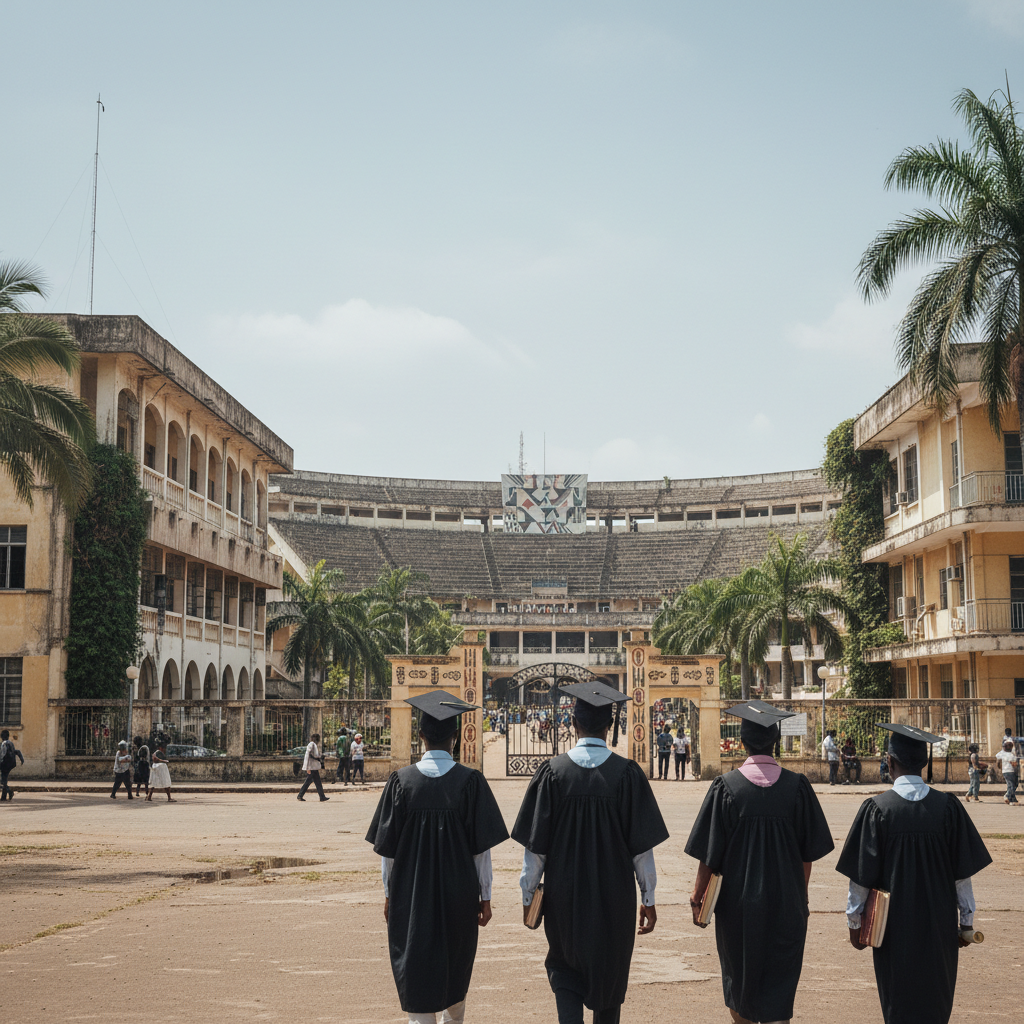
Okyenhene Osagyefuo Amoatia Ofori Panin has called on Ghanaian universities to redesign their academic programmes. He urged higher education institutions to produce graduates who are innovators, entrepreneurs, and job creators.
This call came during the investiture of Professor Eric Kwasi Ofori as Vice-Chancellor of Garden City University. It also coincided with the university's 18th Congregation. The Okyenhene emphasized that the global economy's changing demands require a new approach to education.
Ghana faces persistent youth unemployment challenges, with many graduates seeking formal sector jobs. The Okyenhene's statement reinforces a national narrative of shifting toward private sector entrepreneurship. This approach aims to reduce reliance on government employment. Recent data from the Ghana Statistical Service indicates a youth unemployment rate of 19.7% for individuals aged 15-24 in 2023. This highlights the urgency of creating job-ready graduates.
Speaking as the Special Guest of Honour, Osagyefuo Amoatia Ofori Panin highlighted rapid advancements in technology. He specifically mentioned artificial intelligence, climate change, public health issues, and evolving labor markets. These factors fundamentally change how universities must prepare students for the future. He stated, “Universities must therefore become centres of innovation, entrepreneurship, research and problem-solving.”
The Okyenhene noted that many young Ghanaians possess talent and entrepreneurial spirit. However, they face significant hurdles in turning ideas into successful businesses. He stressed the need for an enabling environment that supports young people. This environment should help them establish and grow their own enterprises. The Ghana Enterprises Agency (GEA) reported in 2022 that small and medium-sized enterprises (SMEs) contribute over 70% of Ghana's GDP. This underscores the potential economic impact of fostering more successful startups.
The future of Africa's economy depends largely on the quality of graduates, the Okyenhene explained. Their ability to develop practical solutions to real-world challenges is crucial. He described education as the most sustainable investment any nation can make. It remains the surest path to national development and long-term prosperity. This perspective aligns with government policies aiming to enhance technical and vocational education and training (TVET).
The newly inducted Vice-Chancellor, Professor Eric Kwasi Ofori, serves as an example. His journey illustrates education's transformative power. The Okyenhene urged universities to continue investing in research, innovation, and entrepreneurship. This will equip graduates with the practical skills and knowledge needed. It will drive economic transformation, create employment, and contribute meaningfully to Africa's development. Decision-makers and educational institutions will likely respond by reviewing and adapting curriculum reforms. This will support innovation hubs and entrepreneurial initiatives within university settings. Further investment in STEM (Science, Technology, Engineering, and Mathematics) fields is also anticipated to meet these demands.