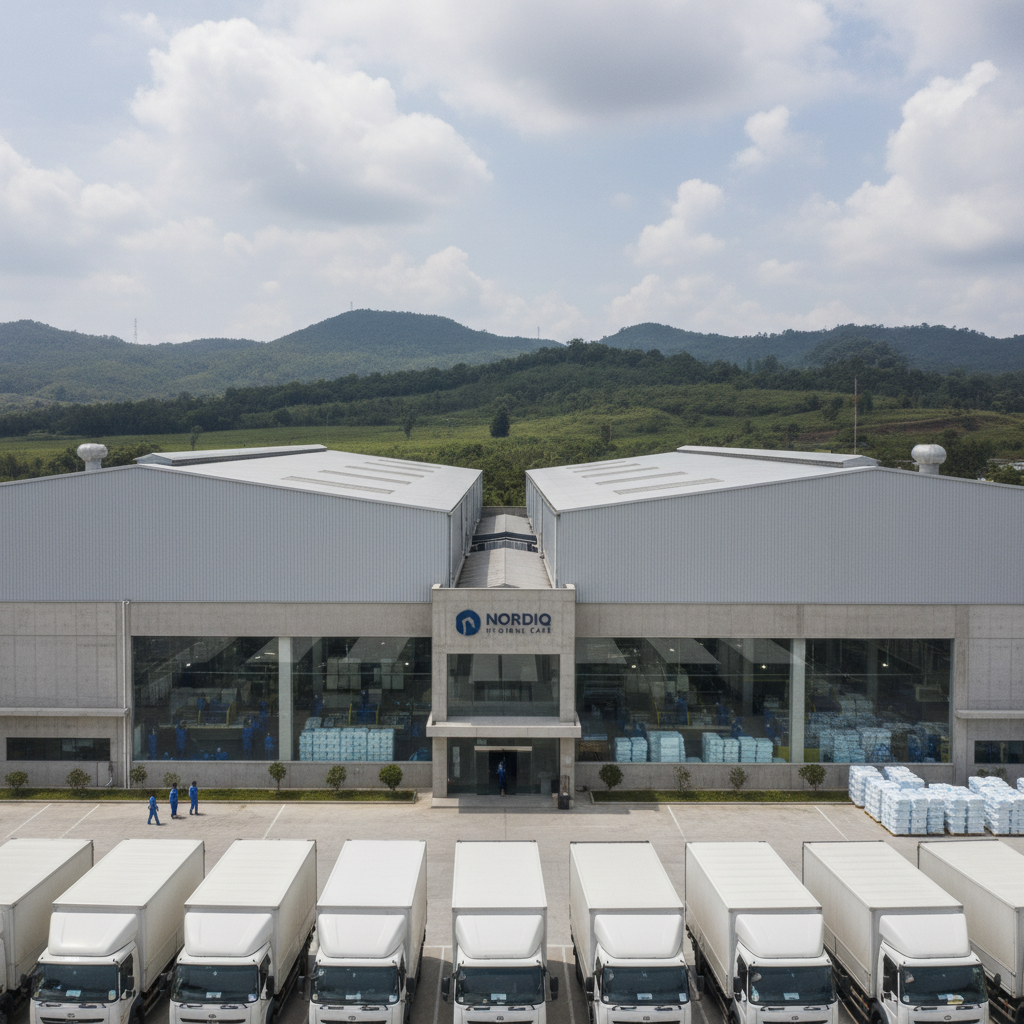
Nordiq Hygiene Care Industry created more than 300 jobs by locally producing sanitary pads for the government's Free Sanitary Pads Initiative. This Tema Free Zones-based company also supplies high-quality, affordable products to public basic schools. The initiative helps ensure that girls do not miss school due to menstruation.
The company, founded in 2016, embraced a strategy that intentionally balances automation with manual labour. This approach maximised job creation, particularly during its government supply contract. Nordiq's affordable, made-in-Ghana sanitary pads reduce the country's dependence on imports. These efforts make menstrual hygiene products more accessible for Ghanaian families.
Nordiq's success fits into Ghana's broader economic goal of building a resilient manufacturing sector. Over 27 percent of adolescent girls in Ghana miss school due to a lack of sanitary products. Nordiq's intervention directly addresses this barrier to education. The company supports three Ghanaian packaging manufacturers, whose businesses grew due to increased demand.
Market Watch Ghana strongly endorsed Nordiq's achievements following an independent assessment. This report noted the company uses local manufacturing processes with imported raw materials at its Tema factory. "Nordiq manufactures its products locally using imported raw materials, which were observed in large quantities at the facility and processed through modern production lines at its Tema factory," the assessment stated. The company also exports products to Togo, Mali, Burkina Faso, and Côte d'Ivoire.
The company’s employment practices provide a model for workplace inclusion. Women make up about 75 percent of Nordiq's workforce. The firm also employs people with physical, hearing, and intellectual disabilities, including individuals with Down syndrome, who receive equal pay. Nordiq operated around the clock to meet tight deadlines during the government contract, aligning with the government's 24-hour economy vision and fulfilling all labour obligations.
Nordiq's continued expansion of its permanent workforce even after completing the government contract demonstrates its commitment to sustainable employment. Its efforts are crucial in reducing period poverty and empowering women. This local manufacturing success shows how homegrown enterprises can combine innovation, social responsibility, and economic impact. Nordiq’s operations contribute meaningfully to national development and improve the lives of thousands of Ghanaian families.