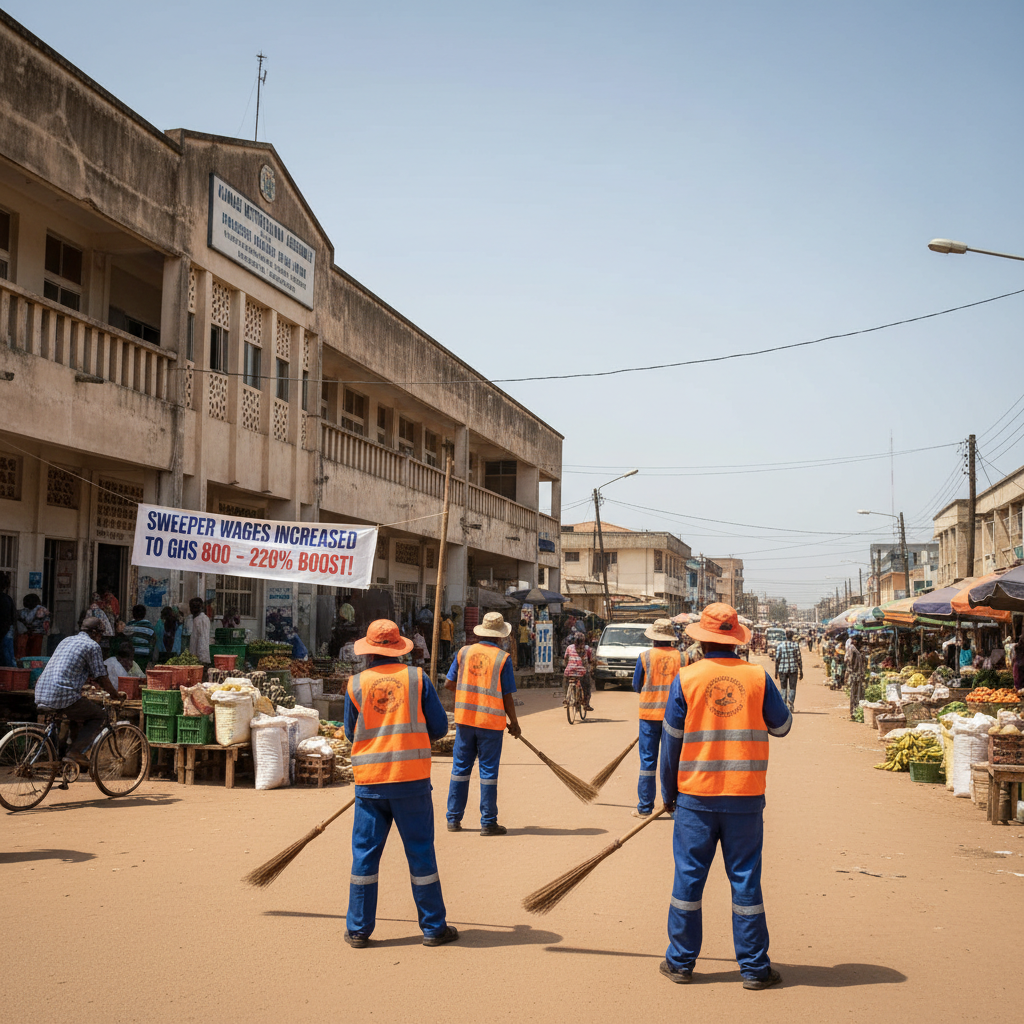
The Kumasi Metropolitan Assembly (KMA) has increased the monthly wage of its street sweepers to GHS 800, a significant jump from the GHS 250 they previously received. This represents a 220 percent increase for the sanitation workers.
This pay rise follows a report by investigative journalist Manasseh Azure Awuni, which questioned the terms of a government contract with Zoomlion Ghana Limited. The journalist argued that the GHS 250 monthly salary did not adequately support the welfare of sanitation workers. The KMA stated this decision improves working conditions and enhances waste management in the city.
This development fits into a broader conversation about public service delivery and the role of private contractors in Ghana. Debates have long existed regarding the effectiveness and cost-efficiency of government contracts with large service providers. This move by KMA suggests a potential shift towards greater direct management of services by local assemblies.
Kumasi Mayor Richard Ofori Agyeman Boadi confirmed the new GHS 800 monthly allowance for KMA-engaged sweepers. He explained this change aligns with efforts to improve environmental sanitation and worker welfare. The KMA now funds these payments directly from its Internally Generated Funds, making the district assembly directly responsible for these costs.
The KMA previously deployed over 580 street sweepers under the Youth Employment Agency (YEA) sanitation module. It now manages the same areas with only 102 sweepers. This change in staffing levels suggests a re-evaluation of operational efficiency and resource allocation within the assembly.
The increase in wages and direct payment by the KMA may set a precedent for other metropolitan, municipal, and district assemblies (MMDAs). Other local governments might explore similar strategies to take control of their sanitation services. This could mean more direct employment and better working conditions for sanitation workers nationwide.
This shift could impact the market for private waste management contractors by encouraging increased competition or a re-negotiation of their roles. Observers will watch to see if other assemblies follow KMA’s example. Financial implications for local government budgets will also be closely monitored, especially regarding Internally Generated Funds.
The KMA's commitment to improving environmental sanitation through direct engagement with sweepers is a critical step. It highlights the assembly's dedication to urban cleanliness despite financial and operational constraints. This approach emphasizes local accountability and direct benefits for workers.