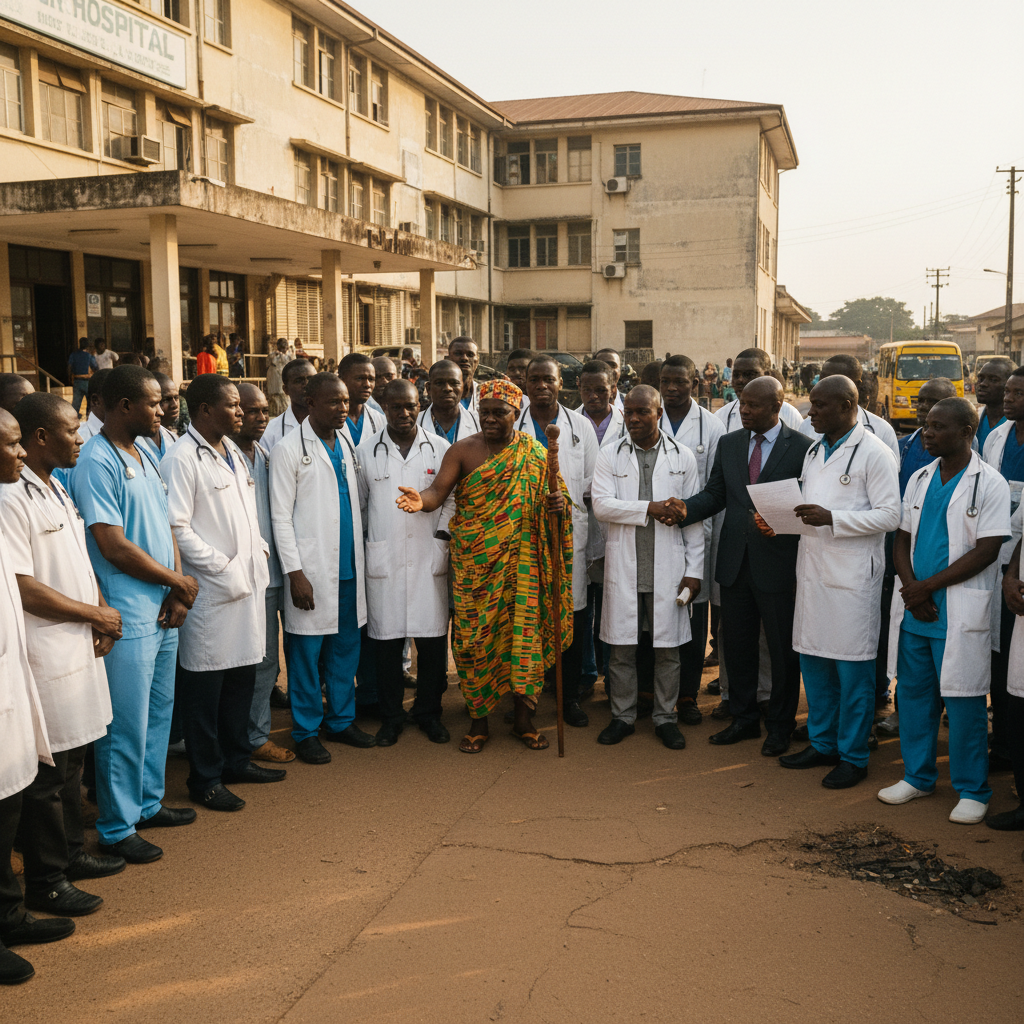
Doctors at the Komfo Anokye Teaching Hospital (KATH) have suspended their industrial action, effective June 9, 2026. This decision follows significant engagement and a timely intervention by the Asantehene, Otumfuo Osei Tutu II.
The Komfo Anokye Doctors' Association (KADA) announced the suspension after discussions involving the Asantehene, the KATH Board, hospital management, and other key stakeholders. These parties demonstrated a commitment to addressing the concerns that prompted the strike. KADA stated that while issues need full resolution, patient care and public interest remain paramount.
This industrial action had significantly impacted healthcare services at one of Ghana's largest referral hospitals. Strikes by medical professionals often lead to the deferral of surgeries, disruption of outpatient services, and increased pressure on alternative healthcare facilities. Such disruptions can affect public health outcomes and diminish public trust in the healthcare system, a recurring challenge in Ghana's labour landscape.
A KADA statement highlighted the association's commitment to finding a full resolution. "The safety and well-being of patients and the broader public interest remain central to our responsibilities, and these have informed our decision to suspend the action and continue the dialogue," KADA stated. The association expressed gratitude to Otumfuo Osei Tutu II and other stakeholders for facilitating dialogue.
The suspension is expected to lead to continued negotiations aimed at resolving the outstanding issues that triggered the strike. This will allow for the full restoration of normal healthcare services at Komfo Anokye Teaching Hospital. Observers will closely monitor these negotiations for their impact on Ghana's healthcare sector and future labour relations within public institutions.
The frequent occurrence of strikes within public sector unions, including health workers, often puts pressure on the government's fiscal management. Resolving such disputes typically involves financial concessions, such as salary increases or improved working conditions. These concessions can strain the public wage bill, which currently constitutes a significant portion of Ghana's government expenditure. The Ministry of Finance often faces the challenge of balancing these demands with broader budgetary constraints and national development priorities.
This intervention by the Asantehene underscores the influential role traditional leaders play in mediating disputes affecting public services in Ghana. Such interventions often help de-escalate tensions and provide a pathway for dialogue. The stability of Ghana's healthcare system is crucial for economic productivity and social welfare. Prolonged strikes by essential service providers can have ripple effects, impacting the workforce's health and the overall economy. Moving forward, the focus will be on the concrete steps taken to prevent future disruptions and ensure sustainable resolutions.