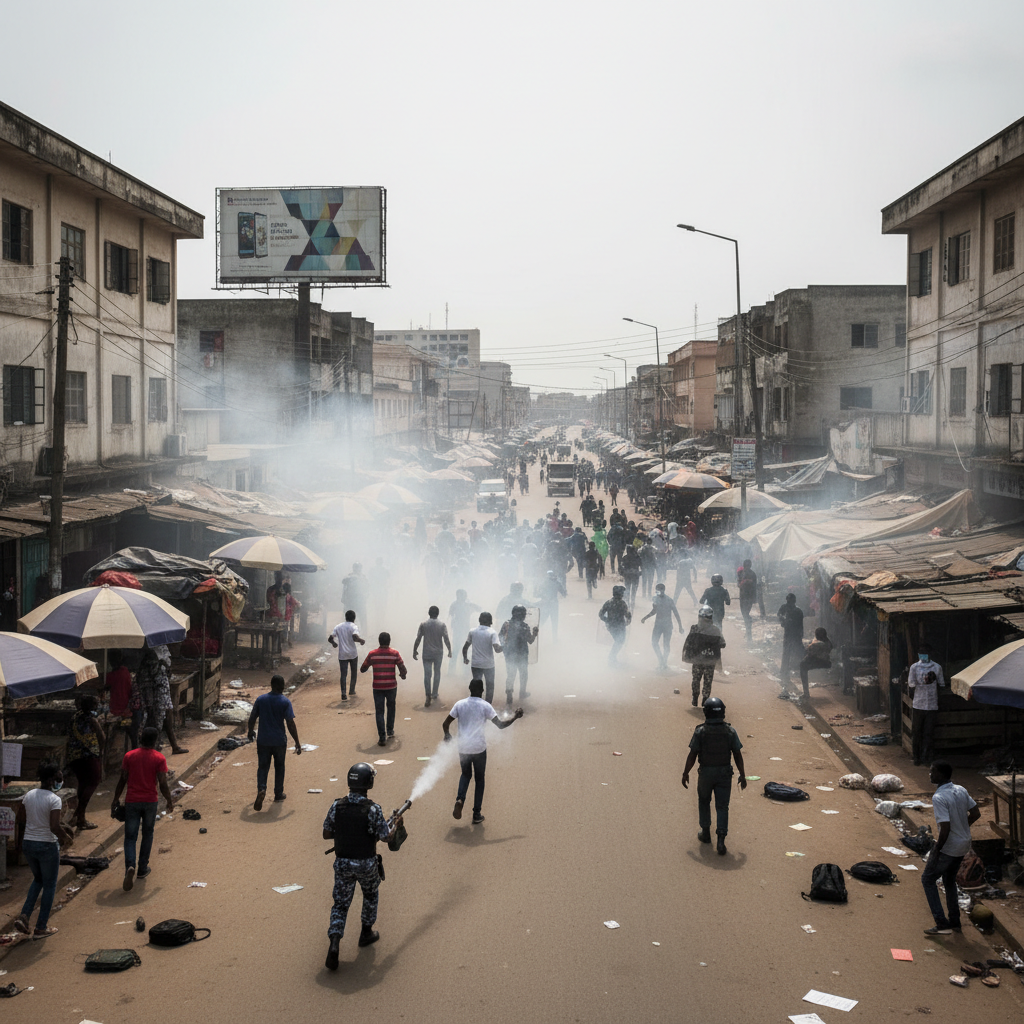
Police in India have fired tear gas shells at thousands of protesters in Jharkhand, India, who are demanding reforms to the state's government recruitment exam system. These demonstrations, ongoing for over two weeks, escalated as protesters attempted to march on the state assembly in Ranchi, the capital city.
The immediate cause of the widespread anger stems from a preliminary civil service exam conducted by the Jharkhand Public Service Commission (JPSC) in April. Following the announcement of results in July, candidates alleged that leaked answer sheets circulating on social media indicated successful applicants had answered significantly fewer questions than expected. This fueled suspicions of manipulated results and widespread corruption within the examination process.
This unrest in Jharkhand follows earlier, larger protests across India, including the "cockroach" protests in Delhi, which also concerned exam paper leaks. That national movement led to the resignation of Education Minister Dharmendra Pradhan. The current protests in Jharkhand highlight a persistent national issue regarding the integrity of public service recruitment, impacting thousands of young Indians seeking stable employment.
Ranchi City Superintendent of Police Paras Rana stated that while most protesters were peaceful, a smaller group broke through barricades and threw stones at officers, injuring three policemen. He affirmed that police used "minimal force for a very short time" due to the student nature of the protest. The state government has assured students of justice, with the allegations currently under investigation by Jharkhand's Criminal Investigation Department (CID).
The implications of these protests are significant for both the state government and the aspirations of young job seekers. Despite the government agreeing to cancel the disputed exam and two others, and the resignation of JPSC chairman L. Khiangte and three other JPSC members, protesters remain unsatisfied. They are demanding an investigation by the Central Bureau of Investigation (CBI), India's premier federal investigative agency, to ensure a thorough and impartial inquiry into the irregularities. This ongoing demand for federal intervention suggests a deep distrust in local investigative processes.
The protests have also garnered strong political backing, with the Bharatiya Janata Party (BJP), the opposition in Jharkhand, supporting the demonstrators and raising the issue in the state assembly. Even Congress, a partner in the state government but a national rival to the BJP, has expressed support for the students. Jharkhand Chief Minister Hemant Soren, leader of the Jharkhand Mukti Morcha (JMM) party, has warned against politicising the agitation while reiterating his promise to deliver justice. The continued political involvement and the protesters' unwavering demands indicate that this issue will likely remain a focal point in Jharkhand's political landscape for the foreseeable future, potentially influencing upcoming elections and public trust in government institutions.