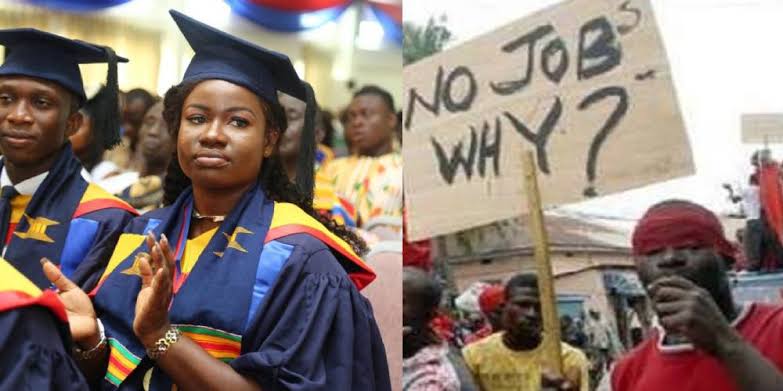
Ghana’s young graduates face widespread unemployment, with over 1,000 individuals benefitting from direct support programs. Many graduates struggle to secure employment after university, despite their academic achievements. This situation is highlighted by the experience of 26-year-old Peter Tetteh, an Economics graduate from Kwame Nkrumah University of Science and Technology (KNUST).
Mr. Tetteh has been unemployed since graduating in November 2024. He faces challenges such as employers demanding prior work experience, limited job opportunities, and location constraints. His story shows the gap between university education and job market demands, leaving many qualified young people without work.
Graduate unemployment has become a persistent concern within Ghana's economic landscape. The National Youth Authority (NYA) describes this as a serious issue among young people. This trend affects job growth and the overall economic productivity of the nation. It also signifies a broader concern about human capital development and deployment in Ghana.
The National Youth Authority addresses this challenge through initiatives like the National Apprenticeship Programme and various skills-training projects. These programs have successfully supported more than 1,000 young people. The NYA encourages graduates to acquire skills that directly match the demands of the labour market.
An HR practitioner emphasized that employers value more than just academic qualifications. They actively look for communication skills, teamwork abilities, professionalism, and a willingness to learn. The HR expert also noted that many graduates need better interview preparation and confidence to effectively present their strengths. Peter Tetteh believes that stronger internship opportunities, university-industry partnerships, and entrepreneurship support could ease the transition into employment.
Policymakers and industry leaders must now focus on bridging this skills gap. Addressing graduate unemployment requires collaboration between the government, educational institutions, and private sector employers. Improved curriculum development and vocational training can better align graduates' skills with market needs. This collaborative approach will be essential to ensure that more graduates find meaningful employment in Ghana’s economy. This situation influences consumer spending and overall economic confidence among the youth.