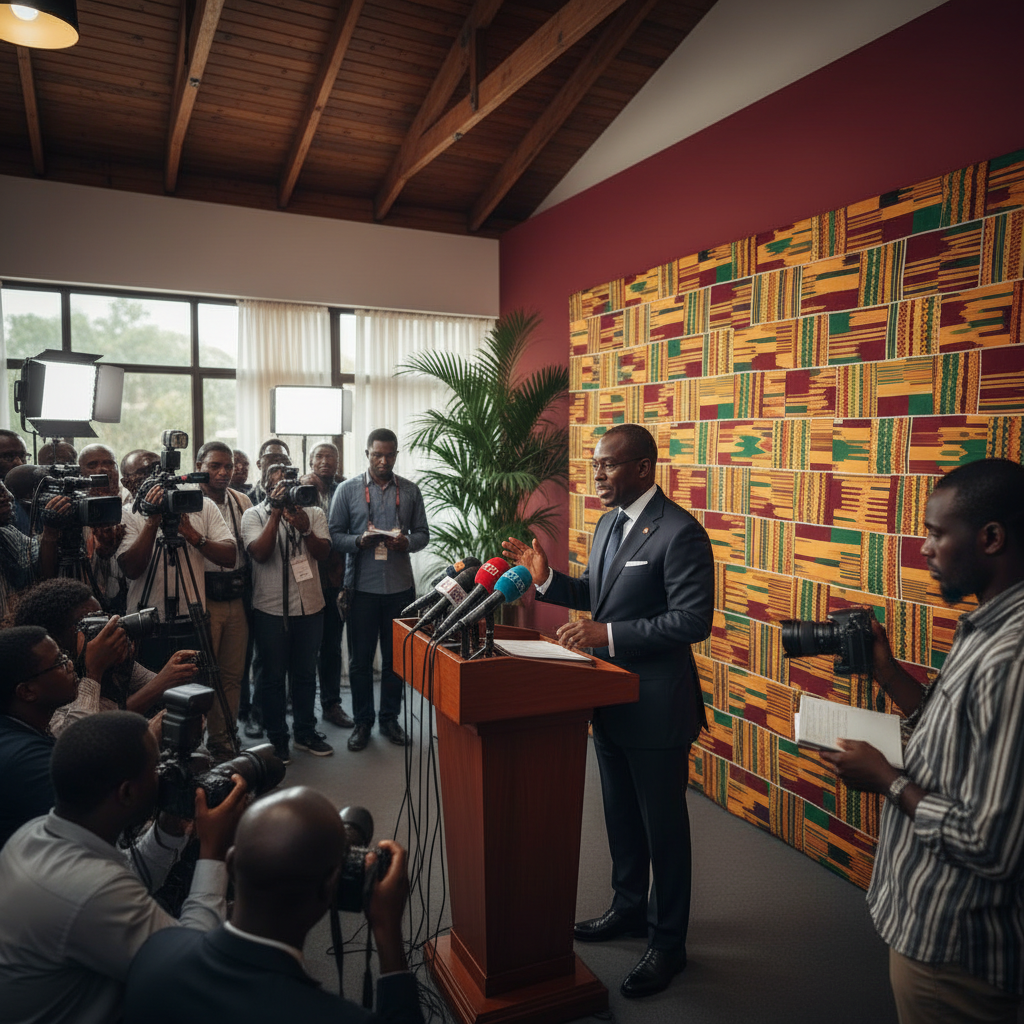
Ghana’s government has agreed to reinstate Dr. Paa Kwesi Baidoo, the Chief Executive Officer of Komfo Anokye Teaching Hospital (KATH). This agreement follows an assurance given to the Ghana Registered Nurses and Midwives Association (GRNMA).
The GRNMA leveraged this assurance to suspend its planned industrial action. Nurses and other health professionals had demanded Dr. Baidoo’s reinstatement. They argued his suspension ignored deeper, systemic issues affecting KATH.
This development unfolds against a backdrop of increasing pressure on Ghana’s healthcare system. KATH operates as the key referral hospital for a vast geographical area. This includes Ghana’s middle and northern regions, and even parts of Cote d’Ivoire and Burkina Faso. The hospital's challenges highlight broader structural deficiencies in national health infrastructure.
Jones Afriyie-Anto, the Ashanti Regional Chairman of the GRNMA, confirmed the government’s commitment. He stated, “Issues were three, basically. First, we should suspend the suspension of the CEO, Dr. Paa Kwesi Baidoo, because we think it is right.” Mr. Afriyie-Anto added that government representatives indicated discussions were underway to resolve the matter. “And we have been assured that they are talking, and then it will be done,” he confirmed.
Beyond the CEO’s reinstatement, the GRNMA’s engagement also focused on KATH’s critical need for retooling. The hospital faces immense pressure, caring for a large patient population with outdated or insufficient equipment. Mr. Afriyie-Anto pointed out that unlike Accra, which has multiple major hospitals, KATH handles most emergencies in its catchment area alone. He cited the ‘Red Ward’ as an example, where cardiac monitors operate continuously, signifying constant bed occupancy. He called for urgent investment to alleviate the strain on the hospital.
This government decision suggests an attempt to de-escalate tensions within the health sector. However, the long-term implications hinge on fulfilling promises to retool KATH. Failure to address the hospital's infrastructure and equipment deficits could trigger renewed industrial action. It could also further strain an already overburdened healthcare system. Stakeholders will closely monitor the government’s actions regarding KATH’s resource needs. This will determine if the root causes of the crisis are effectively addressed.
The situation at KATH serves as a stark reminder of the urgent need for investment in healthcare infrastructure. It also underscores the importance of transparent and accountable management. The government’s move to reinstate the CEO aims to restore stability. Yet, the underlying issues of systemic underfunding and resource scarcity remain prominent concerns. Addressing these will be crucial for the future of healthcare delivery in Ghana.