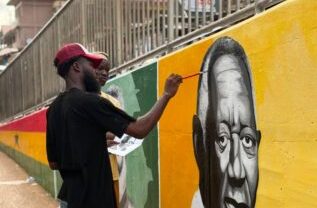
Bawaa the Artist is spearheading a movement in Ghana, enabling young creatives to transform their artistic talent into viable economic opportunities. He operates an art studio in Kumasi and creates public murals, providing practical training and a platform for artists to sell their work without needing formal certifications. This initiative directly addresses the challenge of youth unemployment in Ghana by opening alternative pathways to income generation.
The artist's approach focuses on hands-on skill development and direct market engagement. His studio teaches fundamentals of drawing and painting, helping young artists refine their abilities. Crucially, it also connects them with buyers, ensuring their work translates into income. This model challenges the traditional reliance on academic qualifications, emphasizing practical capability and entrepreneurial spirit.
This effort aligns with Ghana's broader economic narrative, where informal sectors and creative industries are increasingly vital for job creation. Many young Ghanaians face difficulties securing formal employment, making initiatives like Bawaa's crucial. His work contributes to the nation's economic diversification and supports the growth of its cultural sector. The creative industry offers a significant, yet often overlooked, avenue for economic participation.
Bawaa stated, "I started this to bring memories to life and encourage young artists not to kill their talent because of certification." This sentiment highlights a common barrier for many aspiring artists who fear their skills are not legitimate without a certificate. His program provides a tangible alternative, validating their talent through market success rather than academic credentials.
The implications of this model are significant for Ghana's youth employment landscape. It demonstrates that practical skills, combined with market access, can lead to sustainable livelihoods. Decision-makers and investors should observe how such grassroots initiatives can be scaled to further boost the creative economy. This approach could serve as a blueprint for other sectors struggling with youth unemployment.
Humu Adam, a former student of Bawaa's studio, exemplifies the program's success. She now works as an artist, selling her pieces, proving that talent can flourish and generate income without a certificate. Her journey underscores the effectiveness of Bawaa's mentorship and the studio's practical training.
Dr. Kwame Adjei Akrasi, a patron of Bawaa's work, represents the demand side of this creative economy. His purchases demonstrate that a market exists for these artists' creations. This patronage is essential, transforming artistic talent from a hobby into a profession and providing crucial financial support for emerging artists.
The studio's impact extends beyond individual income generation. It contributes to Ghana's cultural identity by preserving memories and documenting lived experiences through art. This cultural preservation is vital for a nation actively shaping its contemporary narrative. The art produced reflects Ghanaian perspectives and contributes to the country's rich artistic heritage.
Artists in Ghana often face challenges like securing materials, finding customers, and accessing funding and exhibition spaces. Bawaa's studio addresses these gaps by providing training and a platform for visibility. This dual approach of skill development and market exposure is critical for the long-term success of creative entrepreneurs.
This initiative directly supports Sustainable Development Goal 8, which focuses on Decent Work and Economic Growth. Bawaa's work provides young people with practical skills and entrepreneurial opportunities, enabling them to build sustainable livelihoods. It offers a tangible example of how local efforts can contribute to global development objectives.
Ultimately, Bawaa's message is clear: a lack of formal certification should not deter talent. As more young Ghanaians seek non-traditional career paths, spaces that train, support, and showcase creative talent will become increasingly important. Art, in this context, is not just an aesthetic pursuit but a powerful tool for economic empowerment and cultural expression.