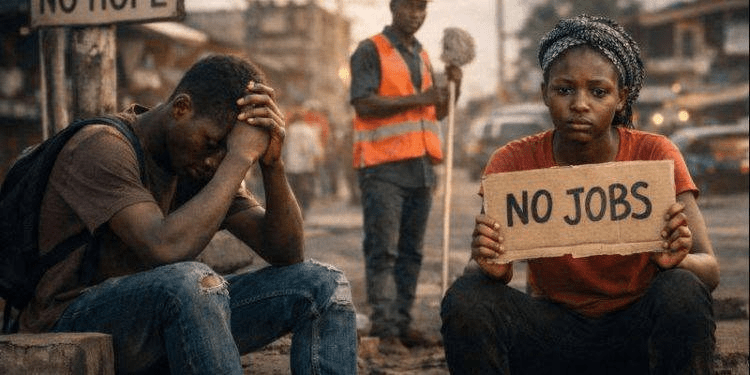
Nearly 2 million young Ghanaians are not in education, employment, or training, according to the Ghana Statistical Service (GSS). This alarming figure, representing 19.5% of the youth population aged 15 to 35, highlights a critical challenge for Ghana's economic future. The data, released as of the third quarter of 2025, underscores concerns about the nation's capacity to transform its expanding youth demographic into a productive workforce.
This substantial number of young people classified as Not in Education, Employment or Training (NEET) signals a significant underutilization of human capital. The GSS indicates that this situation demands immediate and substantial investment in education, skills development, and job creation. Equipping young people with necessary knowledge and opportunities is crucial for their contribution to national development.
The high NEET rate fits into a broader narrative of persistent youth unemployment in Ghana. Data from the Quarterly Labour Force Survey for the first three quarters of 2025 shows that unemployment among individuals aged 15 to 35 averaged 21.9%. This is significantly higher than the national average unemployment rate of 12.8%. Ghana's youth now constitute 36.9% of its estimated 33.7 million population, an increase from 34.6% in 2000. This demographic shift makes investing in young people even more vital for sustainable economic growth.
The Ghana Statistical Service expressed particular concern about adolescent pregnancy, citing findings from the 2022 Ghana Demographic and Health Survey. This survey revealed that 15% of girls aged 15 to 19 had experienced pregnancy, with 11% having already given birth. Early pregnancy often disrupts educational pathways, restricts access to skills training, and reduces young women's prospects for securing long-term employment.
The GSS calls for specific interventions to address these issues. These include greater investment in technical and vocational education and training (TVET) programs. Stronger school-to-work transition initiatives are also necessary to bridge the gap between education and employment. Furthermore, increased support for entrepreneurship and the expansion of industries capable of creating decent jobs are essential. Ghana's ability to leverage its growing youth population depends on providing adequate education, skills, and employment opportunities.
Policymakers and stakeholders must respond to these findings with comprehensive strategies. The long-term economic stability and social cohesion of Ghana depend on effectively integrating its youth into the productive economy. Failure to address the NEET challenge could lead to increased social instability and hinder the country's development goals. The focus must be on creating an environment where young people can thrive and contribute meaningfully to the nation's progress.