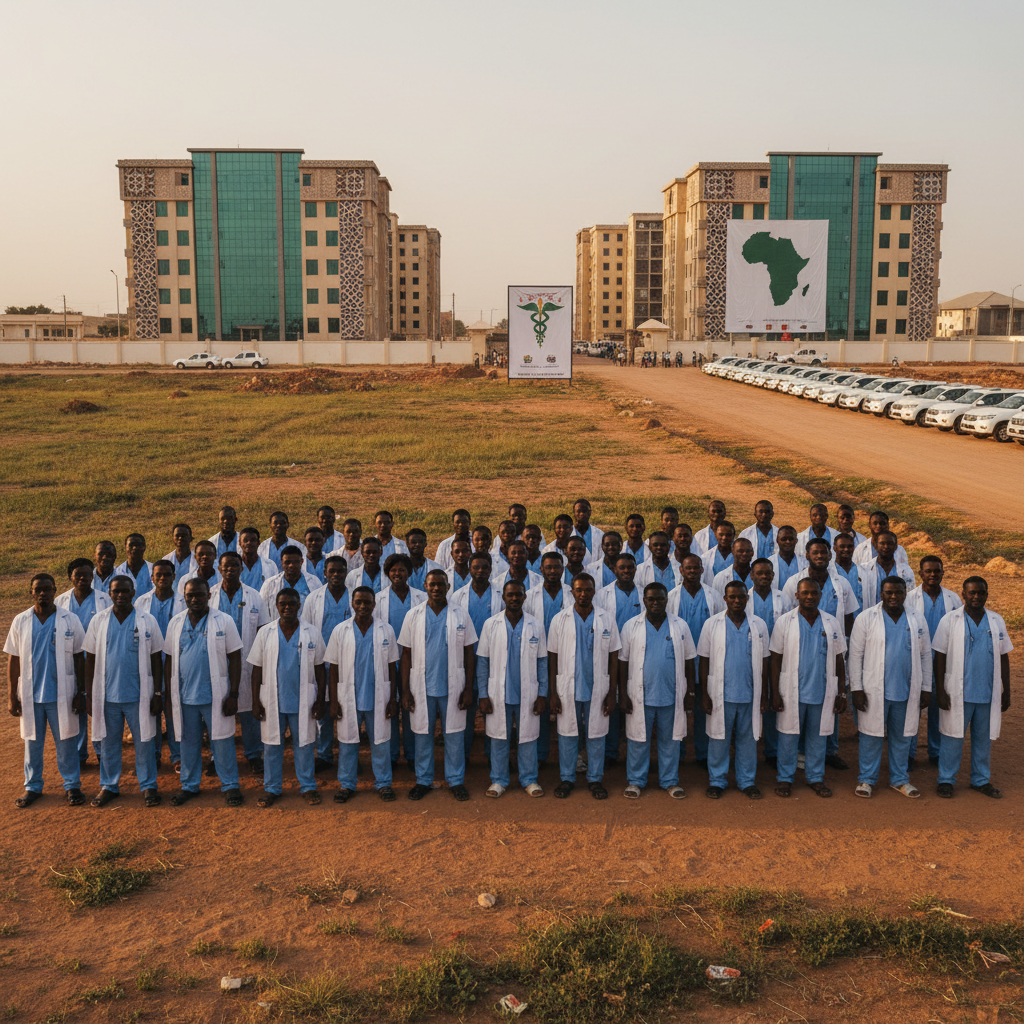
The Ghanaian government plans to deploy 16,000 health workers in 2026. This significant recruitment drive aims to strengthen the country's healthcare workforce. Health Minister Kwabena Mintah Akandoh confirmed the initiative on June 9, 2026, stating that 1,500 workers have already undergone processing.
This large-scale deployment targets persistent staffing gaps, especially in remote and underserved communities. Only 12 medical doctors accepted postings to eight underserved regions in 2024, highlighting the challenge. The government is also expanding specialist training and decentralizing postgraduate medical education to address these shortages effectively.
This effort fits into Ghana's broader strategy to improve public health infrastructure and access. Persistent disparities in healthcare access between urban and rural areas remain a key concern. Increasing the number of health professionals in hard-to-reach areas is crucial for achieving better health outcomes nationwide. This move also aligns with the government's commitment to achieving universal health coverage.
Health Minister Kwabena Mintah Akandoh announced these plans at the 2026 Annual Health Summit in Accra. He emphasized the government's commitment to both increasing staff numbers and developing new health professional specializations. The goal is to address the growing burden of non-communicable diseases. He stated the focus is not only on numbers but also on developing new cadres of health professionals.
The deployment of 16,000 health workers will likely improve healthcare access and quality across Ghana. Decision-makers will closely monitor the distribution of these professionals to ensure equitable coverage. The government's investment in specialist training and PhD scholarships suggests a long-term vision for a more robust health sector. This could attract more professionals to public service roles.
Further steps include scaling up basic nursing training, with 475 nurses currently in training. There are plans to train about 1,000 nurses annually. The government has also awarded 30 PhD scholarships to enhance capacity within the health sector. These measures aim to improve overall service delivery and resilience of the health system. The impact on regional health disparities will be a key indicator of success.