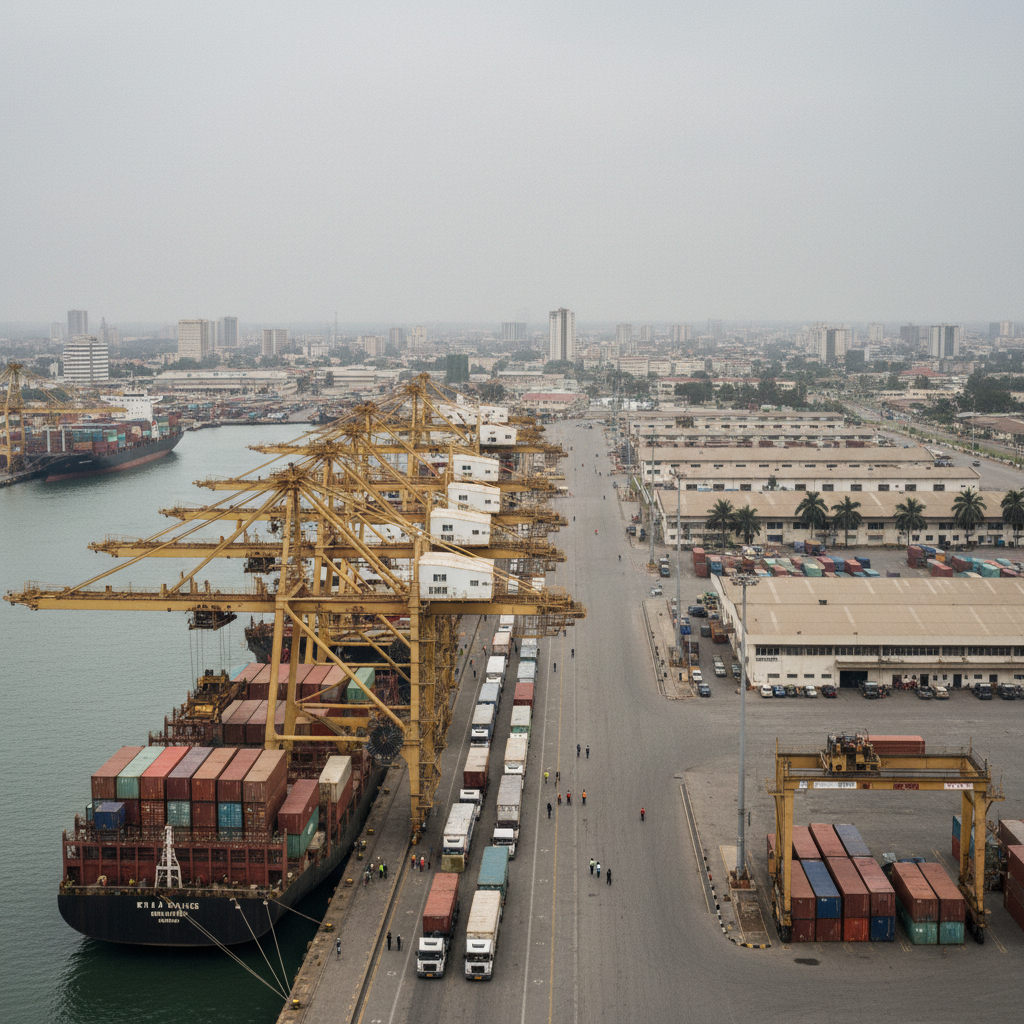
Ghana is actively attracting global investors to support its ambitious 24-hour economy agenda. The 7th Ghana Investment and Trade Week (GITW) in Accra brought together government officials, traditional leaders, and investors from over 30 countries on July 7, 2026. This gathering aims to unlock investment opportunities across key sectors like infrastructure, energy, manufacturing, and trade.
This initiative seeks to transform Ghana into a production-driven economy, moving away from raw material exports. The program focuses on increasing domestic manufacturing capacity and boosting the production of goods for local and international markets. The government projects the creation of 7 million employment opportunities by 2028 through these efforts.
Ghana’s push for a 24-hour economy aligns with its broader goal of industrial transformation and strengthening its position within the African Continental Free Trade Area (AfCFTA). The nation seeks to leverage political stability and a peaceful environment to attract significant foreign direct investment (FDI). This strategy builds on foundational post-independence projects, aiming to tap Ghana's largely undeveloped industrial potential.
Senior Presidential Advisor Dr. Augustus Goosie Tanoh delivered a keynote address on behalf of the Presidency. He outlined the government’s vision to anchor Ghana’s economy on industrialisation, renewable energy, and value addition. Dr. Tanoh stated that the 24-Hour Economy programme addresses the longstanding issue of exporting raw materials while importing finished products. He emphasised that increasing local processing and manufacturing is crucial for job creation, improving exports, and building a competitive economy.
Reliable energy is critical for industrial growth, according to Dr. Tanoh. The Secretariat is co-developing up to 1.5 gigawatts of utility-scale solar power supported by Battery Energy Storage Systems (BESS). Construction of the first 100-megawatt facility is expected to begin next month. This initiative aims to reduce electricity costs for industries and enhance manufacturing competitiveness.
The government’s industrial strategy includes developing the Volta-Oti Economic Corridor. This corridor will feature agro-industrial parks, carbon-neutral oil palm plantations, and clean transportation systems. It will also include compressed biogas facilities and waste-to-energy projects. These projects are part of the target to create 7 million jobs by 2028.
The Ghana Free Zones Authority (GFZA) CEO, Dr. Mary Awusi, reaffirmed the government’s commitment to investors. She highlighted incentives under the Free Zones Scheme, including a ten-year corporate tax exemption. Other benefits include customs duty waivers on production inputs, unrestricted profit repatriation, and access to major international markets. Dr. Awusi noted that the GFZA has over 7,000 acres of litigation-free industrial land available in strategic locations. These locations include Tema, Mpintsin, Shama, and Sekondi, to support manufacturing and export-oriented businesses.
Mr. Mravid Wang, Chairman of MIE Group, stated the organisation's commitment to using GITW to attract FDI. He noted that previous summits connected Ghanaian businesses with investors from countries like China, India, Türkiye, and Italy. This directly resulted in several new manufacturing initiatives. The MIE Group's decade-long engagement reinforced its confidence in Ghana's stability and strategic position in West Africa. This year’s event particularly focuses on renewable energy, construction, and green technologies, especially solar solutions, to promote sustainable development.
The coming months will likely see increased negotiations and groundbreaking ceremonies for new projects. The government's ability to deliver on its energy and industrial infrastructure promises will be closely watched. Investor confidence will depend on the consistent implementation of these ambitious plans and the security of GHS-denominated investments.