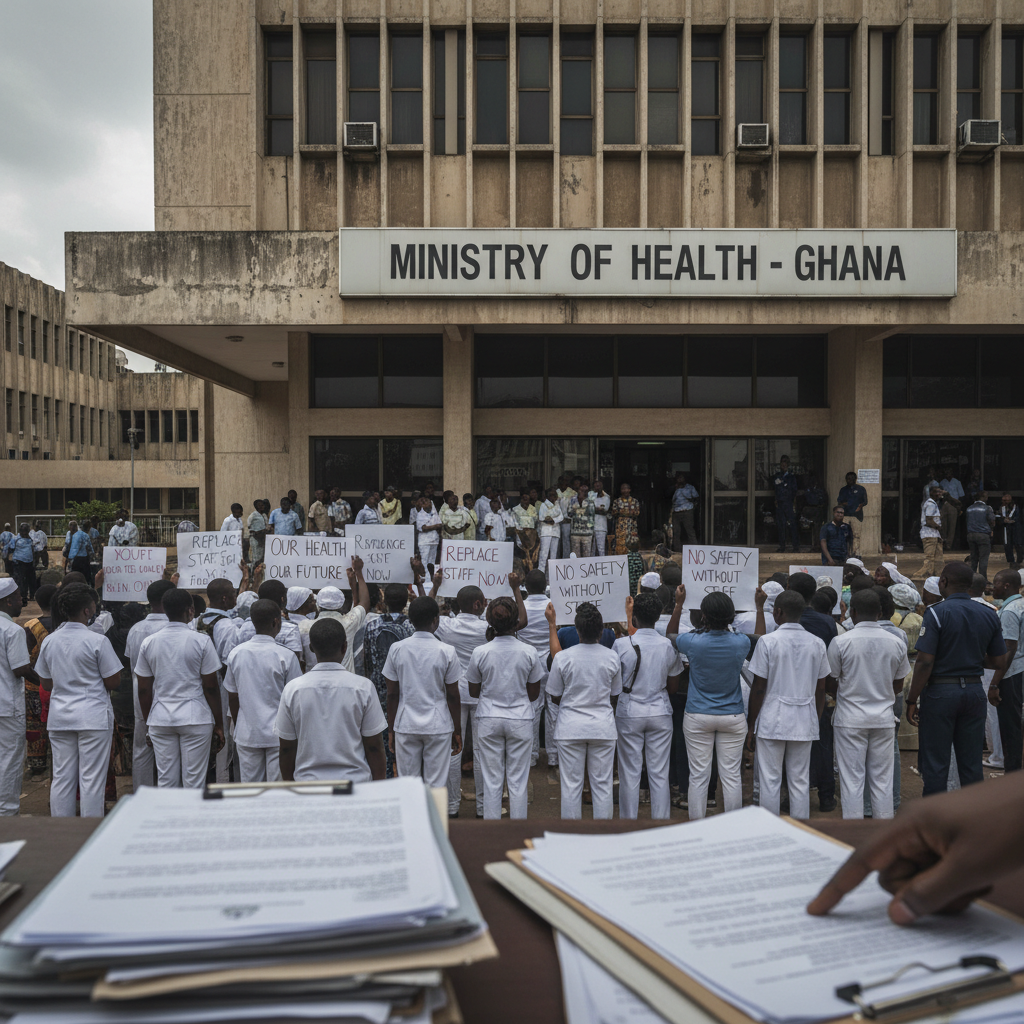
The Union of Professional Nurses and Midwives Ghana (UPNMG) has urged the government to immediately replace nurses and midwives migrating from Ghana. This call responds to a growing exodus of health professionals. The union states this trend is worsening staff shortages and putting immense pressure on the national healthcare system.
This pressing appeal came from Hon. Famous Agbenyefia Attipoe, the Volta Regional President of UPNMG. He spoke at the union's Volta Regional conference in Ho on July 10, 2026. Mr. Attipoe highlighted that Ghana continues to lose experienced medical staff. However, the government has not recruited enough new personnel to fill these critical gaps. This failure creates significant shortages in health facilities across the country.
This issue fits into Ghana’s broader economic and social challenges. The country faces persistent brain drain, particularly in essential services like healthcare. The departure of skilled workers affects productivity and strains social infrastructure. Ghana's healthcare system, already underfunded, struggles to cope with reduced staffing. The economic impact includes potential losses in healthcare service quality and increased public health risks.
Mr. Attipoe stated, "We actually want the government to give listening ears to us. As we speak now, the brain drain is so much." He added, "We have nurses and midwives almost every day leaving the country. We are talking about replacements, not even new employment." He suggested using the salaries of departed staff to recruit newly qualified nurses and midwives. He noted that the salary of a departing principal nursing officer can easily cover that of a newly recruited staff nurse.
The departure of skilled healthcare workers leads to higher healthcare costs and lower quality of service. The government's ability to retain talent is crucial for long-term economic stability and public health. This situation demands a swift and strategic response from policymakers. The market for healthcare services will likely see continued strain.
The UPNMG’s National President, Maxwell Oduro Yeboah, reinforced these concerns. He mentioned that hundreds of trained nurses and midwives leave Ghana monthly. They feel undervalued despite their dedication. "Every single month, hundreds of trained nurses and midwives carry their certificates to the airport," Mr. Yeboah said. He emphasized that improving job satisfaction is critical for retaining skilled health workers. This includes fair pay, safety, and respect.
Mr. Yeboah attributed many challenges in healthcare delivery to inadequate logistics. He noted a lack of equipment and essential supplies. He linked the country's recurring "no bed syndrome" to systemic issues. Providing necessary tools and equipment would prevent many unfortunate situations. Ghanaian nurses succeed internationally, proving they deliver excellent healthcare given the right conditions.
Delays in reviewing nurses' and midwives' conditions of service exacerbate migration. Mr. Attipoe warned that prolonged delays could escalate dissatisfaction. This could further fuel the exodus of healthcare professionals. The government must address these conditions promptly. This move could mitigate the ongoing migration crisis.
The implications are significant for Ghana's public finance and workforce planning. The government must allocate funds for immediate recruitment and salary adjustments. This will help retain existing staff and attract new graduates. Failure to act could destabilize the healthcare sector. It could also lead to a further decrease in public trust in the healthcare system.