Ghana needs to create approximately 300,000 new jobs every year to keep pace with its rapidly growing youth population. This significant demand highlights a critical challenge for the nation's economic development and stability.
The country's youth, comprising about 38% of Ghana’s 35 million people, are entering an economy struggling to generate sufficient opportunities. High borrowing costs, which can reach 40% or more for some bank loans, severely limit access to capital for aspiring young entrepreneurs. This financial barrier, coupled with skills gaps, prevents many talented individuals from establishing viable businesses and securing sustainable livelihoods.
This situation fits into Ghana's broader economic narrative of needing to diversify its economy and empower its workforce. Despite a youthful demographic dividend, the lack of adequate job creation and accessible financing can stifle innovation and economic growth. Previous government initiatives have often focused on education, but the current data suggests a need for more practical, market-oriented skills development and systemic support for young business owners.
The Ghana Report emphasizes that having a young population is only an advantage if young people possess the skills, resources, and opportunities to achieve productive livelihoods. The publication highlights that talent and qualifications alone do not guarantee economic opportunity for many young Ghanaians. This underscores the need for targeted interventions beyond traditional academic pathways.
Looking ahead, policymakers and development partners must focus on creating an environment where skills development is directly linked to market needs and accessible financing. Addressing the high cost of capital and strengthening market linkages will be crucial for unlocking the full potential of Ghana's youth. Decision-makers will need to monitor job creation rates and access to finance indicators closely to ensure economic stability and social progress.
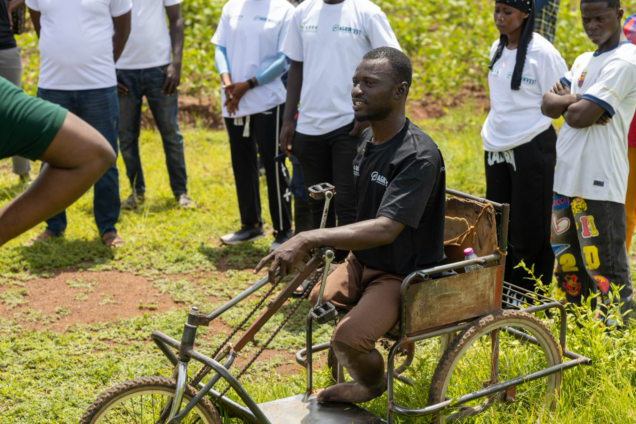
The challenge is particularly acute for vulnerable groups, including young people living with disabilities. These individuals often face additional barriers to education, employment, finance, and entrepreneurship. Inclusive skills development programs are essential to ensure no segment of the youth population is left behind in the pursuit of economic independence.
For instance, Ayishetu Adam, a 30-year-old woman with albinism, gained economic independence through a livelihood skills training program. Despite holding a Higher National Diploma, she faced job market exclusion. The program, supported by the Kosmos Innovation Center and others, taught her to produce soybean-based products. She now earns GHS300 daily, with potential to reach GHS500.
Similarly, Salifu Suale, a 30-year-old farmer with a disability, improved his agricultural productivity with support from the Kumasi Institute for Tropical Agriculture. He now utilizes all three acres of his land, expecting to obtain about 4 metric tons of soybeans valued at GHS11,000. These examples demonstrate the transformative power of practical skills and systemic support.
These success stories illustrate that investments must extend beyond those with existing access to education and finance. Deliberate efforts are required to reach young women, persons with disabilities, and those in underserved communities. Governments, educational institutions, and the private sector must collaborate to invest in both skills and the supportive systems that enable these skills to create economic value and jobs.