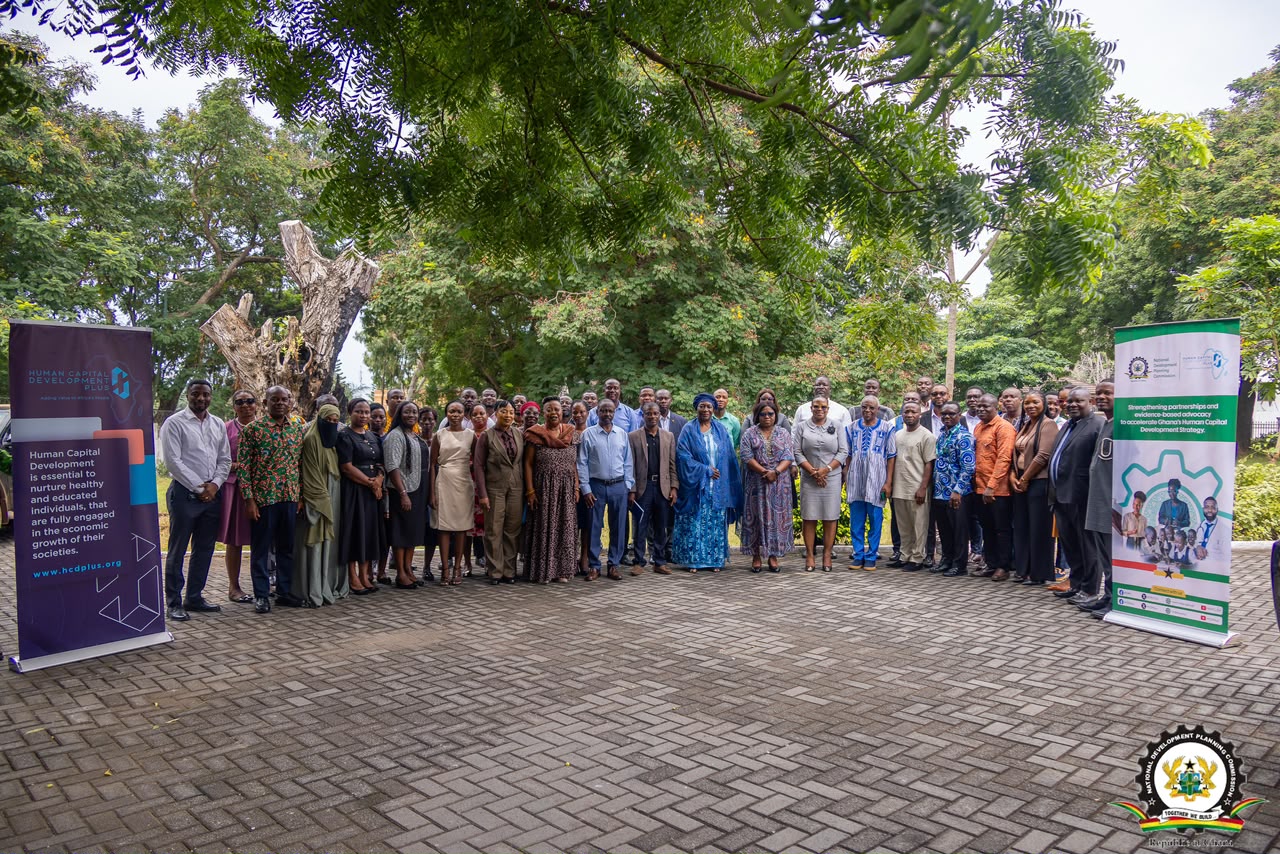
Ghana has initiated a comprehensive effort to develop a National Human Capital Development Strategy. The National Development Planning Commission (NDPC), in partnership with Africa Human Capital Development Plus (Africa HCD+), launched a three-day advocacy workshop on July 27, 2026. This workshop aims to build strong stakeholder support and improve coordination for the upcoming national strategy.
The initiative addresses critical human capital challenges facing the nation. Ghana has seen junior high school enrollment decline to 58.8% and senior high school enrollment to 34.5%. Unemployment stood at approximately 13% in the third quarter of 2025. These figures highlight the urgent need for coordinated action to improve the country's human capital.
This strategy is crucial for Ghana's broader economic and political stability. Persistent issues in education, health, and social protection hinder the country's development potential. The World Bank Human Capital Index for Ghana is 0.45, and its Human Development Index ranks 143rd out of 193 countries. The inequality-adjusted Human Development Index further drops to 0.399, underscoring the significant impact of inequality on human development outcomes.
Dr. Audrey Smock Amoah, Director General of the NDPC, stated the workshop is part of a wider effort to secure political, institutional, and public backing for Ghana's human capital agenda. She emphasized that the policy must link classroom learning and training centers with the demands of the labor market and the broader economy. Madam Finda Koroma, CEO of Africa HCD+, noted that a technically sound strategy is necessary but not sufficient; it must be understood, communicated, financed, owned, and defended by all stakeholders.
The strategy's successful implementation will depend on sustained commitment and collective ownership from various sectors. Decision-makers and markets will closely watch how the government integrates education, skills development, and employment. Mr. Louis Quarcoo from the Office of the President's 24 Hour Economy Secretariat highlighted that over 70% of Ghanaian firms struggle to recruit skilled workers. He also noted that fewer than 20% of young people possess digital proficiency. These statistics reinforce the need for investment in skills development and lifelong learning to enhance productivity and economic transformation.
The workshop brings together representatives from ministries, departments, agencies, metropolitan, municipal, and district assemblies, civil society organizations, development partners, and academia. Their participation is vital for strengthening advocacy, promoting collaboration, and fostering broad-based ownership of the strategy. This collaborative approach is expected to deepen understanding of Ghana's human capital priorities and build a strong coalition of advocates. The ultimate goal is to place people at the center of Ghana's long-term national development agenda.