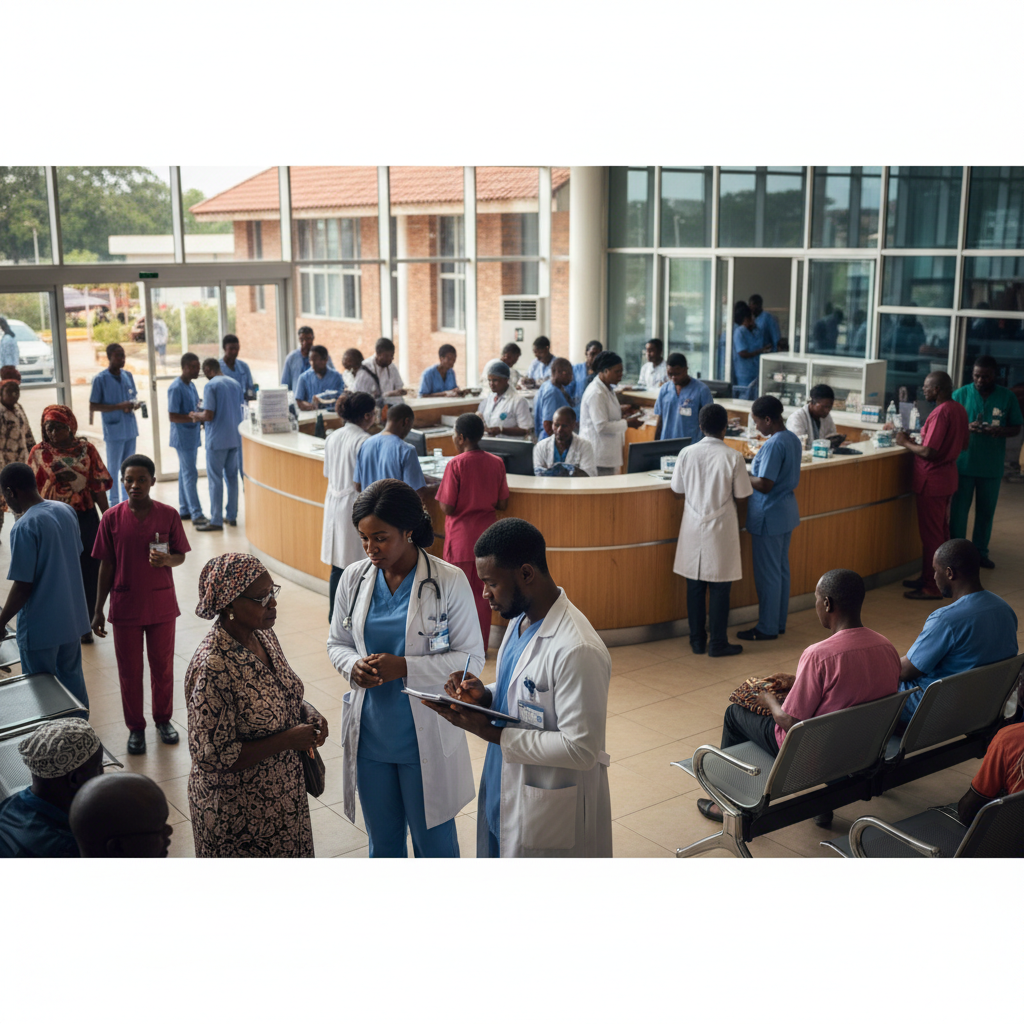
Ghana’s health workforce has more than tripled in recent years. This expansion has boosted the health worker density to 41.9 per 10,000 people from 16.5, according to Health Minister Kwabena Mintah Akandoh.
The combined density of doctors, nurses, and midwives now stands at 82.75 per 10,000 people. This figure is well above the benchmark set by the World Health Organization (WHO). Mr. Akandoh made these statements at the 2026 Annual Health Summit in Accra.
These gains reflect sustained investments in human resources for health. Building a strong workforce is central to improving healthcare delivery across Ghana. However, significant inequalities in the distribution of health personnel persist. Rural areas, where a large portion of the population lives, receive a smaller share of health workers.
Major urban centers, including Greater Accra and Ashanti regions, continue to host most doctors and pharmacists. This uneven distribution creates significant access gaps for many Ghanaians. It affects the quality of care available outside of large cities.
Health Minister Kwabena Mintah Akandoh acknowledged these ongoing distribution challenges. He specifically noted the concentration of healthcare professionals in urban areas. He stated that addressing Ghana’s healthcare challenges requires more than just training new professionals. It demands fair deployment, better motivation, and strong support for staff.
Mr. Akandoh also raised concerns about the ongoing migration of health professionals. Many seek better opportunities abroad. This outflow of talent puts further pressure on Ghana’s healthcare system. It undermines efforts to build a robust and equitable health service.
The government will need to focus on retaining its skilled healthcare workers. This includes providing competitive remuneration and improved working conditions. Fair deployment strategies are also crucial to ensure health equity. Decision-makers must address the push factors driving professionals to leave Ghana. Market responses will depend on the government's ability to implement these retention measures effectively. The goal of universal health coverage depends on these actions.
Achieving universal health coverage requires a workforce capable of delivering quality care everywhere. The government's continued investment in the health sector will face scrutiny. Public finance allocations for salaries and incentives will be key. Addressing the urban-rural divide in healthcare access remains a critical national priority. The success of these efforts will impact Ghana's overall economic productivity and social well-being.