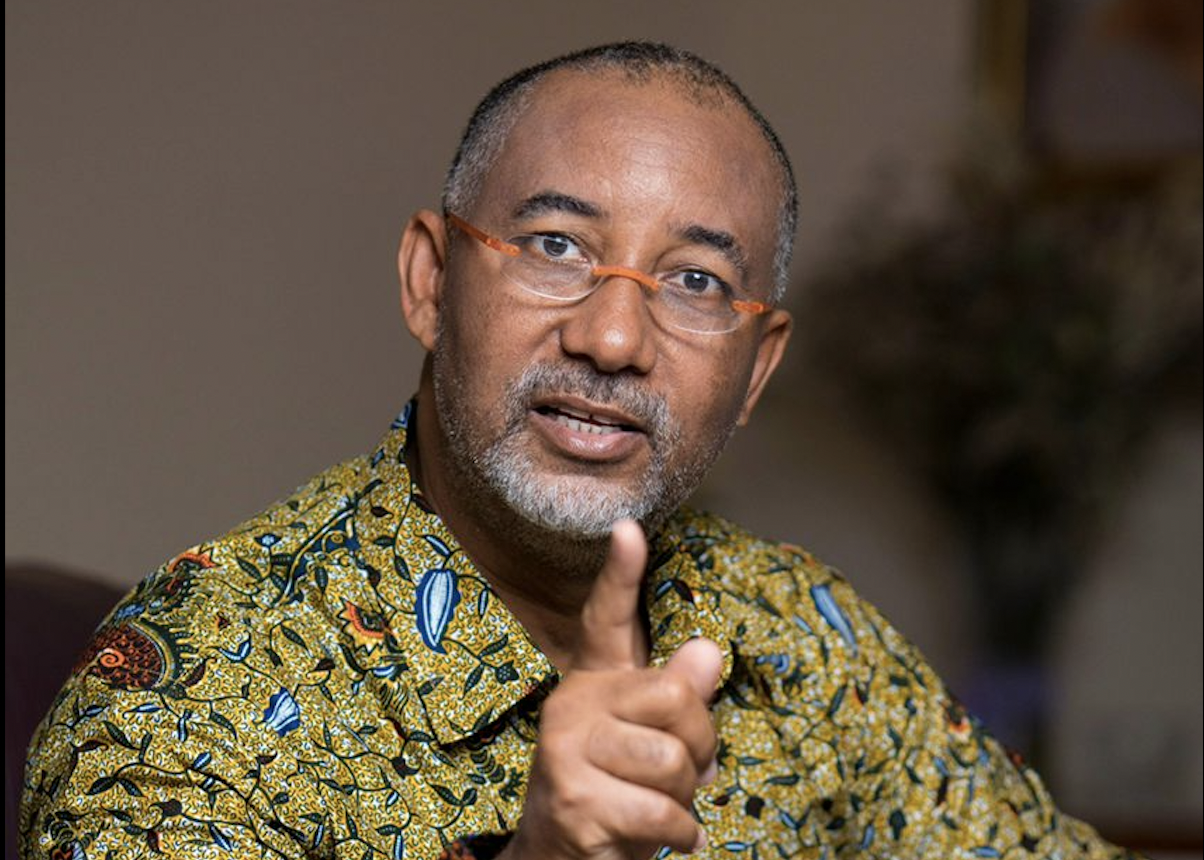
Ghana’s lasting economic transformation will depend on the skills and problem-solving capacity of its young population, not its natural resource wealth. This is according to Alexander Kofi-Mensah Mould, acting chief executive of the Millennium Development Authority. He emphasized that Ghana must move beyond treating young people as future leaders and recognize their immediate role in economic growth.
Mr. Mould delivered this keynote address at the University of Education, Winneba’s Seminar on Conflict and Nation Building. He argued that national prosperity is built through the daily development of human capability. This occurs in classrooms, laboratories, workshops, businesses, and universities, not through distant policy promises. His remarks place human capital at the core of Ghana’s development discussions.
This perspective comes as Ghana seeks to translate improved macroeconomic stability into stronger productivity and private-sector expansion. The country possesses significant natural resources like gold, oil, gas, and cocoa. However, Mr. Mould asserted that these resources alone cannot guarantee prosperity. Ghana needs the institutional and technical capacity to convert them into higher-value economic activity. He stated, “Resources create potential. Capability converts potential into prosperity.”
Mr. Mould pointed to countries like Singapore, South Korea, Finland, and Botswana as examples. Their economic progress resulted from sustained investment in education, public institutions, and technology. These nations achieved high development levels despite lacking vast natural resources. They built the capabilities needed to solve domestic problems and compete internationally.
For Ghana, the main challenge is not a lack of ideas or development plans. It is the gap between policy formulation and effective implementation. Mr. Mould described execution as a missing element in many national development strategies. Economic progress ultimately depends on institutions, businesses, and individuals translating plans into measurable outcomes.
This places a significant responsibility on universities. They must redefine their role in national development. Higher education institutions should produce graduates with practical competencies, not just academic qualifications. These competencies should enable students to create value, improve institutions, and respond to real economic and social problems.
Mr. Mould identified analytical thinking, effective execution, collaboration, value creation, and personal integrity as crucial capabilities. These are needed to build a competitive economy. There is growing concern that formal education often fails to provide graduates with the practical and technical skills employers demand. Youth unemployment and underemployment remain major policy challenges. Many businesses struggle to find workers with specialized skills for expanding sectors.
Mr. Mould urged young people to shift their focus from merely seeking employment. Instead, they should identify problems that can be turned into economic opportunities. He stated, “Capability creates opportunity. Capability creates enterprises. Capability creates industries. Capability creates prosperity.” This suggests that Ghana’s employment challenge requires more than public-sector recruitment. It needs young people to develop commercially relevant skills and build enterprises.
This transition also requires a stronger ecosystem for innovation. This includes access to finance, mentorship, research infrastructure, and markets. While Mr. Mould emphasized individual responsibility, his remarks also have implications for government and educational institutions. Young people can only convert ideas into viable enterprises when the policy environment supports experimentation, investment, and business growth. Weak infrastructure, regulatory uncertainty, and limited access to capital can hinder even capable individuals.