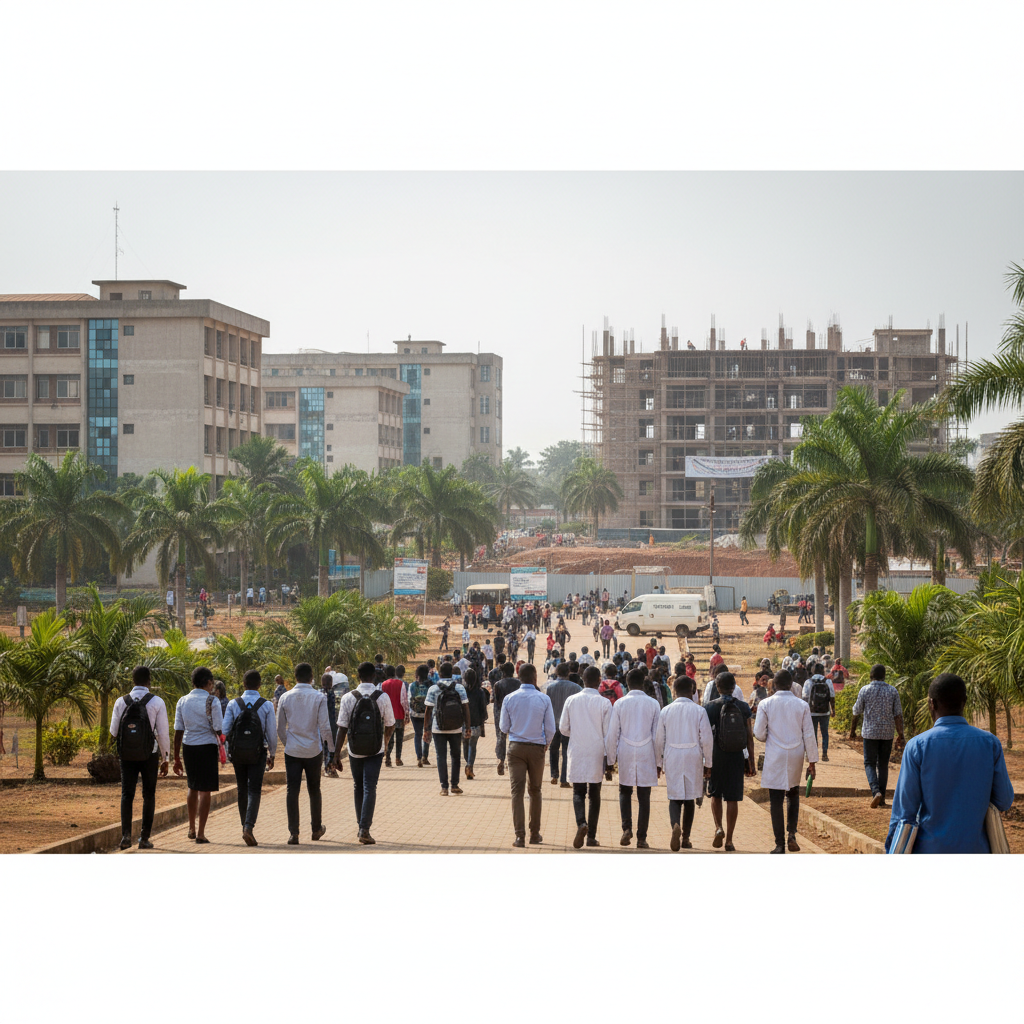
Ghana’s government will significantly expand medical education across the country, according to Education Minister Haruna Iddrisu. This initiative aims to improve the national doctor-to-patient ratio by increasing the number of doctors available.
The government plans to decentralize medical training, moving it beyond traditional urban centers. This strategy seeks to address the uneven distribution of healthcare professionals, ensuring more doctors reach underserved communities. The move also intends to balance the current high number of nurses with a greater number of physicians nationwide.
This educational expansion fits into Ghana's broader human capital development agenda. The government wants to strengthen healthcare delivery across all regions. Previous data shows a critical shortage of doctors, particularly outside major cities. This imbalance strains existing medical facilities and impacts public health outcomes.
Minister Iddrisu stated, “This will help us get more doctors across the country.” He made these remarks at the commissioning of a new hostel facility at Wisconsin International University College in Feyiase, Ashanti Region. He highlighted the urgent need to increase the number of doctors to complement the existing large nursing workforce.
The government will implement reforms similar to those in legal education. Minister Iddrisu referenced how the NDC government “demystified legal education,” increasing the number of law students. He expects a similar surge in medical school admissions by removing barriers to entry and expanding training institutions. This model aims to broaden access to medical careers significantly.
The newly commissioned hostel facility at Wisconsin International University College will house more health science students. This addition supports the school's plans to scale up its medical and allied health programs. Expanding infrastructure for medical training is a key part of the government’s strategy.
Stakeholders, including traditional leaders and educationists present at the event, welcomed the announcement. They believe improved access to medical education will ease the burden on Ghana's few major teaching hospitals. They also expect it will help retain medical professionals within their respective regions. This will lead to a more balanced and efficient national healthcare system.
Looking ahead, the policy’s success will depend on securing adequate funding and maintaining educational quality. Close monitoring of admission numbers and doctor deployment will show its effectiveness. This initiative is a critical step towards achieving a more robust and equitable healthcare system for all Ghanaians.