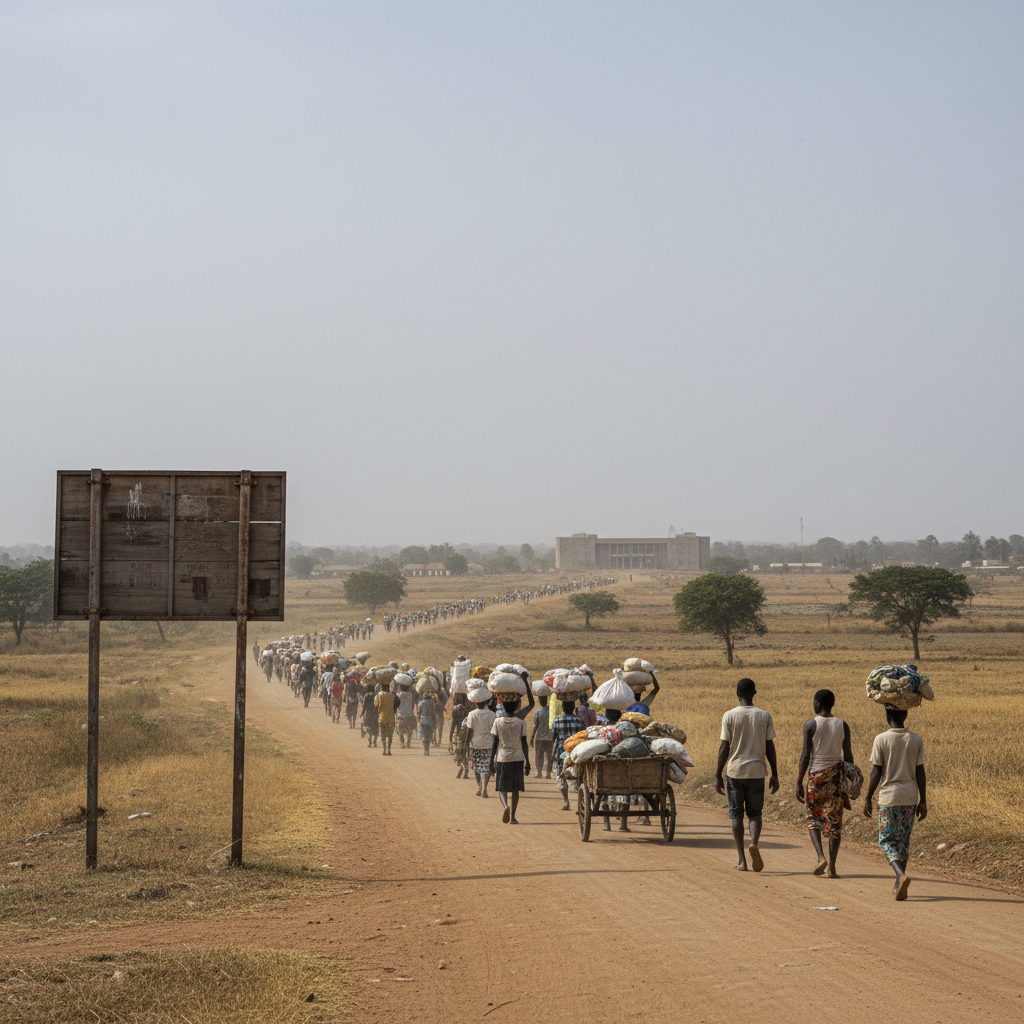
Ghana’s 1969 Aliens Compliance Act led to the displacement of over 200,000 foreign nationals. This policy, enacted by Prime Minister General Abrefa Busia, required all foreigners without residence permits to leave the country.
Among those displaced, approximately 140,000 were Nigerians, according to the Migration Policy Institute (MPI). Many affected individuals were forced to abandon their livelihoods and restart their lives in their home countries. This act highlights an early example of large-scale migrant expulsions within Africa, predating similar events in other nations.
This historical event in Ghana fits into a broader pattern of xenophobia observed across various African countries. Economic tensions and uncertainties often trigger such actions. Data shows that other nations like Nigeria, Gabon, and Mauritania have also carried out similar expulsions. South Africa, for instance, has seen recurring anti-migrant violence and deportations, with recent incidents in mid-April 2026.
Professor Vladimir Antwi-Danso, a Security and International Relations Analyst, links these incidents to economic conditions. He stated, “Anytime an economy faces a downward trend, unemployment rises and inflation is high, ordinary people start to believe that foreigners are to blame.” He added that foreigners, often having adapted to the system and taken odd jobs, can thrive, becoming targets of resentment.
The implications of such policies often prove counterproductive. Prof. Antwi-Danso explained, “The economy becomes worse because these people have left. You see a dent in the economic indices simply because work is not going on well.” He noted that while managing undocumented immigration is a state responsibility, expulsions should be handled diplomatically. Decision-makers and markets should observe that removing foreign workers does not solve economic problems but often exacerbates them.
Following Ghana's 1969 act, Nigeria retaliated in 1983 under President Shehu Shagari. Nigeria carried out a mass expulsion of over 2 million undocumented migrants from various countries. These included citizens from Niger, Togo, Cameroon, Chad, and Ghana, as reported by the International Organisation for Migration (IOM).
Nigeria conducted another mass expulsion in 1985 under President Muhammadu Buhari’s military government. These events illustrate a cycle of retaliatory actions and internal pressures influencing migrant policies. Countries must consider the long-term economic and social consequences of such drastic measures.
The debate around xenophobia continues to shape economic policies and international relations across the continent. Ghana's past actions provide a crucial historical perspective on these ongoing challenges.