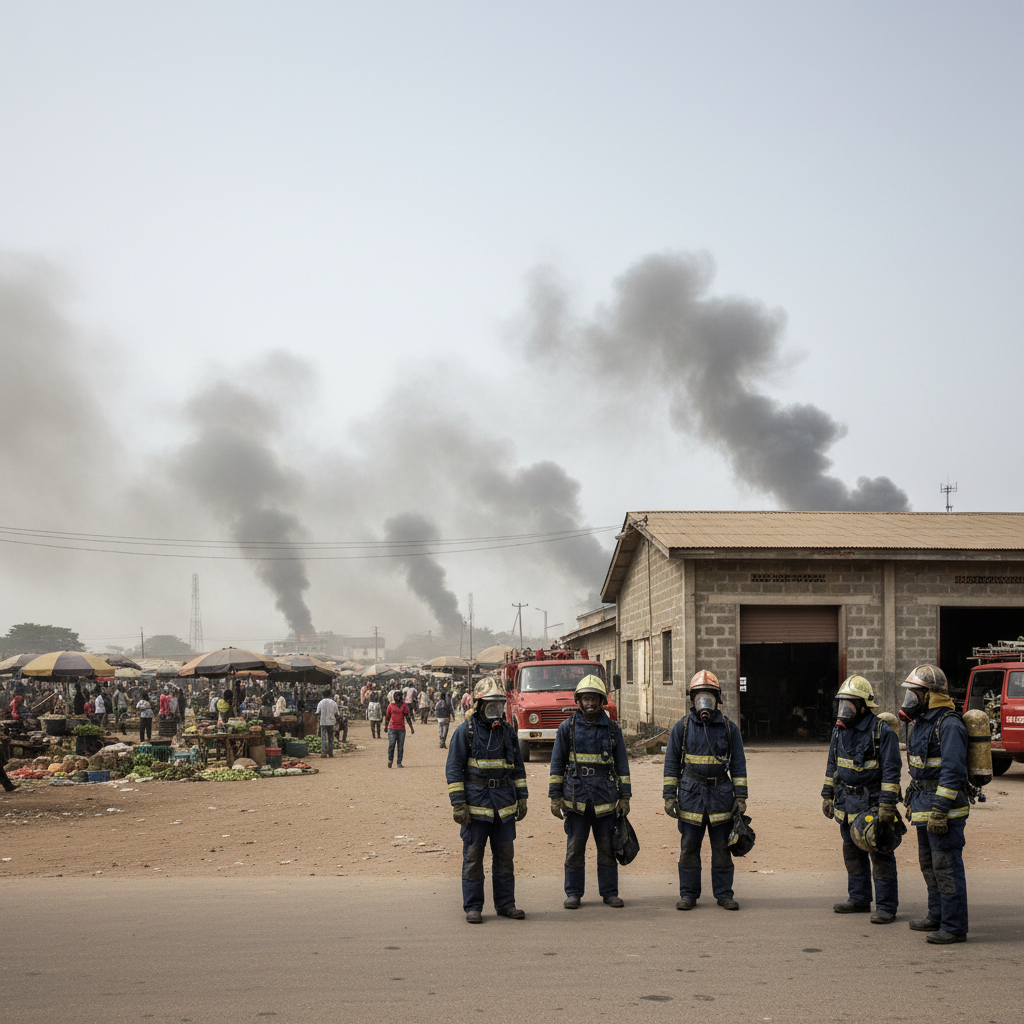
The Clean Air Fund has called for Ghana to implement stronger protections for firefighters against the health risks of smoke and air pollution. Desmond Appiah, Country Lead for the Clean Air Fund, emphasized this critical need during a recent interview. He stated that current policies do not adequately recognize the dangers faced by fire service personnel.
Mr. Appiah highlighted that firefighters face significant health and safety risks in their daily duties. These risks stem from prolonged exposure to smoke and other harmful pollutants during emergencies. He noted that existing occupational health and air-quality policies in Ghana fail to provide sufficient safeguards. This situation leaves firefighters vulnerable to long-term health complications.
This call for action fits into Ghana's broader efforts to improve public health and worker safety standards. The nation has seen increasing awareness regarding air quality issues, particularly in urban centers. Data from the Environmental Protection Agency (EPA) often indicates high levels of particulate matter in major cities. This pollution contributes to various respiratory and cardiovascular diseases among the general population. Protecting essential service providers like firefighters becomes even more crucial in this context. Their direct exposure levels are significantly higher than the average citizen.
“We are not doing them a great service,” Mr. Appiah stated, describing the current situation. He stressed that stakeholders must improve the health, safety, and working conditions for firefighters. This statement underscores the urgency of revising existing frameworks. It also highlights the moral obligation to protect those who protect others. The Ghana National Fire Service (GNFS) plays a vital role in national safety and property protection. Ensuring their well-being is an investment in national resilience.
The implications of this call are far-reaching for Ghana’s public health and labour sectors. Decision-makers will need to review and update occupational health policies to include specific provisions for firefighters. This could involve better equipment, regular health screenings, and specialized training on air pollution mitigation. Markets for personal protective equipment (PPE) and air filtration systems could see increased demand. Furthermore, the government may need to allocate more resources to the Ghana National Fire Service. This would ensure they have the necessary tools and support to operate safely. Improved protection could also lead to better recruitment and retention rates within the service. This would strengthen Ghana's emergency response capabilities. Ultimately, addressing these concerns will contribute to a healthier workforce and a more robust public safety infrastructure across the country.
The current situation also reflects a wider challenge in balancing economic development with environmental and occupational health. As Ghana industrializes, air quality management becomes increasingly complex. The health of frontline workers, like firefighters, serves as a stark indicator of these broader environmental pressures. Their protection is not just an occupational issue; it is a public health imperative. Policymakers must consider the long-term economic costs of neglecting worker health. These costs include healthcare expenses, lost productivity, and potential disability benefits. Investing in preventative measures now can yield significant savings and benefits in the future. This proactive approach aligns with sustainable development goals. It ensures that Ghana's growth does not come at the expense of its citizens' well-being. The Clean Air Fund's intervention provides a timely reminder of these interconnected challenges.