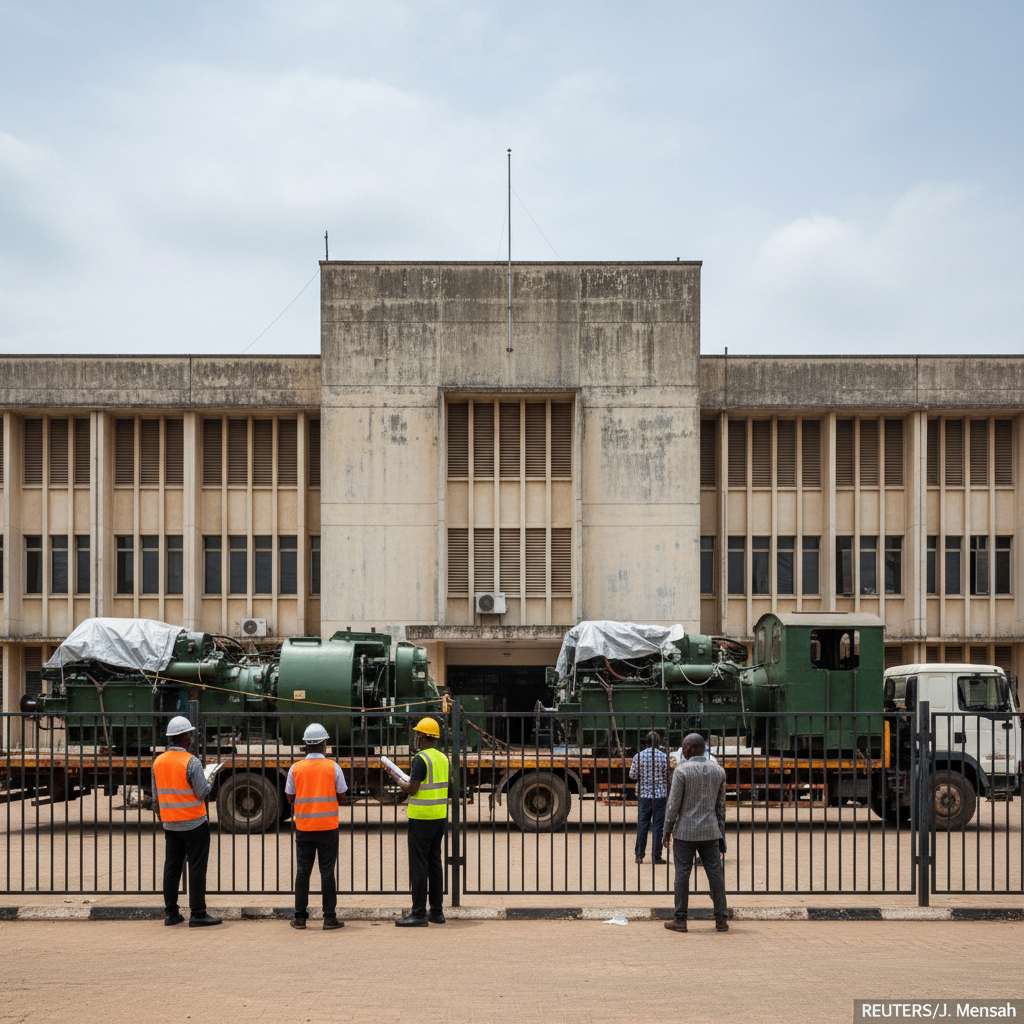
Ghana’s Ministry of Transport has defended its GHS 39 million (US$3.18 million) acquisition of two diesel locomotives and 20 freight wagons. The Ministry dismissed concerns from critics who termed the assets outdated as inaccurate and technically unfounded. This purchase aims to establish Ghana's first structured container rail freight business.
The Ministry clarified that the British Rail Class 56 locomotives underwent extensive refurbishment in the United Kingdom. This work included complete overhauls of key components like diesel engines, traction motors, and braking systems. Modern railway communication and safety systems were also installed, aligning with current operational standards. The locomotives received testing and certification before export and come with a five-year warranty against operational defects.
This acquisition fits into Ghana's broader economic strategy to enhance infrastructure and reduce logistical costs. The Tema-Mpakadan Railway Project is a crucial component, designed to provide efficient transport for cargo operators. This project supports industrialisation and aims to position rail transport as a key pillar of the government's 24-hour economy vision. The Ministry estimates freight operations will generate approximately US$3.5 million in annual revenue.
A statement from the Ministry of Transport’s Public Relations Unit on July 2, 2026, explained the decision. It stated that locomotives are evaluated for structural integrity, refurbishment quality, and reliability, not just age. The Ministry noted that Class 56 locomotives remain in active commercial freight service in the United Kingdom and Hungary. It also highlighted commitments from suppliers to maintain a five-year stock of essential spare parts for these locomotives.
The Ministry expects the investment in locomotives and wagons to be recovered within two years from freight operation revenues. Specialised engineers are already training Ghana Railway Development Authority (GRDA) technicians to build local maintenance capacity. This focus on local expertise aims to ensure long-term operational sustainability and minimise reliance on foreign support.
Officials also addressed criticisms about the cost, contrasting the US$3.18 million for the Class 56 locomotives and wagons with a previous administration's US$14.67 million purchase of two PESA Diesel Multiple Unit passenger trains. The Ministry highlighted that the PESA trains are for passenger transport, while the new acquisitions are specifically for heavy freight operations. This distinction is crucial for understanding their respective roles in Ghana's transport network. The Ministry stated that GRDA currently possesses two reach stackers and five heavy-duty forklift machines for container handling. Plans are in place to procure two gantry cranes to further bolster terminal operations. These measures are designed to ensure efficient cargo movement.
Feasibility studies confirmed freight demand along the Tema-Mpakadan corridor prior to the railway's construction. This supports the commercial viability of the project. The GRDA is finalising commercial off-take agreements, which are expected to generate significant annual revenue. The project is focused on creating a seamless logistics corridor connecting Tema Port to northern Ghana via the Volta Lake. This corridor will facilitate trade with landlocked countries such as Burkina Faso, Niger, and Mali. Reduced heavy truck traffic on major highways will ease congestion and minimise damage to road infrastructure. This long-term vision aims to create a more efficient and cost-effective route for goods movement across the region.