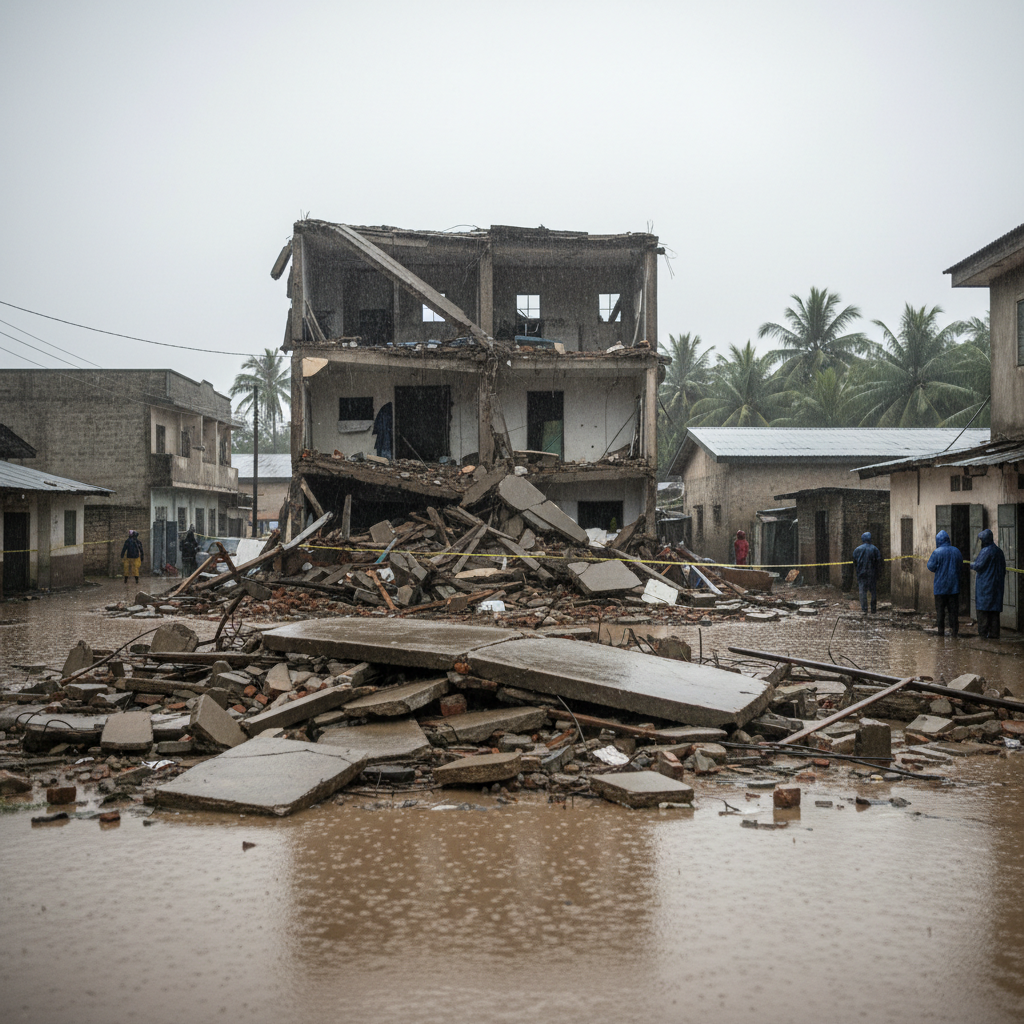
A seven-bedroom three-storey building, 90 per cent complete, collapsed in Tabora Number 9, Accra, on June 29, 2026. The structure gave way around 9 p.m. after torrential rains throughout the day. This incident adds to ongoing concerns about building integrity during Ghana's rainy season.
Occupants of the building narrowly escaped harm by evacuating minutes before the collapse. The landlady reported hearing a block fall, which prompted the quick departure of her family. This preemptive action averted any casualties, although significant property remains buried under the rubble. Local residents are now waiting for officials from the National Disaster Management Organisation (NADMO) to assess the damage.
This event underscores a critical issue plaguing Accra: the structural vulnerability of buildings, especially in low-lying and flood-prone areas. Ghana experiences regular and intense rainfall, which often leads to flooding and infrastructure damage. The collapse of this building highlights the economic costs of inadequate construction standards and poor urban planning. In 2023, similar incidents prompted the Accra Metropolitan Assembly to review building permits across the city, aiming to enforce stricter compliance.
The landlady told Adom News’ Serwaa Prempeh that she suspects the heavy rainfall caused the land to become waterlogged. This saturation weakened the building's foundation, leading to its collapse. Authorities typically attribute such incidents to a combination of heavy precipitation and substandard construction practices.
The collapse will likely intensify calls for increased oversight in Ghana's construction sector. Regulators and urban planners will face pressure to enforce building codes more rigorously, especially for structures nearing completion. Property owners may also see rising insurance premiums in flood-prone areas, reflecting the increased risk. Decision-makers must address the long-term impact of climate change on urban development.
Ghana's growing urban population leads to rapid construction, sometimes at the expense of safety. The structural integrity of buildings, particularly residential ones, is a recurring policy challenge. This incident serves as a stark reminder of the GHS multi-million costs associated with building failures and the importance of resilient infrastructure. The government's Ghana Urban Resilience and Integrated Development (GARID) project, though extended, still faces challenges in preventing such disasters. The GARID project aims to improve drainage and infrastructure in flood-prone areas but contractor payment delays sometimes slow progress, as admitted by the project coordinator.
This latest collapse necessitates a renewed focus on preventative measures. Regular inspections and adherence to engineering standards are crucial to safeguard lives and property. Without these interventions, similar incidents could continue to occur, posing risks to Ghana's urban development goals and its citizens.