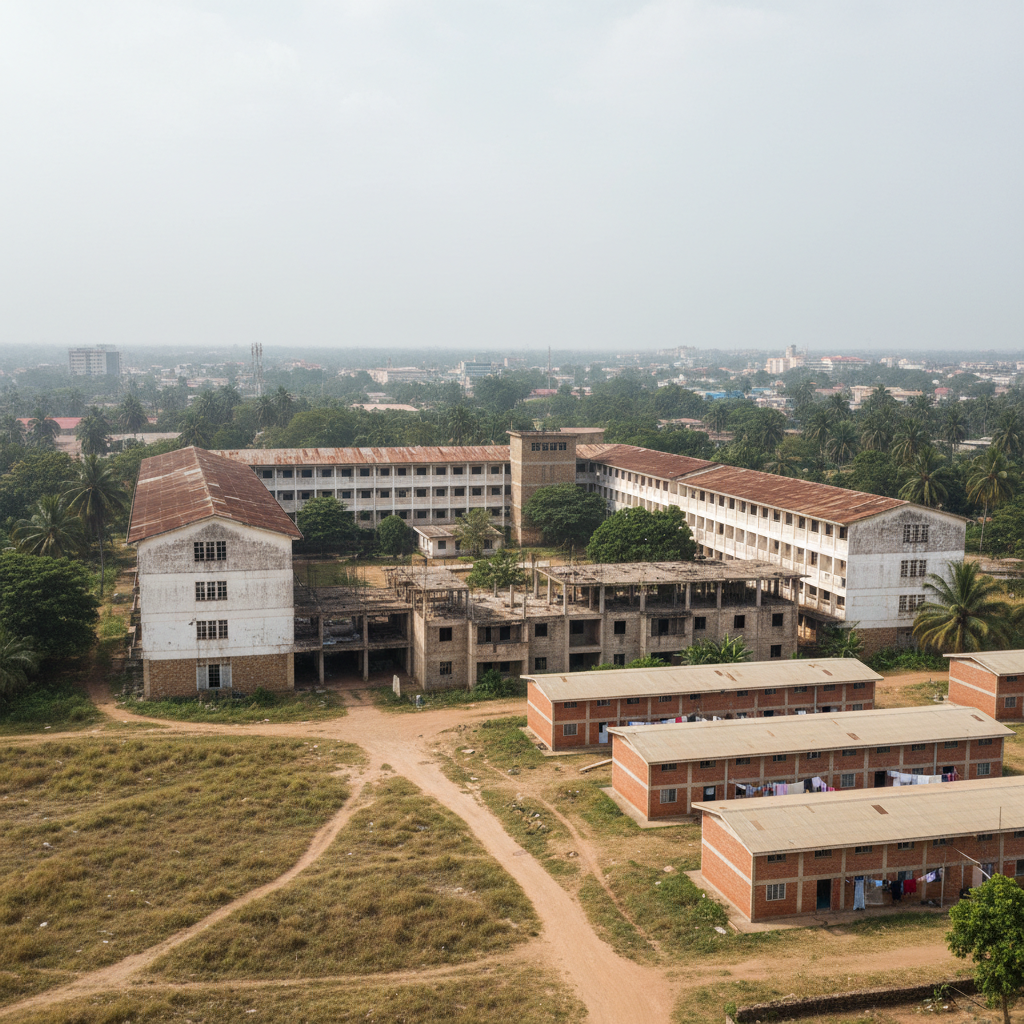
St. Augustine's College reports a substantial shortage of residential staff accommodation. Out of 140 staff members, only 60 currently live on campus, leaving 80 teachers to commute daily. This 57% housing deficit poses a significant threat to student discipline and academic standards within the school.
The critical shortage of on-campus housing forces the majority of teachers to travel to work. This situation makes effective student supervision and mentorship more difficult. The daily commute for such a large proportion of staff stresses school operations and teacher welfare.
This housing crisis at St. Augustine's College reflects a broader issue of infrastructure bottlenecks in Ghana's educational institutions. Many senior high schools increasingly rely on alumni associations to fund crucial development projects. Public funding alone often cannot meet the growing demands for modern facilities and improved living conditions for staff.
Reverend Father Dr. Patrick Godfred Appiah, Headmaster of St. Augustine’s College, highlighted the urgency of the situation. He stated, “Improving conditions for teachers must remain a priority if schools are to maintain high educational standards.” The Augustine’s Past Students’ Union (APSU) 2002 year group has launched the BOLT teacher accommodation project in response. This initiative aims to construct modern housing units on campus.
The BOLT project leadership views this as a vital step towards solving the accommodation crisis. The Chairperson of the Technical Team, Engineer Elliot Defortse, emphasized the project's contemporary design. Professor Kofi Abotsi, Dean of UPSA Law School, commended the alumni for their proactive leadership. He urged other corporate bodies and alumni to prioritize teacher welfare across the nation. This intervention marks a critical effort to address teacher accommodation as a key factor in educational quality.
The successful implementation of the BOLT project could inspire similar initiatives in other schools facing infrastructure challenges. Its success will demonstrate the power of alumni networks in bridging funding gaps for public education. Decision-makers and other alumni groups will closely watch the project's progress as a potential model. This could lead to more widespread investments in teacher welfare, improving educational outcomes nationwide.
The emphasis on teacher housing underlines its importance not just for staff comfort but for the entire school environment. Stable on-campus housing allows for better teacher availability for extracurricular activities and student support. This directly impacts student well-being and academic performance. The project also showcases how private philanthropic efforts can complement government investments in education. It demonstrates a shared responsibility in creating optimal learning environments. This initiative could set a precedent for future collaborations between educational institutions and their alumni networks. Such partnerships are essential for sustainable development in the sector.