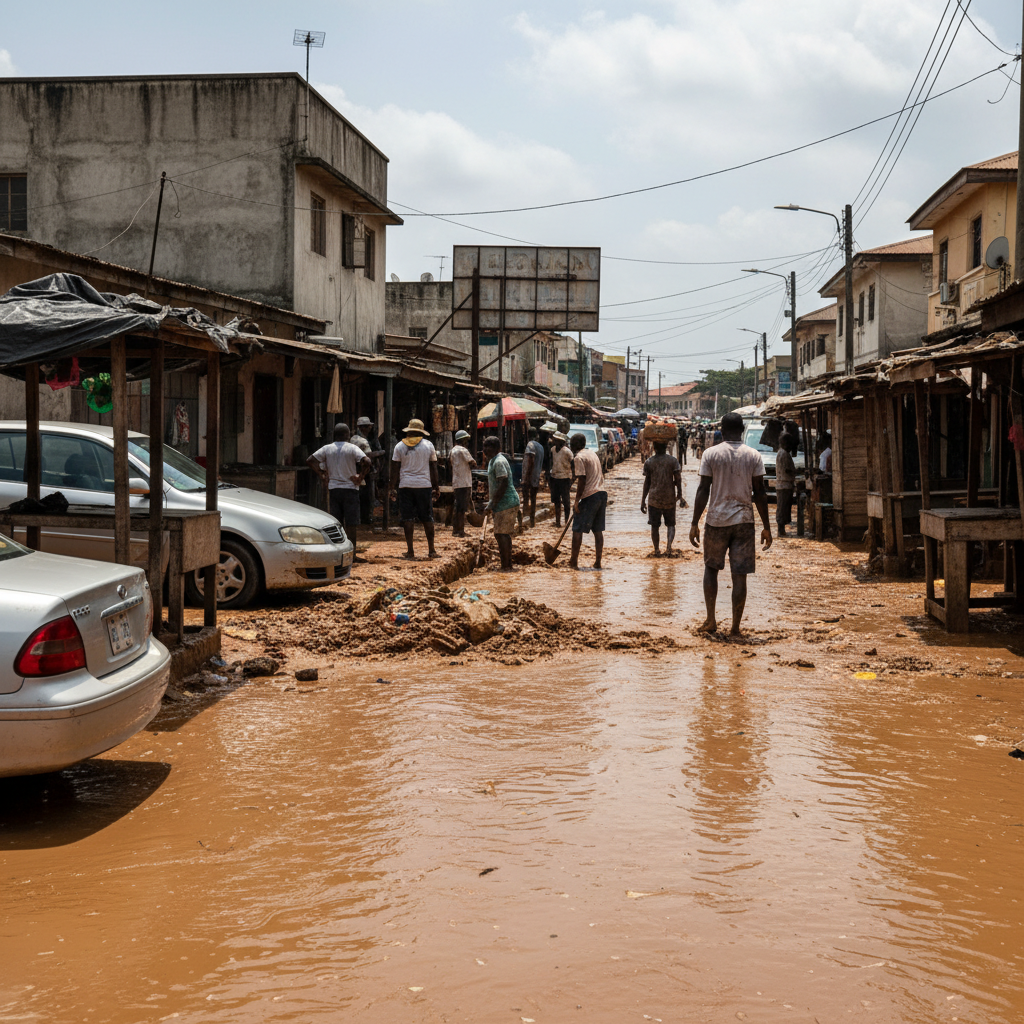
Silt and sand, rather than solid waste, are the primary culprits behind extensive flooding in Ghana. Environmental Engineer Dr. Juliet Ohemeng-Ntiamoah identified this key factor on July 8. Her analysis shifts focus from common public perceptions regarding blocked drains.
Dr. Ohemeng-Ntiamoah stated that discussions often incorrectly blame solid waste for clogged gutters. She emphasized that the dominant material blocking drainage systems nationwide is silt and sand. She explained this issue arises from Ghana's urban development, particularly the large number of unpaved roads.
This insight is crucial for Ghana's economic stability and public health. Flooding causes significant infrastructure damage and economic disruption. It also poses serious health risks to affected communities. Addressing the root cause, as identified by Dr. Ohemeng-Ntiamoah, is essential for sustainable urban development. This will also protect GHS billions in assets and reduce recovery costs.
Dr. Juliet Ohemeng-Ntiamoah, speaking on Joy FM's Super Morning Show, highlighted the problem of unpaved roads. She said, “If we look at our gutters, you will see that the main choke is silt and sand, and that is because of the nature of our city.” She explained how rain and wind carry sediment from these roads into drainage systems.
The continuous accumulation of silt overrides frequent desilting efforts. Dr. Ohemeng-Ntiamoah noted that desilting operations often remove mainly sand from major drainage systems like the Odaw. She highlighted the ineffectiveness of these efforts without addressing the source of the sediment. The current approach is akin to cleaning a leaky bucket without patching the hole.
To tackle this problem, Dr. Ohemeng-Ntiamoah urged the government to prioritize constructing unpaved roads. She stressed that these roads are significant sources of dust and sediment. These materials directly contribute to drainage blockages. Investing in proper road infrastructure would reduce the amount of silt entering city gutters. This would lead to better flood control and public safety.
She also recommended investing in green infrastructure. This includes creating more green spaces within cities. Such infrastructure would help reduce stormwater runoff. Permeable pavements should also replace conventional tarred surfaces. These pavements allow water to seep into the soil, reducing surface flow and easing pressure on drainage systems. This integrated approach promises more effective flood management.
Ultimately, addressing silt buildup is critical for solving Ghana's chronic flooding problems. Dr. Ohemeng-Ntiamoah concluded that effective waste management must also consider silt. The issue stems from how Ghanaian cities are planned, or rather, unplanned. Long-term solutions require strategic investment in urban planning and infrastructure. This will ensure free water flow and protect communities from devastating floods.