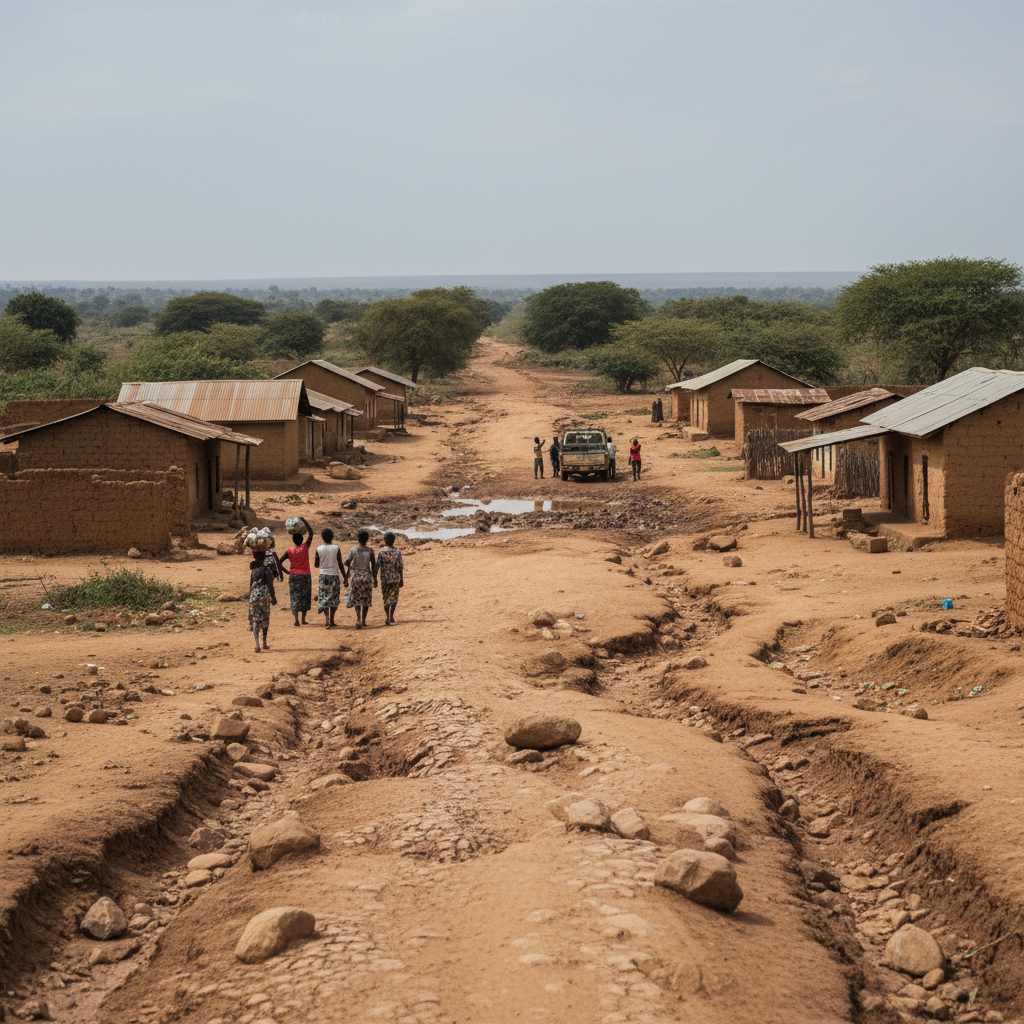
The Sazie community in Ghana's Upper West Region faces potential total isolation because of a severely damaged culvert. This single culvert is the only link connecting Sazie to the outside world. Its deterioration significantly impacts economic activity and access to essential services for residents.
Farmer Pogoziema Dousaa highlighted the severe consequences. She states that during heavy rains, sick individuals must be carried on people's backs. No vehicles can pass the damaged section. This critical infrastructure problem affects farmers reaching their fields and traders accessing the Tabiase market. Furthermore, sick residents struggle to reach medical facilities in the district capital, Issa.
This situation stems from a cancelled road tarring contract over 10 years ago. The contract was awarded before 2016 but was cancelled following the change of government that year. The project was never re-tendered or repackaged for construction. This lack of maintenance has led to the current perilous state of the culvert and the road.
James Wor, the District Chief Executive for Daffiama-Bussie-Issa, confirmed the dire situation. He warned that if the culvert breaks completely, Sazie will be entirely cut off. Mr. Wor has submitted reports to the Regional Roads Engineer, who has visited the site. He stressed the urgency of the matter during a visit to the community.
The economic implications for Sazie are substantial. The community relies heavily on agriculture and trade. Blocked access during rainfall prevents farmers from transporting produce to market. This directly affects their livelihoods and the local economy. The disruption also impacts broader regional trade networks and supply chains.
Mr. Wor has made an urgent appeal to the government. He is pushing for the immediate repackaging and construction of the road. Elder Cletus Samari, 55, expressed the community's frustration, stating that rainfall now feels like a punishment. The ongoing prayer for intervention is coupled with calls for immediate governmental action to prevent a complete collapse of connectivity.
The lack of infrastructure investment in Sazie mirrors broader challenges facing rural road networks in Ghana. Timely completion of road projects is crucial for economic development and social welfare. Delays and cancellations of contracts often lead to exacerbated problems and higher future repair costs. This case highlights the need for consistent infrastructure planning and execution across political transitions.
Decision-makers must prioritize this road rehabilitation. The impending rainy season could worsen the culvert's condition, making repairs more expensive and difficult. Markets and residents will be watching for a swift governmental response. Failure to act could lead to increased poverty and reduced access to essential services for the Sazie community.